Within Zambia Curiosities
The Stories Behind Zambia's Missionary Relics
Historical objects linked to David Livingstone reveal exploration, missionary activity and changing views of colonial collections.
On this page
- David Livingstone objects and archives
- Exploration records and historical memory
- Questions about collecting and representation
Page outline Jump by section
Introduction
The missionary relics of Zambia are not simply old objects in glass cases. They are reminders of a complicated encounter between exploration, Christianity, local communities and colonial power. The most important collection connected with this story is held at the Livingstone Museum in Livingstone, where letters, photographs, documents and personal belongings linked to David Livingstone preserve one of the most recognisable European figures in Zambia’s history.[livingstonemuseum.org]livingstonemuseum.orgTemporary Exhibits | Livingstone MuseumTemporary Exhibits | Livingstone Museum
These objects are unusual because they carry several meanings at once. To some visitors, they represent exploration, medical work, anti-slavery campaigns and the history of Christian missions. To others, they are evidence of how colonial-era museums often preserved African history through European encounters and European collectors’ viewpoints. The interest of these relics lies not only in what they show about Livingstone himself, but also in how Zambia has chosen to remember, question and reinterpret the colonial past.[livingstonemuseum.org]livingstonemuseum.orgResearch & Collections | Livingstone MuseumResearch & Collections | Livingstone Museum
The Stories Behind Zambia’s Missionary Relics
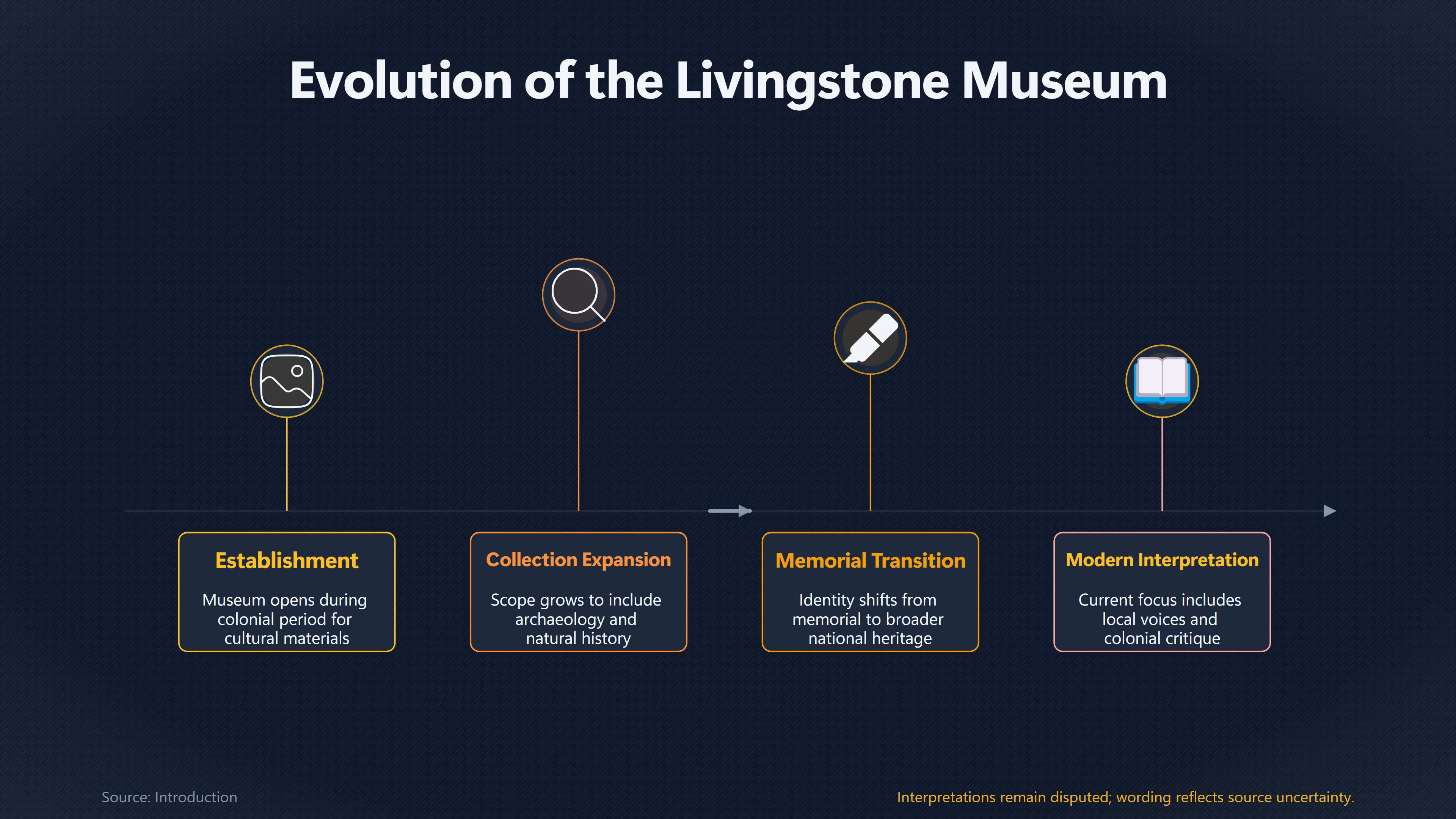
The Livingstone Museum is the main place where visitors encounter Zambia’s missionary and exploration memories. Established in 1934, the museum began during the colonial period and was initially developed around collections of cultural materials from Northern Rhodesia, later expanding into archaeology, history and natural history. Its history gallery and research collections include material connected with David Livingstone, colonial records and wider histories of Zambia.[NMB Bank]nmb.co.zmNMB Bank Livingstone museum – National Museums BoardNMB Bank Livingstone museum – National Museums Board
The museum’s David Livingstone collection includes personal relics, letters, documents and photographs relating to the Scottish doctor, missionary and explorer who travelled through parts of south-central Africa in the nineteenth century. The collection is not a single “treasure” but a group of objects and records that preserve different versions of the past: the story of exploration, the story of missionary activity and the story of colonial-era collecting.[livingstonemuseum.org]livingstonemuseum.orgDavid Livingstone Gallery | Livingstone MuseumDavid Livingstone Gallery | Livingstone Museum
For visitors interested in unusual museum experiences, these objects have a particular fascination because they are close to a famous historical figure. A handwritten note, a travel record or a personal belonging can feel more intimate than a traditional historical display. Yet the deeper importance is not simply that these objects belonged to Livingstone. They reveal how explorers’ writings and possessions became part of national heritage collections and shaped how later generations understood the colonial period.[livingstonemuseum.org]livingstonemuseum.orgResearch History | Livingstone MuseumResearch History | Livingstone Museum
David Livingstone Objects and Archives
A missionary remembered through objects
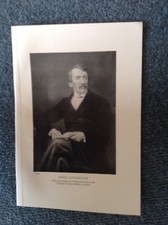
David Livingstone occupies an unusual position in Zambian heritage. He is remembered as a missionary, medical doctor and explorer, but his image has changed over time. Nineteenth-century European audiences often celebrated him as a heroic explorer and campaigner against the slave trade, while modern historical discussions pay more attention to the wider political environment in which missionaries and explorers operated.[Royal Geographical Society]rgs.orgRoyal Geographical Society Portrait of David Livingstone | RGSRoyal Geographical Society Portrait of David Livingstone | RGS
The Livingstone Museum’s collection allows these different interpretations to exist together. Its displays present his journeys and work, while the surrounding historical collections place him within a broader Zambian story that includes local societies, colonial administration and changing ideas about heritage.[livingstonemuseum.org]livingstonemuseum.orgTemporary Exhibits | Livingstone MuseumTemporary Exhibits | Livingstone Museum
The most valuable aspect of these relics is often the paperwork around them. Diaries, letters and maps can show how explorers recorded landscapes, people and events. They also reveal the limitations of historical records: European travellers documented their own experiences in detail, while the voices of many African guides, interpreters and communities who shaped those journeys were recorded less frequently in museum archives.[livingstonemuseum.org]livingstonemuseum.orgResearch History | Livingstone MuseumResearch History | Livingstone Museum
The archive behind the display
The Livingstone Museum holds an extensive historical archive containing records connected with colonial government, explorers and early mapping of the region. The museum describes its history section as containing thousands of records, including documents, notebooks, diaries and early cartographic material.[livingstonemuseum.org]livingstonemuseum.orgResearch History | Livingstone MuseumResearch History | Livingstone Museum
This makes the collection more than a memorial display. It functions as a research archive where historians can examine how Zambia was described and recorded during the colonial era. The same documents that preserve valuable information can also be studied critically, because archives reflect the priorities and assumptions of the people who created them.[livingstonemuseum.org]livingstonemuseum.orgResearch History | Livingstone MuseumResearch History | Livingstone Museum
Exploration Records and Historical Memory
Missionary relics are unusual museum objects because they sit between biography and national history. A personal item connected to Livingstone is not only about one individual; it is also connected to larger changes in Central Africa during the nineteenth and twentieth centuries.
Livingstone’s travels contributed to European knowledge of the region and helped create international interest in Central Africa. His writings and journeys became part of wider European debates about geography, Christianity and the slave trade. Collections linked to him therefore preserve both a human story and the history of how Africa was represented abroad.[Royal Geographical Society]rgs.orgRoyal Geographical Society Portrait of David Livingstone | RGSRoyal Geographical Society Portrait of David Livingstone | RGS
At the same time, museums today face the challenge of presenting these materials without reducing Zambian history to the actions of foreign visitors. The most meaningful interpretation places missionary objects alongside local histories: the communities Livingstone encountered, the African assistants who supported expeditions, and the societies whose landscapes and traditions existed long before colonial collections were created.[livingstonemuseum.org]livingstonemuseum.orgResearch History | Livingstone MuseumResearch History | Livingstone Museum
This tension is what makes the collection part of Zambia’s wider “curiosity culture”. Like unusual folklore objects or archaeological discoveries, missionary relics invite questions about who collected the object, who preserved it, who is represented and whose story may have been overlooked.
Questions About Collecting and Representation
Why colonial museum memories remain debated
Colonial-era museum collections often create difficult questions. An object can be historically important while also being connected to unequal systems of power. A missionary diary may provide rare information about nineteenth-century Zambia, but it may also reflect the viewpoint of an outsider observing African societies through European ideas of religion, civilisation and exploration.
The Livingstone Museum’s challenge is therefore not simply preservation. It is interpretation: explaining why these objects matter while acknowledging the colonial setting in which many museum collections were formed. The museum’s broader collections now include archaeology, ethnography, history and natural history, helping place missionary materials within a wider national heritage rather than presenting them in isolation.[livingstonemuseum.org]livingstonemuseum.orgResearch & Collections | Livingstone MuseumResearch & Collections | Livingstone Museum
From memorial to historical conversation
The museum’s earlier identity was strongly connected with remembering Livingstone. It first opened as the David Livingstone Memorial Museum before later changes in name and direction reflected broader national collecting priorities.[livingstonemuseum.org]livingstonemuseum.orgABOU T US | Livingstone MuseumABOU T US | Livingstone Museum
That evolution mirrors a wider change in museums around the world. Older displays often focused on famous explorers, rulers or collectors. Contemporary interpretation increasingly asks how ordinary people, local communities and previously overlooked voices fit into the same story.
For visitors, the appeal of Zambia’s missionary relics is therefore not only the presence of a famous explorer’s belongings. The deeper attraction is the encounter with a historical crossroads: a place where exploration, faith, empire, local knowledge and memory meet. The objects preserve a past that is both fascinating and contested, making them among Zambia’s most revealing colonial-era museum memories.[livingstonemuseum.org]livingstonemuseum.orgResearch History | Livingstone MuseumResearch History | Livingstone Museum
Amazon book picks
Further Reading
Books and field guides related to The Stories Behind Zambia's Missionary Relics. Use these as the next step if you want deeper reading beyond the article.
The Scramble For Africa
In 1880 the continent of Africa was largely unexplored by Europeans. Less than thirty years later, only Liberia and Ethiopia remained unc...
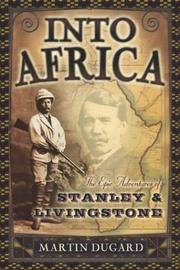
Into Africa: The Epic Adventures of Stanley and Livingstone
First published 2003. Subjects: Missionaries, Medical, Medical Missionaries, Explorers, Biography, Discovery and exploration.
Expressions of Innocence and Eloquence
First published 2006. Subjects: Folk art, united states, Americana, Catalogs, Folk art, History.
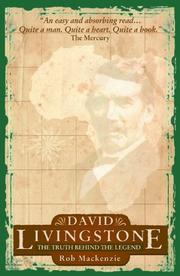
David Livingstone: The Truth Behind the Legend
First published 1993. Subjects: Biography, Explorers, Medical Missionaries, Missionaries, Medical, Livingstone, david, 1813-1873.
eBay marketplace picks
Marketplace Samples
Live-tested eBay searches with available results related to this page.
Selected fromLivingstone memorabilia oneBay.co.uk.
Endnotes
1.
Source: livingstonemuseum.org
Title: Temporary Exhibits | Livingstone Museum
Link:https://livingstonemuseum.org/temporary-exhibits/
2.
Source: livingstonemuseum.org
Title: David Livingstone Gallery | Livingstone Museum
Link:https://livingstonemuseum.org/david-livingstone-gallery/
3.
Source: livingstonemuseum.org
Title: Research & Collections | Livingstone Museum
Link:https://livingstonemuseum.org/research-collections/
4.
Source: livingstonemuseum.org
Title: Research History | Livingstone Museum
Link:https://livingstonemuseum.org/research-history/
5.
Source: livingstonemuseum.org
Title: ABOU T US | Livingstone Museum
Link:https://livingstonemuseum.org/about-us/
6.
Source: livingstonemuseum.org
Link:https://livingstonemuseum.org/research-page/
7.
Source: livingstonemuseum.org
Link:https://livingstonemuseum.org/history-gallery/
8.
Source: livingstonemuseum.org
Link:https://livingstonemuseum.org/facilities/
9.
Source: livingstonemuseum.org
Link:https://livingstonemuseum.org/research-ethnography/
10.
Source: livingstonemuseum.org
Link:https://livingstonemuseum.org/research-publications/
11.
Source: zambia.travel
Link:https://www.zambia.travel/livingstonemuseum.html
12.
Source: nmb.co.zm
Title: NMB Bank Livingstone museum – National Museums Board
Link:https://nmb.co.zm/livingstone-museum/
13.
Source: rgs.org
Title: Royal Geographical Society Portrait of David Livingstone | RGS
Link:https://www.rgs.org/our-collections/stories-from-our-collections/explore-our-collections/portrait-of-david-livingstone
14.
Source: africa-research.org
Title: Livingstone Museum
Link:https://africa-research.org/livingstone-museum/
Source snippet
Africa ResearchMay 3, 2026 — LIVINGSTONE MUSEUM Prev Article Next Article Image: Livingstone Museum LIVINGSTONE MUSEUM Museum profile LIV...
Published: May 3, 2026
15.
Source: rhodesianstudycircle.org.uk
Title: Livingstone Museum
Link:https://www.rhodesianstudycircle.org.uk/livingstone-museum/
Source snippet
Rhodesian Study CircleApril 24, 2020 — LIVINGSTONE MUSEUM LIVINGSTONE MUSEUM Livingstone The Livingstone Museum is the largest and the ol...
Published: April 24, 2020
16.
Source: books.google.com
Title: David Livingstone
Link:https://books.google.com/books/about/David_Livingstone.html?id=Mh0xAQAAIAAJ
17.
Source: books.google.com
Title: David Livingstone
Link:https://books.google.com/books/about/David_Livingstone.html?id=-DH6zNL9SfcC
18.
Source: manuscripts.nls.uk
Link:https://manuscripts.nls.uk/agents/people/31525
19.
Source: wileydigitalarchives.com
Title: Royal Geographical Society (with IBG)
Link:https://www.wileydigitalarchives.com/royal-geographical-society/
20.
Source: theexplorationarchive.com
Link:https://theexplorationarchive.com/exploration/david-livingstone
Additional References
21.
Source: thedigitalphilatelist.com
Title: zambia philately 1968 new currency definitives 5n national museum livingstone
Link:https://thedigitalphilatelist.com/zambia-philately-1968-new-currency-definitives-5n-national-museum-livingstone/
Source snippet
Zambia Philately: 1968 New Currency Definitives – 5n National Museum, Livingstone - The Digital PhilatelistJanuary 23, 2022 — ZAMBIA PHIL...
Published: January 23, 2022
22.
Source: youtube.com
Title: The UNTOLD Story of Zambia’s Struggle for Independence
Link:https://www.youtube.com/watch?v=WD6xfPfkD5A
Source snippet
Tracing Jewish History: A Tour of the Railway Museum in Livingstone...
23.
Source: upjournals.up.ac.za
Link:https://upjournals.up.ac.za/index.php/historia/article/view/947
Source snippet
of the Livingstone Museum and its role in colonial Zambia, 1934-1964 | HistoriaApril 19, 2021 — ESTABLISHMENT OF THE LIVINGSTONE MUSEUM A...
Published: April 19, 2021
24.
Source: africabib.org
Link:https://africabib.org/rec.php?DB=p&RID=P00033365
25.
Source: openlibrary.org
Link:https://openlibrary.org/works/OL8148126W/David_Livingstone_Letters_Documents_1841-1872_The_Zambian_Collection_at_the_Livingstone_Museum
26.
Source: countryreports.org
Link:https://www.countryreports.org/articles/david-livingstone
27.
Source: livingstoneonline.org
Link:https://livingstoneonline.org/in-his-own-words/catalogue?access=download&order=Addressee%28s%29&page=1&sort=asc
28.
Source: collections.st-andrews.ac.uk
Link:https://collections.st-andrews.ac.uk/file/art-in-the-livingstone-museum-zambia/2052223
29.
Source: collections.st-andrews.ac.uk
Link:https://collections.st-andrews.ac.uk/item/david-livingstone-and-zambia/2052221
30.
Source: uwcscholar.uwc.ac.za
Link:https://uwcscholar.uwc.ac.za/items/46361862-4e9c-460f-940d-a9d0fb3ad031/full