Where Paraguay Keeps Its Strangest Stories
Paraguay does not have a large, heavily commercialised circuit of “weird museums” devoted to UFOs, witchcraft or manufactured monsters. Its curiosity culture is quieter and more locally rooted.
Page outline Jump by section
Introduction
The clearest starting point is the Ramón Elías Mythological Museum in Capiatá, where creatures once transmitted mainly through storytelling and literature appear as physical sculptures. Beyond it, Paraguay’s strange collections tend to blur familiar boundaries: a private art museum becomes a cabinet of masks and featherwork; a former torture centre becomes both evidence store and memorial; a naturalist’s forest home combines laboratory, archive and historic landscape. These places matter because they show how Paraguay turns belief, violence, devotion, science and cultural memory into objects that visitors can confront directly.
Where Paraguay’s monsters became visible
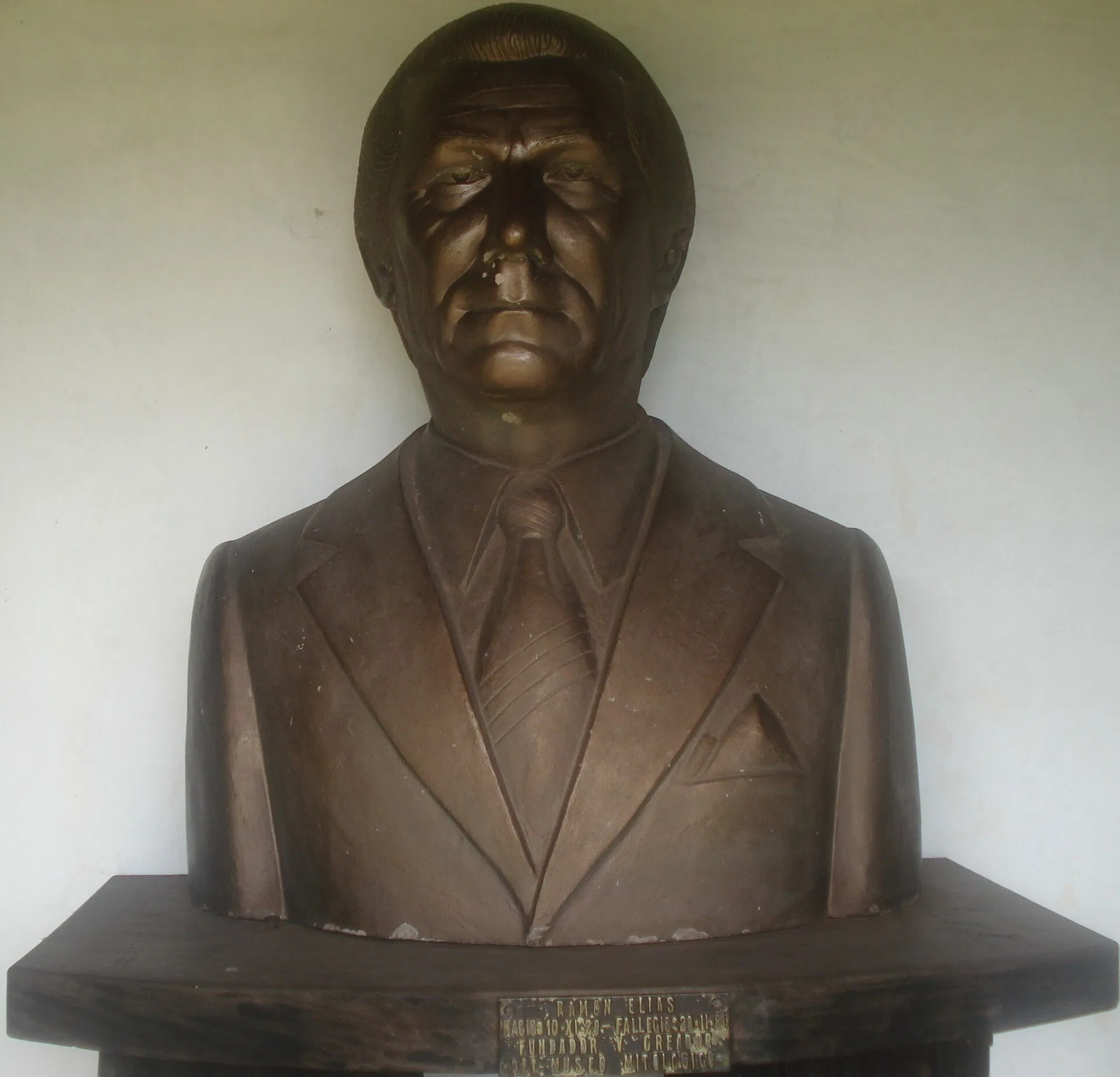
The Ramón Elías Mythological Museum is Paraguay’s most direct answer to the conventional idea of a strange museum. Opened in 1979, it occupies a modest site beside the main road through Capiatá, east of Asunción. Its signature room contains sculptural representations of supernatural figures from Paraguayan popular tradition, including the forest trickster Pombero, the fair-haired child spirit Jasy Jateré and the monstrous offspring associated with the story of Taú and Keraná.[wikipedia.org]WikipediaMythical Museum Ramón ElíasMythical Museum Ramón Elías
Ramón Elías was an artist, teacher, restorer and collector rather than an academic museum curator. He travelled through rural Paraguay buying antiques and speaking with older residents about stories, beliefs and historical memories. His crucial intervention was visual: figures that had largely existed in oral accounts and printed descriptions were given faces, bodies and theatrical settings. The museum therefore presents an individual artist’s interpretation of folklore, not archaeological proof that the beings were considered physically real.[Wikipedia]WikipediaMythical Museum Ramón ElíasMythical Museum Ramón Elías
That distinction makes the museum more interesting, not less. It occupies the border between folklore display, personal collection and immersive popular art. Visitors are not merely shown text panels about old legends; they meet human-sized embodiments of creatures associated with forests, night journeys, dangerous sexuality, disobedient children and inexplicable noises. The darkened presentation encourages an atmosphere closer to a haunted attraction than to a conventional ethnographic gallery, although its purpose is cultural preservation rather than jump-scare entertainment.[Wikipedia]WikipediaMythical Museum Ramón ElíasMythical Museum Ramón Elías
The museum’s other rooms complicate its identity. One contains Franciscan and Jesuit religious objects and altarpieces, while another presents photographs and material connected with the Paraguayan War and the Chaco War. It is consequently not a single-theme monster museum but a collector’s compressed vision of national memory, joining supernatural beings, Christianity and military history under one roof.[Visit Paraguay]visitparaguay.travelVisit ParaguayMuseo Mitológico Ramón ElíasEl Museo Ramón Elías, cuenta con tres amplias salas dedicadas a cada una de estas temáticas. Ac…
Practical information should be checked shortly before travelling. Paraguay’s official tourism portal describes the museum as open to visitors and lists paid admission, while more recent public listings and the museum’s social-media profile indicate that arrangements and hours may vary or require advance contact.[visitparaguay.travel]visitparaguay.travelVisit ParaguayMuseo Mitológico Ramón ElíasEl Museo Ramón Elías, cuenta con tres amplias salas dedicadas a cada una de estas temáticas. Ac…

Folklore is living culture, not a cryptid claim
The beings displayed at Capiatá are sometimes described online as “cryptids”, but that label can be misleading. A cryptid is usually presented as an unknown animal whose physical existence is disputed. Paraguayan figures such as Pombero or Jasy Jateré belong more properly to a living field of folklore, moral storytelling and supernatural belief. Their meanings have changed through oral transmission and through contact among indigenous traditions, colonial Christianity and later popular culture.
The frequently repeated story of seven monstrous children born to Taú and Keraná is especially prominent in modern representations of Paraguayan mythology. Its creatures include animal-human hybrids and beings associated with particular dangers or behaviours. Yet “Guaraní mythology” is not a single, fixed canon shared identically by every Guaraní-speaking or indigenous community. Academic work on Paraguay’s indigenous cosmologies shows that distinct peoples maintain their own complex understandings of spirits, landscape and the sky. A public museum’s neat set of named characters is therefore best understood as one influential version of national popular folklore, not a complete map of indigenous religion.[arXiv]arxiv.orgarXiv The Tomaraho Conception of the SkyThe Tomaraho Conception of the SkyJuly 28, 2011…
This matters for visitors because the sculptures can otherwise appear to be simple fantasy monsters. Within Paraguayan culture, such figures may also regulate behaviour, explain danger or embody anxiety about isolated roads, forests, sexuality, childhood and social boundaries. The museum preserves the popular image of these beings while also demonstrating how folklore changes when private imagination becomes a permanent public display.
Masks, feathers and unsettling transformations
Asunción’s Museo del Barro is not marketed as an oddities museum, but it contains one of Paraguay’s richest collections for anyone interested in masks, ceremonial transformation and visually unfamiliar objects. The private cultural complex brings together three broad areas: popular art, indigenous art and modern or contemporary art. Its holdings include ceramics, carvings, textiles, baskets, masks, featherwork and urban artworks rather than arranging Paraguay’s culture into a simple progression from “traditional” to “modern”.[Museum]museum.deOpen source on museum.de.
For a curiosity-minded visitor, the indigenous and popular-art material is particularly striking. Feather ornaments and ceremonial clothing can radically reshape the human silhouette, while festival masks turn familiar faces into devils, animals or exaggerated social types. These are not props invented for tourists. They belong to social, ceremonial and artistic traditions whose meaning depends on the communities that made and used them.
The museum’s curatorial importance lies in treating such pieces as art rather than merely as anonymous ethnographic specimens. Its collections were assembled through purchases, donations and exchanges, beginning with separate initiatives that were later combined in one institution. This history gives the museum something of the character of a modern cabinet of curiosities, but one organised around Paraguay’s cultural diversity and debates about who has the authority to define art.[Contemporary And (C&)]contemporaryand.commuseo del barro paraguaymuseo del barro paraguay
That does not remove questions about provenance or representation. Older museum traditions often detached indigenous objects from named makers and living communities. Visitors should look for information about the people, purpose and date connected with each object rather than treating all masks or feather pieces as timeless remnants of a mysterious past. The strongest interpretation recognises them as culturally specific works whose meanings continue beyond the display case.
Sacred figures with mixed identities
The Museum of Sacred Art in Asunción offers a different form of strangeness: carved Christian saints produced within the cultural world of colonial Paraguay. Its public display consists of works selected from the much larger private collection of the Nicolás Darío Latourrette Bo Foundation, with a particular emphasis on seventeenth- and eighteenth-century religious sculpture.[WhichMuseum]whichmuseum.co.ukOpen source on whichmuseum.co.uk.
These figures are unusual because they record a visual encounter between imported Catholic subjects and the skills and aesthetic decisions of local and indigenous makers. Saints, angels and holy figures may follow European religious models, yet their facial features, proportions, surfaces and decorative treatment can depart noticeably from metropolitan conventions. What appears at first to be a conventional devotional statue may therefore carry evidence of negotiation between missionary instruction, workshop practice and local imagination.
The collection should not be reduced to a story of harmonious cultural fusion. Religious art in colonial Paraguay was also produced within systems of evangelisation and colonial authority. Some objects were created for churches and missions where Christianity displaced or absorbed existing beliefs. Their beauty sits alongside that history. As a result, the museum works best as a place to examine how devotion, power and cultural adaptation became embedded in carved wood.
For visitors interested in reliquaries, miracle traditions or occult collections, this is not a museum of magical objects in the usual sense. The figures were devotional works rather than curiosities. Yet the intensity of their expressions, traces of age and continued religious associations give them a presence quite unlike that of ordinary decorative sculpture.
A torture centre that preserves its own evidence
Paraguay’s most disturbing collection is not supernatural. The Museum of Memories: Dictatorship and Human Rights occupies the former National Directorate of Technical Affairs in Asunción, a security institution used during Alfredo Stroessner’s dictatorship. The building functioned as a place of detention, interrogation and torture, and the museum preserves cells, documents, photographs and material connected with political repression.[Sites of Conscience]sitesofconscience.orgOpen source on sitesofconscience.org.
This is an unusual museum in the most serious sense: the site is both container and exhibit. Visitors are not entering a reconstructed prison room inside a neutral gallery. They are moving through a building where abuse occurred. Surviving architecture gives physical scale to histories that can otherwise become abstract statistics, while photographs and personal records restore individual identities to those imprisoned, killed, exiled or forcibly disappeared.
The museum is closely related to, but should not be confused with, Paraguay’s Archives of Terror. Those police records were discovered in December 1992 during searches connected with a legal case. They document state repression under the dictatorship and contain evidence relating to Operation Condor, the cross-border system of surveillance, abduction and political violence involving several South American regimes.[Plan Cóndor]plancondor.orgOpen source on plancondor.org.
The archive is held by the Museum of Justice within Paraguay’s judicial system. The institution states that the material has remained publicly accessible and under the custody of a branch of the state, characteristics that distinguish it from some comparable Latin American archives. UNESCO has included the Archives of Terror in its Memory of the World programme because of their significance as documentary evidence of systematic repression.[Poder Judicial]pj.gov.pyPoder Judicial Museo de la JusticiaPoder Judicial Museo de la Justicia
Together, the former torture centre and the judicial archive form one of Paraguay’s most important “dark heritage” complexes. Their credibility does not depend on legend or theatrical reconstruction. It rests on buildings, government records and testimony. They also demonstrate why unusual collections are not always entertaining: sometimes the unsettling object in the case is an ordinary form, photograph or identity card that reveals how bureaucracy enabled violence.
A scientist’s forest cabinet
Near Presidente Franco, the Moisés Bertoni Scientific Monument preserves the former home and research environment of Swiss-born naturalist Moisés Bertoni. Set within protected Atlantic Forest beside the Paraná River, it combines historic house, museum, archive, scientific site and nature reserve. Bertoni worked across botany, agriculture, meteorology, zoology and anthropology, producing hundreds of publications and assembling extensive collections at his remote settlement.[wikipedia.org]WikipediaMoisés Bertoni Scientific MonumentMoisés Bertoni Scientific Monument
The site feels closer to an expanded nineteenth-century cabinet of curiosity than to a modern, narrowly specialised laboratory. Bertoni’s interests crossed boundaries that later became separate academic disciplines. His home and working landscape therefore evoke a period when one collector-observer attempted to document plants, animals, weather, farming and human culture within a single intellectual system.
That breadth is fascinating, but it requires critical interpretation. Bertoni’s research involving Guaraní communities emerged from the assumptions and unequal relationships of his era. His writings and collections are valuable historical evidence, yet they should not automatically be treated as definitive accounts of indigenous life. The museum is most useful when visitors see it both as a monument to scientific ambition and as a record of how knowledge about Paraguay was collected, classified and authored.
The forest setting is essential to the experience. Unlike specimens isolated in an urban glass case, the collections remain connected to the environment in which much of Bertoni’s work took place. A visit is therefore partly museum trip, partly historic-site excursion and partly encounter with the surviving landscape that made the research possible.
The Chaco’s rooms of animals and migration
The Mennonite settlements of the Paraguayan Chaco contain several small museums whose unusual quality comes from the collision of radically different histories. In Filadelfia, the Jakob Unger Museum has been described as a natural-history collection filled with preserved animals of the Chaco, alongside indigenous objects and material connected with Mennonite settlement. Nearby historic-house displays explain how Mennonite migrants established agricultural colonies in an environment unfamiliar to them.[World Adventurers]worldadventurers.wordpress.comWorld Adventurers Filadelfia, Paraguay | World AdventurersWorld Adventurers Filadelfia, Paraguay | World Adventurers
These museums can feel like local cabinets assembled from whatever seemed important, rare or representative: taxidermied mammals, birds and reptiles; tools used by early settlers; photographs of migration; and objects made by indigenous peoples who lived in the region long before the colonies were founded. Their mixed displays offer a vivid sense of place, although the standard of labelling and contextual explanation may vary.
The central interpretive question is whose Chaco is being presented. A museum founded within a Mennonite colony naturally emphasises migration, hardship, agricultural development and community survival. Indigenous objects may consequently appear at the edge of another group’s historical narrative. Wider research into Chaco collections has increasingly examined how objects were gathered through missions, colonial encounters and unequal exchanges. More than 600 Paraguayan Chaco objects are held by the British Museum alone, illustrating how much regional material was removed into overseas institutions.[SDCELAR British Museum]sdcelarbritishmuseum.orgOpen source on sdcelarbritishmuseum.org.
The best Chaco visit therefore avoids treating taxidermy, indigenous material and settler history as unrelated curiosities. Together they reveal competing ways of occupying, classifying and transforming one of South America’s most distinctive environments.
Scientific collections behind the scenes
Some of Paraguay’s most remarkable collections are only partly visitor-facing. The scientific organisation Para La Tierra maintains a natural-history collection containing mammals, birds, reptiles, amphibians and fish, including anacondas, vipers, bats and a maned wolf. Its published inventory lists thousands of specimens used for research, education and biodiversity documentation.[Para La Tierra]paralatierra.orgOpen source on paralatierra.org.
This is not a sideshow of bizarre dead animals. Scientific specimens are preserved because bodies, skins, skeletons or tissue samples can answer questions long after collection. Researchers may use them to verify species records, compare physical variation, identify environmental change or reassess earlier classifications. What looks to a casual visitor like a room of jars and skins is effectively a biological archive.
Access and display conditions may differ from those of a conventional public museum. Anyone planning a visit should distinguish between an institution that holds a collection and one that maintains permanent, walk-in galleries. This difference is important throughout Paraguay, where many unusual holdings remain in research centres, historic houses, private foundations or locally managed spaces rather than in large national institutions.
What Paraguay does not appear to have
Reliable current evidence does not support claims that Paraguay has a major permanent public museum devoted specifically to UFO wreckage, alien bodies, witchcraft prosecutions, medical deformities, mummies or authenticated cryptids. Online references to mysterious artefacts or paranormal incidents should not be mistaken for established institutions.
That absence is itself informative. Paraguay’s curiosity culture is not primarily built around the commercial “museum of the unexplained” model found in some tourist centres. Its unusual collections emerge from local folklore, private collecting, colonial religion, natural science, migration and political trauma. The most uncanny material is often presented inside a broader cultural museum rather than isolated and advertised as weird.
Visitors should also be cautious with old opening times, copied travel listings and unverified claims that a private collection is permanently accessible. Small institutions can change schedules, require appointments or depend on family members and volunteers. Official tourism listings, institutional pages and direct confirmation are more dependable than recycled attraction lists.
Why these collections matter
Paraguay’s strange museums and unusual collections repeatedly turn invisible systems into physical things. The Ramón Elías Museum gives bodies to stories. Museo del Barro makes ceremonial transformation and cultural difference visible through masks, ceramics and featherwork. Sacred carvings embody the complicated meeting of Christianity and local artistic practice. Dictatorship museums expose repression through rooms and paperwork. Bertoni’s home preserves the ambition to collect an entire environment, while Chaco museums show how animals, settlers and indigenous communities have been fitted into competing histories.
They are also reminders that a curiosity is never merely curious. A monster sculpture may preserve folklore but simplify a diverse tradition. An indigenous mask may be visually spectacular but lose meaning when separated from its maker or ceremony. A torture instrument may attract horrified attention, yet the surrounding documents explain the political system that made it possible. A taxidermied animal may appear eccentric while serving as evidence of a disappearing ecosystem.
For travellers seeking Paraguay’s offbeat heritage, the reward lies less in sensational oddities than in these collisions of belief and documentation. The country’s strongest unusual collections ask visitors to decide where folklore ends and national identity begins, whether devotional objects are art or sacred presences, how archives can challenge official forgetting, and what happens when one person’s private obsession becomes a public version of the past.
Amazon book picks
Further Reading
Books and field guides related to Where Paraguay Keeps Its Strangest Stories. Use these as the next step if you want deeper reading beyond the article.
A History of Zimbabwe
The first single-volume history of Zimbabwe with detailed coverage from pre-colonial times to the present, this book examines Zimbabwe's...
A History of African Archaeology
First published 1990. Subjects: History, Antiquities, Archaeology, Archéologie, Antiquités.
eBay marketplace picks
Marketplace Samples
Live-tested eBay searches with available results related to this page.
Selected fromAfrican archaeology decor oneBay.co.uk.
Endnotes
1.
Source: Wikipedia
Title: Mythical Museum Ramón Elías
Link:https://en.wikipedia.org/wiki/Mythical_Museum_Ram%C3%B3n_El%C3%ADas
2.
Source: instagram.com
Link:https://www.instagram.com/museoramonelias/?hl=en
Source snippet
Museo Mitológico Ramón Elias (@museoramonelias)Patrimonio Cultural e Histórico Distrital Visitas con agendamiento de 8 a 18hs Ci...
3.
Source: arxiv.org
Title: arXiv The Tomaraho Conception of the Sky
Link:https://arxiv.org/abs/1107.5759
Source snippet
The Tomaraho Conception of the SkyJuly 28, 2011...
Published: July 28, 2011
4.
Source: museum.de
Link:https://www.museum.de/museen/museo-del-barro
5.
Source: unesco.org
Title: Archives of Terror, XXth Century
Link:https://www.unesco.org/en/memory-world/lac/archives-terror-xxth-century
6.
Source: Wikipedia
Title: Moisés Bertoni Scientific Monument
Link:https://en.wikipedia.org/wiki/Mois%C3%A9s_Bertoni_Scientific_Monument
7.
Source: Wikipedia
Title: Unusual articles
Link:https://en.wikipedia.org/wiki/Wikipedia%3AUnusual_articles
8.
Source: Wikipedia
Title: Archives of Terror
Link:https://en.wikipedia.org/wiki/Archives_of_Terror
9.
Source: Wikipedia
Title: Museo del Barro
Link:https://en.wikipedia.org/wiki/Museo_del_Barro
10.
Source: media.unesco.org
Title: paraguay terror
Link:https://media.unesco.org/sites/default/files/webform/mow001/paraguay_terror.pdf
11.
Source: whichmuseum.com
Title: Museo de las Memorias (Asuncion)
Link:https://whichmuseum.com/museum/museo-de-las-memorias-asuncion-22826
12.
Source: instagram.com
Link:https://www.instagram.com/reel/DCRYvVzxbFf/
13.
Source: instagram.com
Link:https://www.instagram.com/reel/DG33sJdR36T/?hl=en
14.
Source: visitparaguay.travel
Link:https://visitparaguay.travel/places/museo-mitologico-ramon-elias
Source snippet
Visit ParaguayMuseo Mitológico Ramón ElíasEl Museo Ramón Elías, cuenta con tres amplias salas dedicadas a cada una de estas temáticas. Ac...
15.
Source: contemporaryand.com
Title: museo del barro paraguay
Link:https://contemporaryand.com/america-latina-magazine/texts/museo-del-barro-paraguay
16.
Source: whichmuseum.co.uk
Link:https://whichmuseum.co.uk/museum/museum-of-sacred-art-asuncion-22792
17.
Source: sitesofconscience.org
Link:https://www.sitesofconscience.org/membership/museo-de-las-memorias-dictadura-y-derechos-humanos-paraguay/
18.
Source: plancondor.org
Link:https://plancondor.org/en/node/1474
19.
Source: pj.gov.py
Title: Poder Judicial Museo de la Justicia
Link:https://www.pj.gov.py/contenido/132-museo-de-la-justicia/334
20.
Source: ecoiguassu.com
Link:https://www.ecoiguassu.com/moises-bertoni
21.
Source: worldadventurers.wordpress.com
Title: World Adventurers Filadelfia, Paraguay | World Adventurers
Link:https://worldadventurers.wordpress.com/2012/07/20/filadelfia-paraguay/
22.
Source: sdcelarbritishmuseum.org
Link:https://www.sdcelarbritishmuseum.org/projects/cono-sur/collection-mission-colonisation-encounters-and-entangled-histories-from-the-chaco/
23.
Source: britishmuseum.org
Link:https://www.britishmuseum.org/collection/search?keyword=paraguay&page=1
24.
Source: paralatierra.org
Link:https://www.paralatierra.org/museum
25.
Source: encarnacion.gov.py
Link:https://encarnacion.gov.py/turismo/museos/
26.
Source: encarnacion.gov.py
Link:https://encarnacion.gov.py/turismo/cicuito-recreacion-y-areas-verdes/
27.
Source: encarnacion.gov.py
Title: CIRCUIT O EDIFICIOS HISTÓRICO
Link:https://encarnacion.gov.py/turismo/edificios-historicos/
28.
Source: cipdh.gob.ar
Title: Archives of Terror
Link:https://www.cipdh.gob.ar/memorias-situadas/en/lugar-de-memoria/archivo-del-terror/
29.
Source: tripadvisor.com
Title: Museo del Barro
Link:https://www.tripadvisor.com/Attraction_Review-g294080-d316219-Reviews-Museo_del_Barro-Asuncion.html
30.
Source: yaguaron.gov.py
Title: museo ramon bogarin arambulo
Link:https://www.yaguaron.gov.py/museo-ramon-bogarin-arambulo/
31.
Source: whichmuseum.co.uk
Title: Mythical Museum Ramón Elías (Capiatá)
Link:https://whichmuseum.co.uk/museum/mythical-museum-ramon-elias-capiata-22832
32.
Source: asuncion.gov.py
Title: Guía de Invertebrados
Link:https://www.asuncion.gov.py/wp-content/uploads/2022/11/Gui%CC%81a-de-Invertebrados.pdf
33.
Source: itaipu.gov.py
Title: ITAIP U Binacional
Link:https://www.itaipu.gov.py/
34.
Source: wanderlog.com
Title: Museum of Sacred Art, Paraguay
Link:https://wanderlog.com/place/details/264416/museum-of-sacred-art
35.
Source: conacyt.gov.py
Title: AMELIA AGUIRRE TESIS POPULARIZACION
Link:https://www.conacyt.gov.py/sites/default/files/AMELIA_AGUIRRE_-_TESIS_POPULARIZACION.pdf
36.
Source: conacyt.gov.py
Title: ALTAS WEB 0
Link:https://www.conacyt.gov.py/sites/default/files/upload_editores/u454/ALTAS-WEB_0.pdf
37.
Source: conacyt.gov.py
Title: Investigadoras paraguayas descubrieron nueva especie planta similar mandioca
Link:https://www.conacyt.gov.py/Investigadoras-paraguayas-descubrieron-nueva-especie-planta-similar-mandioca
38.
Source: bellavista.gov.py
Title: Circuito Turistico de Bella Vista Itapua PY
Link:https://bellavista.gov.py/wp-content/uploads/2018/03/Circuito-Turistico-de-Bella-Vista-Itapua-PY.pdf
Additional References
39.
Source: abc.com.py
Title: turismo interno museo mitologico de capiata excelente opcion para vacaciones
Link:https://www.abc.com.py/nacionales/2024/01/02/turismo-interno-museo-mitologico-de-capiata-excelente-opcion-para-vacaciones/
Source snippet
Museo Mitológico de Capiatá: descubrí los mitos y leyendas...2 Jan 2024 — El Museo Mitológico “Ramón Elías” es un destino ideal para...
40.
Source: asunciontimes.com
Title: mythological museum a treasure of mystical artifacts in capiata
Link:https://asunciontimes.com/lifestyle/things-to-do/mythological-museum-a-treasure-of-mystical-artifacts-in-capiata/
Source snippet
The Asunción TimesMythological Museum: A Treasure Of Mystical Artifacts In...10 Mar 2025 — Mythological Museum of Ramon Elías from the c...
41.
Source: youtube.com
Link:https://www.youtube.com/watch?v=JEkk4L_0EWY
Source snippet
Hopineo presents Monumento Cientificó Moisés Bertoni, Next to Cuidad del Este, Paraguay...
42.
Source: youtube.com
Link:https://www.youtube.com/watch?v=Ccjy8q9XsOo
Source snippet
Pombero: The Mischievous Goblin of Paraguayan Lore...
43.
Source: youtube.com
Title: Pombero: The Mischievous Goblin of Paraguayan Lore
Link:https://www.youtube.com/watch?v=2qUhDauzSqo
Source snippet
Ramon Elias Mythological Museum Capiata Paraguay Museo Mitológico Ramón Elías en Capiatá-Paraguay GGDIARIO...
44.
Source: tripadvisor.com
Title: Museo Mitologico Ramon Elias
Link:https://www.tripadvisor.com/Attraction_Review-g3440392-d6403482-Reviews-Museo_Mitologico_Ramon_Elias-Capiata_Central_Department.html
Source snippet
In one room, you will find sculptures of creatures from the Tau and Keraná story...Read more...
45.
Source: youtube.com
Title: House of Pombero Open Air Museum, Atyra
Link:https://www.youtube.com/watch?v=hHFj5ra_Zr0
Source snippet
Don’t Enter This House Without an Offering... | The Secret Myth of Pombero Róga...
46.
Source: facebook.com
Link:https://www.facebook.com/capiatapresspy/posts/a-44-a%C3%B1os-de-su-partida-el-legado-de-ram%C3%B3n-el%C3%ADas-sigue-vivo-en-el-museo-mitol%C3%B3gi/1439891830532017/
47.
Source: southamericanpostcard.com
Link:https://www.southamericanpostcard.com/cgi-bin/photo.cgi?paraguay-BMCJ4845=
48.
Source: facebook.com
Link:https://www.facebook.com/groups/1018678435262692/posts/2076476746149517/