Within Vincentian Curiosities
Why Bequia's Whaling Museum Still Divides Visitors
Bequia's whaleboats preserve remarkable maritime skill while confronting visitors with a living tradition that remains internationally contested.
On this page
- Inside the Bequia Heritage Museum
- How the traditional hunt developed
- Culture, conservation and ethical dispute
Page outline Jump by section
Introduction
Bequia’s whaling heritage is one of the most unusual and most controversial cultural traditions in the Caribbean. Unlike historic whaling displays that describe a vanished industry, Bequia preserves a living maritime practice that still operates on a very small scale under international regulation. This makes the island’s heritage museum and surviving whaleboats far more than maritime curiosities: they represent a tradition that some islanders see as an important part of local identity and food culture, while many conservationists and visitors regard the continued hunting of whales as ethically unacceptable. Understanding Bequia therefore requires holding two ideas together at once. The island preserves remarkable boatbuilding skills and maritime history, yet those same traditions remain at the centre of an international debate about culture, conservation and animal welfare.[International Whaling Commission]iwc.intInternational Whaling Commission BequiaInternational Whaling Commission Bequia
Why Bequia’s Whaling Museum Still Divides Visitors
The Bequia Heritage Museum, overlooking Friendship Bay, occupies an unusual place within Saint Vincent and the Grenadines’ cultural landscape. Rather than celebrating maritime history in isolation, it interprets the people, tools and boats behind a practice that has never entirely disappeared.
Visitors encounter full-sized traditional whaleboats, locally built wooden vessels, harpoons, navigation equipment, photographs, ship models and woodworking tools. These objects are displayed not simply as antiques but as evidence of specialised craftsmanship that enabled small crews to pursue humpback whales from open sailing boats. The museum also links whaling to wider themes including Indigenous settlement, inter-island navigation and Bequia’s long tradition of wooden boatbuilding.[International Whaling Commission]iwc.intInternational Whaling Commission BequiaInternational Whaling Commission Bequia
The result is a museum experience unlike most maritime collections. Many historic boat museums commemorate extinct industries; Bequia instead asks visitors to consider artefacts connected with a regulated activity that still survives. That reality shapes almost every reaction to the collection. Some visitors admire the seamanship and engineering involved, while others struggle to separate the historic craftsmanship from the killing of whales itself.
Inside the Bequia Heritage Museum
The museum’s displays are strongest when explaining how an isolated island community developed practical maritime expertise.
Among the most significant exhibits are:
- Traditional Bequian whaleboats modelled on nineteenth-century New England designs.
- Boatbuilding tools showing how vessels were constructed using local craftsmanship.
- Harpoons, lances and associated hunting equipment illustrating the technology used before modern industrial whaling.
- Historic photographs documenting crews, shore stations and processing sites.
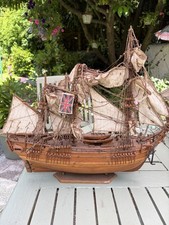
- Maritime models and navigation objects placing whaling within Bequia’s broader seafaring culture.
One particularly striking aspect is that many of these objects are not relics from an abandoned profession. Similar styles of open wooden boats continue to be used in the legally permitted hunt, reinforcing the continuity between museum display and living heritage.[International Whaling Commission]iwc.intInternational Whaling Commission BequiaInternational Whaling Commission Bequia
For readers interested in unusual collections, this makes the museum significant not because it contains rare artefacts alone, but because it preserves practical knowledge that remains embedded within a small community rather than existing only in archives.
How the Traditional Hunt Developed
Bequia’s whaling tradition is often misunderstood as an ancient Indigenous practice. The historical record is more complex.
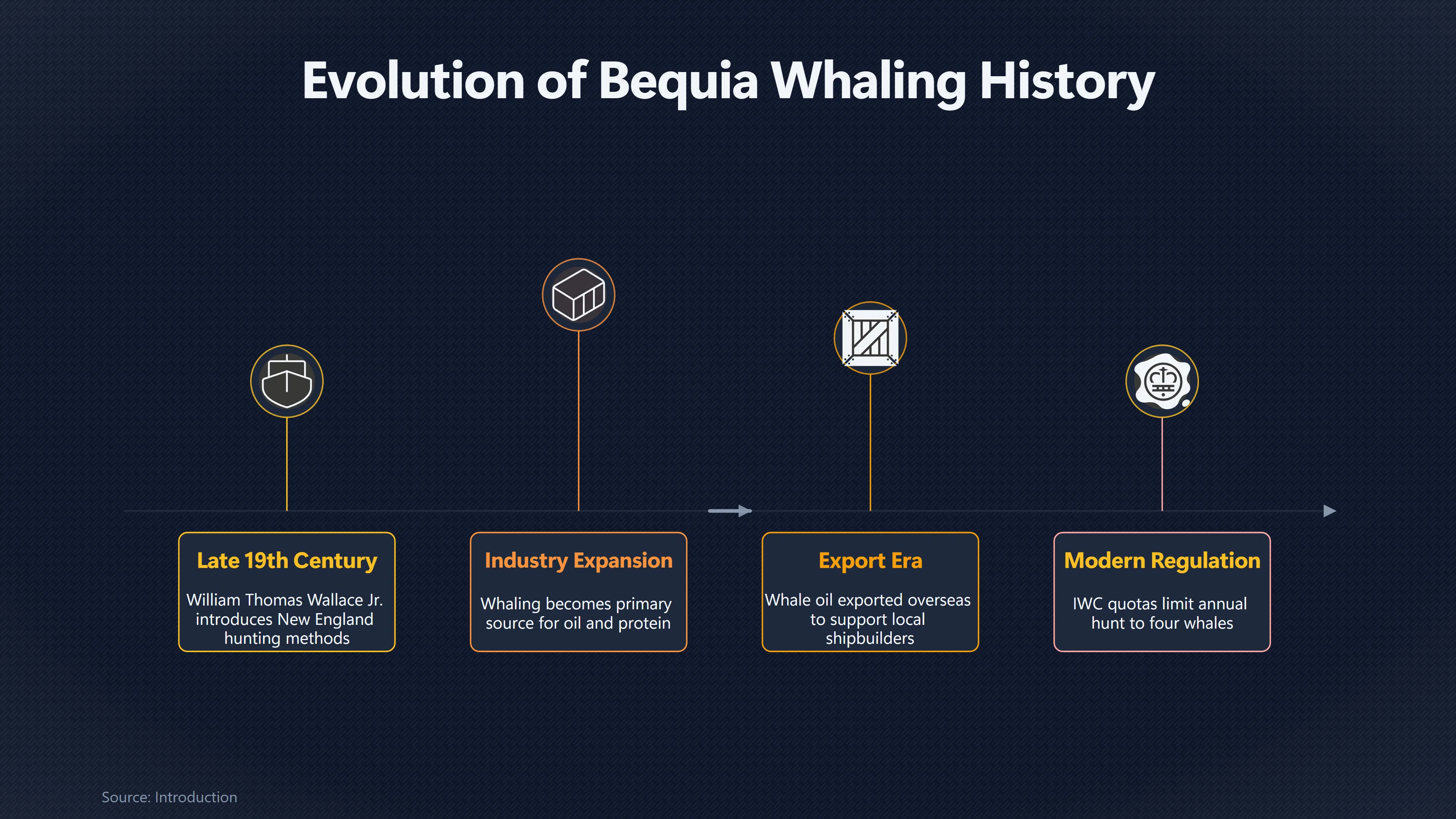
Modern whaling on Bequia developed during the late nineteenth century after William Thomas Wallace Jr., a Scottish sailor with experience aboard New England whaling ships, introduced Yankee-style hunting methods. Following the decline of plantation agriculture, whaling became an important seasonal source of income, oil and protein for island residents. By the end of the nineteenth century the industry had expanded substantially, exporting whale oil overseas while supporting local shipbuilders and mariners.[bequia.travel]bequia.travelHistory & Culture · Whalers, Shipbuilders & the Sea | Bequia.travelBequia History & Culture · Whalers, Shipbuilders & the Sea | Bequia.travel…
Today only a tiny remnant survives. The export trade has disappeared, and the hunt operates under an International Whaling Commission (IWC) quota allowing up to four humpback whales annually under the category of Aboriginal Subsistence Whaling. In practice, weather, the reliance on traditional sailing boats and the difficulty of locating whales mean the full quota is seldom reached.[International Whaling Commission]iwc.intInternational Whaling Commission BequiaInternational Whaling Commission Bequia
This historical evolution explains why Bequia generates debate even within whaling policy circles. Unlike Arctic Indigenous hunts with much older documented origins, Bequia’s tradition dates primarily from the nineteenth century, leading some critics to question whether the IWC’s Aboriginal Subsistence Whaling category is the most appropriate framework. Supporters argue that more than a century of continuous cultural practice has created a distinct local tradition deserving recognition.[bequia.travel]bequia.travelHistory & Culture · Whalers, Shipbuilders & the Sea | Bequia.travelBequia History & Culture · Whalers, Shipbuilders & the Sea | Bequia.travel…

Culture, Conservation and Ethical Dispute
The ethical argument surrounding Bequia rarely centres on legality alone. Instead, it reflects competing values that cannot easily be reconciled.
Supporters emphasise several points:
- The hunt is internationally regulated rather than commercially open.
- Traditional sailing boats and hand-thrown harpoons greatly limit the scale of catches.
- Whale meat is distributed locally rather than exported internationally.
- Boatbuilding, navigation and crew traditions form part of Bequia’s cultural identity.
- The hunt contributes to local food supplies and ceremonial community life.[International Whaling Commission]iwc.intInternational Whaling Commission BequiaInternational Whaling Commission Bequia
Critics focus on different concerns:
- Humpback whales are highly intelligent marine mammals whose hunting raises animal welfare questions regardless of population status.
- Whale watching has become an important economic alternative across the Caribbean, creating incentives for living whales rather than harvested ones.
- Some conservation organisations question whether Bequia’s nineteenth-century origins fit the intent of Aboriginal Subsistence Whaling rules.
- Modern ethical attitudes towards whaling have shifted dramatically since the industry first developed, changing how many visitors interpret the practice.[J-STAGE]jstage.jst.go.jpJ-STAGEWhale Watching: Trouble on the Small Whaling Island of BequiaJ-STAGEWhale Watching: Trouble on the Small Whaling Island of Bequia
Neither side generally disputes that the hunt is extremely small compared with historical commercial whaling. Instead, disagreement centres on whether cultural continuity justifies maintaining even a limited whale hunt in the twenty-first century.
What the International Whaling Commission Actually Regulates
The IWC distinguishes Aboriginal Subsistence Whaling from commercial whaling.[awionline.org]awionline.orgSource details in endnotes.
According to the Commission, Aboriginal Subsistence Whaling exists to support the cultural and nutritional needs of recognised communities while maintaining whale populations at sustainable levels. Quotas are established in multi-year blocks using scientific assessments of whale populations, and governments must provide detailed information about the cultural importance and operation of each hunt. The quota applies to whales struck rather than successfully landed, reflecting a precautionary management approach.[International Whaling Commission]iwc.intInternational Whaling Commission Aboriginal Subsistence Whaling in the ArcticInternational Whaling Commission Aboriginal Subsistence Whaling in the Arctic
For Bequia, the hunt remains subject to reporting requirements and international review. This does not mean that all parties agree with the policy. Instead, the IWC framework represents a negotiated compromise between conservation objectives and recognition of limited traditional hunting practices.[International Whaling Commission]iwc.intInternational Whaling Commission Aboriginal Subsistence Whaling in the ArcticInternational Whaling Commission Aboriginal Subsistence Whaling in the Arctic
Why the Museum Matters Beyond Whaling
The Bequia Heritage Museum ultimately functions as more than a museum about whales. It preserves evidence of a distinctive island society whose survival depended on extraordinary maritime skill.
Its boats demonstrate advanced woodworking traditions developed on a small Caribbean island. Its tools illustrate techniques handed down through generations of builders and sailors. Its photographs document communities whose livelihoods combined fishing, boatbuilding, navigation and seasonal whaling. Even visitors who strongly oppose whaling often acknowledge the importance of preserving these historical records.
That combination of admiration and discomfort is precisely what makes the museum unusual within Saint Vincent and the Grenadines’ landscape of heritage attractions. Rather than presenting a settled historical narrative, it asks visitors to confront a tradition that remains culturally meaningful to some residents while ethically troubling to many outsiders. Few museums preserve objects that are simultaneously historical artefacts, symbols of community identity and reminders of a practice that continues to provoke international debate.
Amazon book picks
Further Reading
Books and field guides related to Why Bequia's Whaling Museum Still Divides Visitors. Use these as the next step if you want deeper reading beyond the article.
In the Heart of the Sea
Tragedy of the Whaleship Essex, 1819. Donated by Paul Davis 2003.
Leviathan: The History of Whaling in America
A Los Angeles Times Best Non-Fiction Book of 2007 A Boston Globe Best Non-Fiction Book of 2007 Amazon.com Editors pick as one of the 10 b...
The Whale: In Search of the Giants of the Sea
A travelogue through the history, literature, and lore of the remarkable mammals that we long have been fascinated with, from Moby-Dick t...
eBay marketplace picks
Marketplace Samples
Live-tested eBay searches with available results related to this page.
Selected fromwooden ship model oneBay.co.uk.
Endnotes
1.
Source: iwc.int
Title: International Whaling Commission Bequia
Link:https://iwc.int/management-and-conservation/whaling/aboriginal/bequia
2.
Source: iwc.int
Title: International Whaling Commission Aboriginal Subsistence Whaling in the Arctic
Link:https://iwc.int/management-and-conservation/whaling/aboriginal
3.
Source: bequia.travel
Title: History & Culture · Whalers, Shipbuilders & the Sea | Bequia.travel
Link:https://bequia.travel/history-culture.html
Source snippet
Bequia History & Culture · Whalers, Shipbuilders & the Sea | Bequia.travel...
4.
Source: jstage.jst.go.jp
Title: J-STAGEWhale Watching: Trouble on the Small Whaling Island of Bequia
Link:https://www.jstage.jst.go.jp/article/jrca/16/0/16_59/_article/-char/en
5.
Source: iwc.int
Title: International Whaling Commission Information on hunts
Link:https://iwc.int/management-and-conservation/whaling/aboriginal/information-on-hunts
6.
Source: iwc.int
Link:https://iwc.int/commission/commission-sub-groups/aboriginal-subsistence-whaling-sub-committee
7.
Source: iwc.int
Link:https://iwc.int/management-and-conservation/whaling
8.
Source: iwc.int
Link:https://iwc.int/management-and-conservation
9.
Source: recommendations.iwc.int
Title: int IW C
Link:https://recommendations.iwc.int/view/6725
10.
Source: recommendations.iwc.int
Title: int IW C
Link:https://recommendations.iwc.int/view/1491
11.
Source: iwc.int
Link:https://iwc.int/commission/history-and-purpose
12.
Source: bequia.travel
Link:https://bequia.travel/things-to-do.html
13.
Source: gregg784.com
Title: Natives of Bequia are allowed to catch up to four humpback whales
Link:https://gregg784.com/2018/02/03/bequia/
Source snippet
BEQUIA | THE GREGG INTERNATIONALFebruary 3, 2018 — WHALING Bequia is one of the few places in the world where limited whaling is still al...
Published: February 3, 2018
14.
Source: jstage.jst.go.jp
Link:https://www.jstage.jst.go.jp/article/jasca/2011/0/2011_0_143/_article/-char/en
15.
Source: jstage.jst.go.jp
Title: jst.go.jp Nihonkai Cetology
Link:https://www.jstage.jst.go.jp/browse/ncetology/10/0/_contents/-char/en
16.
Source: awionline.org
Link:https://awionline.org/content/subsistence-whaling
17.
Source: tripadvisor.ca
Title: Bequia Heritage Museum
Link:https://www.tripadvisor.ca/Attraction_Review-g1938737-d24983494-Reviews-Bequia_Heritage_Museum-Friendship_Bequia_St_Vincent_and_the_Grenadines.html
Additional References
18.
Source: frontiersin.org
Link:https://www.frontiersin.org/journals/marine-science/articles/10.3389/fmars.2021.668597/full
Source snippet
Mar. Sci., 14 April 2021 Sec. Marine Megafauna Volume 8 - 2021 | [https://doi.org/10.3389/fmars.2021.668597](https://doi.org/10.3389/fmars.2021.668597) Published in Frontiers in Mari...
Published: April 2021
19.
Source: islandinthenet.com
Title: Visiting the Bequia Heritage Museum
Link:https://islandinthenet.com/visiting-the-bequia-whaling-museum/
Source snippet
Since 2001 Bequia Heritage Museum, Friendship Bay, Bequia · Thursday 15 May 2025 Apple iPhone 16 Pro · ISO 80 · 1/5000 sec iPhone 16...
Published: May 2025
20.
Source: youtube.com
Link:https://www.youtube.com/watch?v=x_-Mhd7qQW4
Source snippet
Whale Boat Blessing - Persecution ready for the 2026 season...
21.
Source: link.springer.com
Link:https://link.springer.com/article/10.1007/s40152-021-00233-2
Source snippet
colonisation, law, and Indigenous marine dispossession: historical perspectives on the construction and entrenchment of unequal marine go...
22.
Source: youtube.com
Title: Whale Boat Blessing
Link:https://www.youtube.com/watch?v=I6z3FEioNfs
Source snippet
Blows! Blowssss! Bequia Whaling - Island Life...
23.
Source: wcl.org.uk
Link:https://wcl.org.uk/the-case-for-controlled-aboriginal-subsistence-whaling.asp
25.
Source: youtube.com
Link:https://www.youtube.com/watch?v=ZQCYQn9fDKs
Source snippet
Ep. 198 Whale Museum in Bequia...
26.
Source: youtube.com
Title: Ep. 198 Whale Museum in Bequia
Link:https://www.youtube.com/watch?v=Uaa8KRPwAQk
Source snippet
Whale Boat Blessing...Our Heritage, Bequia, St. Vincent and the Grenadines...
27.
Source: youtube.com
Title: Bequia whaling museum
Link:https://www.youtube.com/watch?v=NhBbq2Bx_vM
Source snippet
WHALE HUNTING in Bequia A Deeply Rooted Caribbean Tradition | Sailing Hallberg Rassy 352...