Within Strange France
Why Did French Medicine Put Bodies on Display?
France's anatomical and medical museums reveal why disturbing specimens were preserved as serious tools for teaching and diagnosis.
On this page
- The preserved bodies of the Musee Fragonard
- Wax diseases and clinical teaching at Saint Louis
- How context changes shock into medical history
Page outline Jump by section
Introduction
France’s most unsettling medical museums were never created to shock visitors. They were built because generations of doctors needed a way to study the human body before photography, medical imaging and digital teaching transformed medical education. Preserved bodies, flayed anatomical preparations, wax models of diseased skin and carefully catalogued pathological specimens allowed students to compare real cases, recognise rare conditions and understand anatomy with a level of realism that drawings alone could not provide.

Today these collections can appear disturbing, yet their original purpose changes how they are understood. Rather than celebrating the macabre, France’s surviving medical museums preserve the history of diagnosis, anatomy and clinical teaching. They also illustrate how modern ethical attitudes towards displaying human remains have evolved, making these collections important not only as scientific artefacts but as evidence of changing ideas about medicine, consent and the treatment of the dead.[Hôpital Saint-Louis]hopital-saintlouis.aphp.frHôpital Saint-Louis Le musée des moulages | Hôpital Saint-LouisHôpital Saint-LouisLe musée des moulages | Hôpital Saint-LouisMay 21, 2026…
The preserved bodies of the Musée Fragonard
The Musée Fragonard at the National Veterinary School in Maisons-Alfort is perhaps France’s most famous example of a teaching collection whose exhibits still have the power to surprise modern visitors. Although many people associate it with horror imagery, it originated as part of one of Europe’s oldest veterinary schools, founded in the eighteenth century to educate surgeons and veterinarians through direct observation of anatomy.
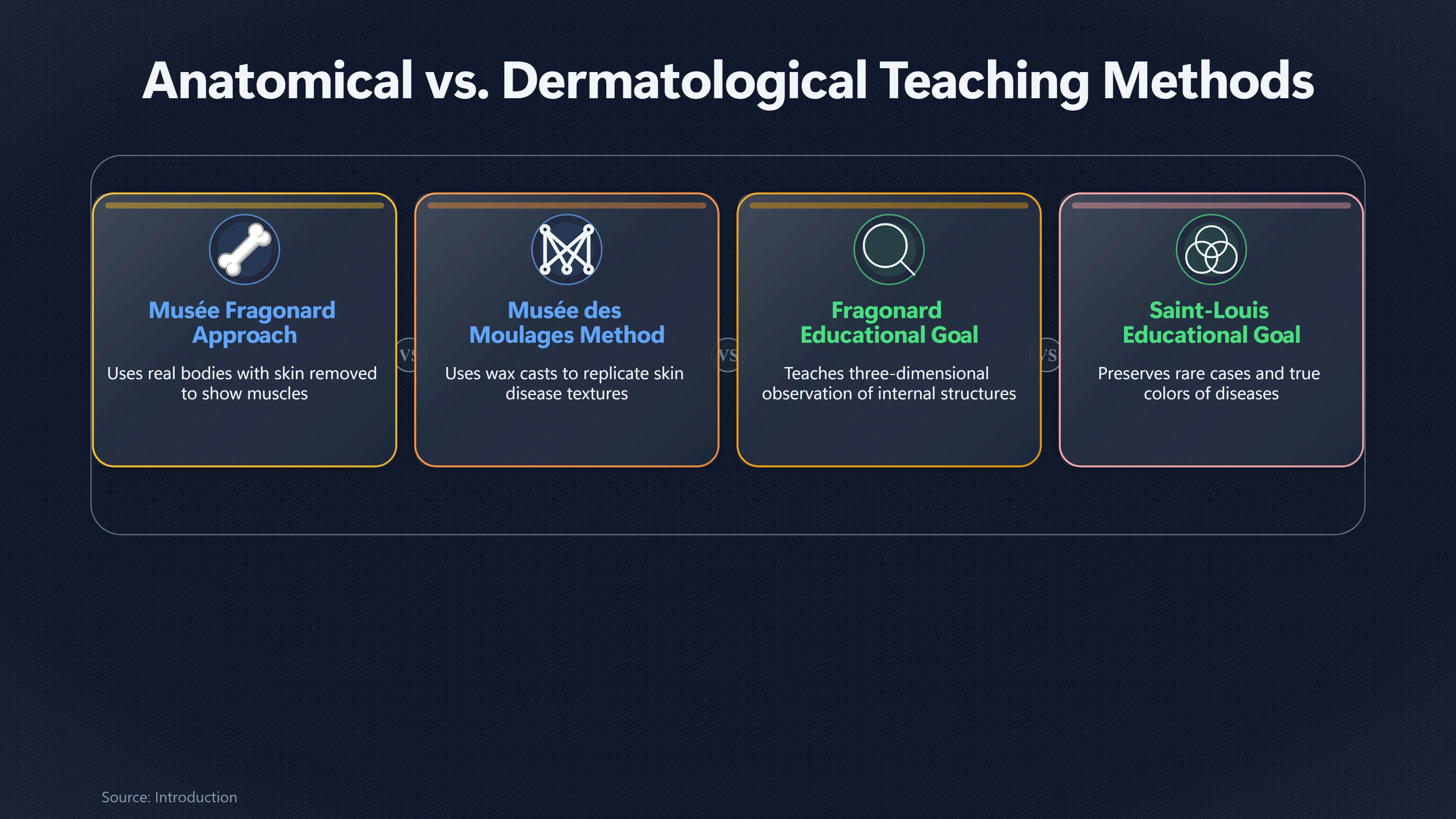
Its most celebrated objects are the écorchés—real bodies whose skin was removed so muscles, tendons and blood vessels could be displayed in lifelike poses. These preparations are associated with Honoré Fragonard, the school’s first professor of anatomy. His techniques remain only partly understood, but they combined careful dissection with preservation methods that allowed the tissues to survive for centuries. The museum regards the mounted figure of a man riding a dissected horse as the only surviving large composition that can confidently be attributed to Fragonard himself, an important distinction because many other anatomical preparations have been linked to him without firm evidence.[Hôpital Saint-Louis]hopital-saintlouis.aphp.frHôpital Saint-Louis Le musée des moulages | Hôpital Saint-LouisHôpital Saint-LouisLe musée des moulages | Hôpital Saint-LouisMay 21, 2026…
What makes these displays unusual is not simply that they contain preserved human remains. They demonstrate an eighteenth-century belief that anatomy could be learned through three-dimensional observation rather than diagrams alone. Every exposed tendon and muscle became part of an educational model intended to reveal how living bodies functioned.
The museum also broadens this approach beyond humans. Comparative anatomy sits alongside veterinary pathology, congenital abnormalities, skeletons and preserved animal organs, encouraging students to compare structures across species. Seen in this context, the famous human figures become one element within a much larger scientific collection rather than isolated curiosities.
Wax diseases and clinical teaching at Saint-Louis
If the Musée Fragonard demonstrates anatomy, the Musée des Moulages at Hôpital Saint-Louis explains how nineteenth-century physicians taught diagnosis before colour photography.
Instead of preserving whole bodies, doctors commissioned extraordinarily realistic wax casts taken directly from patients suffering from skin diseases. These moulages reproduced the exact colour, texture and shape of lesions in three dimensions, giving students an opportunity to study conditions that might otherwise disappear as patients recovered or died.
The collection began in 1867 when dermatologist Charles Lailler asked the modeller Jules Baretta—originally a maker of artificial fruit—to produce accurate wax reproductions of skin disorders. The resulting models proved so useful that Baretta abandoned his previous trade and spent decades creating thousands of medical moulages. Today the museum preserves nearly 5,000 examples, making it one of the world’s largest surviving dermatological wax collections.[Hôpital Saint-Louis]hopital-saintlouis.aphp.frHôpital Saint-Louis Le musée des moulages | Hôpital Saint-LouisHôpital Saint-LouisLe musée des moulages | Hôpital Saint-LouisMay 21, 2026…
These wax models solved several practical problems:
- They preserved rare cases long after patients had left hospital.
- They showed true colour, something black-and-white photography could not capture.
- They standardised teaching, allowing every student to examine the same condition closely.
- They supported international medicine, since visiting physicians could compare diseases without relying solely on written descriptions.
The museum building itself reflected this educational mission. Opened in 1889 alongside the first International Congress of Dermatology, it combined consultation rooms, a teaching library, conference facilities and the wax collection into a single institute devoted to dermatological education. The arrangement demonstrated that the moulages were not museum pieces in the modern sense but working teaching tools integrated into everyday clinical practice.[Hôpital Saint-Louis]hopital-saintlouis.aphp.frHôpital Saint-Louis Histoire du Musée des Moulages | Hôpital Saint-LouisHôpital Saint-Louis Histoire du Musée des Moulages | Hôpital Saint-Louis
Why preserve bodies instead of relying on books?
Modern readers often assume anatomical collections existed because medicine lacked ethical standards. The historical reality is more practical.
Before X-rays, MRI scans and high-resolution medical photography, physicians had limited ways to record complex diseases. Printed illustrations depended heavily on an artist’s interpretation, while many pathological conditions changed rapidly over time.
Teaching collections addressed these limitations in different ways:
- Anatomical preparations revealed internal structures impossible to understand from flat illustrations.
- Preserved organs allowed repeated study by successive generations of students.
- Wax moulages captured the appearance of diseases with remarkable fidelity.
- Large collections enabled comparison between common and extremely rare conditions.
In effect, these museums functioned as three-dimensional medical textbooks assembled over decades or even centuries.
How context changes shock into medical history
Visitors frequently describe these collections as disturbing on first encounter, particularly the flayed human figures at the Musée Fragonard or the vivid dermatological waxes at Saint-Louis. Yet the historical context fundamentally alters their meaning.
Unlike commercial exhibitions built around spectacle, French medical collections were organised according to scientific principles. Objects were classified by anatomy or pathology, accompanied by teaching materials and intended to answer clinical questions rather than provoke emotional reactions. Even the arrangement of the Saint-Louis wax models alphabetically by disease reflected educational priorities, making the collection easier for students to navigate regardless of their level of medical training.[Hôpital Saint-Louis]hopital-saintlouis.aphp.frHôpital Saint-Louis Histoire du Musée des Moulages | Hôpital Saint-LouisHôpital Saint-Louis Histoire du Musée des Moulages | Hôpital Saint-Louis
The experience also illustrates changing museum ethics. Nineteenth-century physicians generally referred to preserved remains as specimens or preparations, emphasising their scientific value. Contemporary curators increasingly seek to restore the humanity of the individuals behind these collections, acknowledging that many historical specimens were stripped of personal identity. Recent debates in France have focused on documentation, provenance, respectful interpretation and, where appropriate, restitution or rehumanisation of human remains held in scientific collections.[Le Monde.fr]lemonde.frIt opens with the Paris Catacombs’ recent restoration, emphasizing a shift from spectacle to a respectful memory space, where the presenc…
Rather than diminishing their historical importance, these ethical discussions have added another layer of interpretation. Visitors are encouraged to consider not only what the collections taught doctors in the past, but also how medicine itself has changed in its understanding of consent, dignity and the display of the human body.
Why these collections matter within France’s curiosity culture
France’s medical museums occupy a distinctive place among the country’s unusual collections because they were never intended as cabinets of horror. Their strangeness comes from preserving scientific practices that once represented the cutting edge of medical education.
The Musée Fragonard shows how anatomy became visible through preserved bodies, while the Musée des Moulages demonstrates how disease itself could be transformed into durable teaching material. Together they reveal a period when the body was treated as a physical archive of medical knowledge, carefully collected so future doctors could learn from it.
For visitors interested in France’s stranger museums, these institutions stand apart from folklore attractions, curiosity cabinets or theatrical displays. Their unsettling appearance is inseparable from a serious educational purpose, reminding us that many of history’s most extraordinary museum objects were created not to entertain, but to teach.
Amazon book picks
Further Reading
Books and field guides related to Why Did French Medicine Put Bodies on Display?. Use these as the next step if you want deeper reading beyond the article.
The Sick Rose: Or, Disease and the Art of Medical Illustration
The Sick Rose is a beautifully gruesome and strangely fascinating visual tour through disease in an age before colour photography. This s...
The Ghost Map: The Story of London's Most Terrifying Epidemic...
Rating: 4.0/5 from 11 Google Books ratings
A thrilling historical account of the worst cholera outbreak in Victorian London--and a brilliant exploration of how Dr. John Snow's solu...
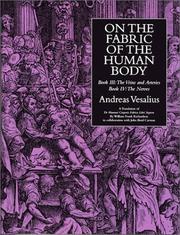
On the fabric of the human body
First published 2003. Subjects: Anatomy, Early works to 1800, Neuroanatomy, Blood-vessels, Blood Vessels.
The Body in the Library: A History of Medical Museums
First published 2013. Subjects: Medical museums, Museums, Health and Wellbeing.
eBay marketplace picks
Marketplace Samples
Live-tested eBay searches with available results related to this page.
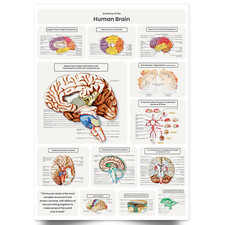
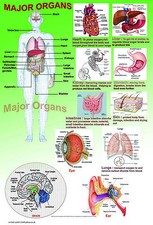
Selected frommedical poster oneBay.co.uk.
Endnotes
1.
Source: hopital-saintlouis.aphp.fr
Title: Hôpital Saint-Louis Le musée des moulages | Hôpital Saint-Louis
Link:https://hopital-saintlouis.aphp.fr/le-musee-des-moulages-de-lhopital-de-saint-louis
Source snippet
Hôpital Saint-LouisLe musée des moulages | Hôpital Saint-LouisMay 21, 2026...
Published: May 21, 2026
2.
Source: lemonde.fr
Link:https://www.lemonde.fr/en/science/article/2026/04/08/in-catacombs-museums-and-labs-the-delicate-heritage-of-human-remains_6752206_10.html
Source snippet
It opens with the [Paris Catacombs]({{ 'paris-catacombs/' | relative_url }})’ recent restoration, emphasizing a shift from spectacle to a respectful memory space, where the presenc...
3.
Source: hopital-saintlouis.aphp.fr
Title: Hôpital Saint-Louis Histoire du Musée des Moulages | Hôpital Saint-Louis
Link:https://hopital-saintlouis.aphp.fr/histoire-du-musee-des-moulages
4.
Source: archives.aphp.fr
Title: fr Petite histoire du Musée des moulages de l’hôpital Saint-Louis
Link:https://archives.aphp.fr/petite-histoire-du-musee-des-moulages/
5.
Source: hopital-saintlouis.aphp.fr
Link:https://hopital-saintlouis.aphp.fr/actualites/retour-sur-lexposition-de-sophie-delpeux-et-marc-bauer-au-musee-des-moulages
6.
Source: hopital-saintlouis.aphp.fr
Link:https://hopital-saintlouis.aphp.fr/journees-europeennes-du-patrimoine-a-lhopital-saint-louis/
7.
Source: lejournaldesarts.fr
Title: Musée des moulages
Link:https://www.lejournaldesarts.fr/lieu/musee-des-moulages-hopital-saint-louis-8637
Additional References
8.
Source: numerabilis.u-paris.fr
Link:https://numerabilis.u-paris.fr/partenaires/sfhd/musee/videoguide/
Source snippet
u-paris.frMusée des moulages de l'Hôpital Saint-Louis et Bibliothèque Henri-Feulard: Vidéo-guide - SFHDMarch 2, 2020 — MUSÉE DES MOULAGE...
Published: March 2, 2020
9.
Source: paris.fr
Title: Les curiosités de la médecine à Paris
Link:https://www.paris.fr/pages/les-curiosites-de-la-medecine-a-paris-18770
Source snippet
Ville de ParisOctober 5, 2021 — LES CURIOSITÉS DE LA MÉDECINE À PARIS Découvrir Mise à jour le 05/10/2021 Image: Oeuvre de Nathalie Latou...
Published: October 5, 2021
10.
Source: ucl.ac.uk
Title: About the UCL Pathology Museum | Museums and Collections
Link:https://www.ucl.ac.uk/museums-collections/ucl-pathology-museum/about-ucl-pathology-museum
Source snippet
We use the collection to facilitate teaching, research and public engagement in human health and disease...
11.
Source: youtube.com
Title: Le plus vieux musée de France, le musée Fragonard
Link:http://www.youtube.com/watch?v=Hz-4askRaGI
Source snippet
Apprendre autrement en Val-de-Marne - Episode 10 - Le Musée Fragonard de Maisons-Alfort...
12.
Source: journals.sagepub.com
Link:https://journals.sagepub.com/doi/10.1177/1357034X211036488
Source snippet
Made by Contagion: On Dermatological Wax Moulages - Mechthild Fend, 2022January 17, 2022 — First published online January 17, 2022 IMAGES...
Published: January 17, 2022
13.
Source: pop.culture.gouv.fr
Link:https://pop.culture.gouv.fr/notice/joconde/M5064007341
Source snippet
October 8, 2021 — Notice joconde M5064007341 Image Référence de la notice M5064007341 Nom de la base Collections des musées de France (Jo...
Published: October 8, 2021
14.
Source: go-expo.fr
Link:https://go-expo.fr/expo/collection-permanente-musee-des-moulages
15.
Source: umontpellier.fr
Link:https://www.umontpellier.fr/universite/patrimoine/musees/musee-danatomie
16.
Source: visitparisregion.com
Link:https://www.visitparisregion.com/en/fragonard-museum
17.
Source: vet-alfort.fr
Link:https://www.vet-alfort.fr/domaine-d-alfort/musee-fragonard/les-collections/les-ecorches-de-fragonard