Within Strange Bahrain
Why Bahrain's Strangest Museum Is Full of Graves
Reconstructed tombs and vast mound fields turn Bahrain's Bronze Age dead into its most powerful and unusual public heritage experience.
On this page
- Inside the Hall of Dilmun Graves
- How the burial mound landscape changed Bahrain
- What archaeology can and cannot reveal
Page outline Jump by section
Introduction
Bahrain’s strangest public heritage experience is not a haunted house or a cabinet of curiosities but an immense landscape of prehistoric graves. Across the island, thousands of low earthen mounds mark the resting places of people who lived during the Early Dilmun civilisation roughly 4,000 years ago. Inside the Bahrain National Museum, reconstructed tombs allow visitors to step inside burial chambers that would otherwise appear as little more than rounded humps in the landscape. Together, the museum displays and the surviving mound fields transform an apparently ordinary desert setting into one of the world’s most remarkable archaeological funerary landscapes. UNESCO recognised this significance by inscribing the Dilmun Burial Mounds as a World Heritage Site in 2019, citing both their extraordinary scale and what they reveal about the social organisation of Bronze Age Bahrain.[UNESCO World Heritage Centre]whc.unesco.orgWorld Heritage Centre UNESCO World Heritage CentreUNESCO World Heritage CentreUNESCO World Heritage Centre - Decision - 43 COM 8B.12…
Rather than promising mystery for its own sake, Bahrain’s burial landscape invites a different kind of curiosity. The fascination lies in how archaeologists reconstruct the lives of a civilisation that left relatively few settlements but an astonishing number of graves.
Inside the Hall of Dilmun Graves
The Bahrain National Museum provides the easiest way to understand what makes the burial mounds so distinctive. Instead of expecting visitors to interpret low, weathered mounds scattered across modern neighbourhoods, the Hall of Dilmun Graves reconstructs tomb architecture at full scale and explains how the monuments were built and used. Visitors can examine burial chambers, stone construction techniques and grave layouts that would normally remain hidden beneath layers of earth.[Bahrain]bahrain.comNational Museum | Bahrain Tourism2 days agoBahrain National Museum | Bahrain Tourism2 days ago…
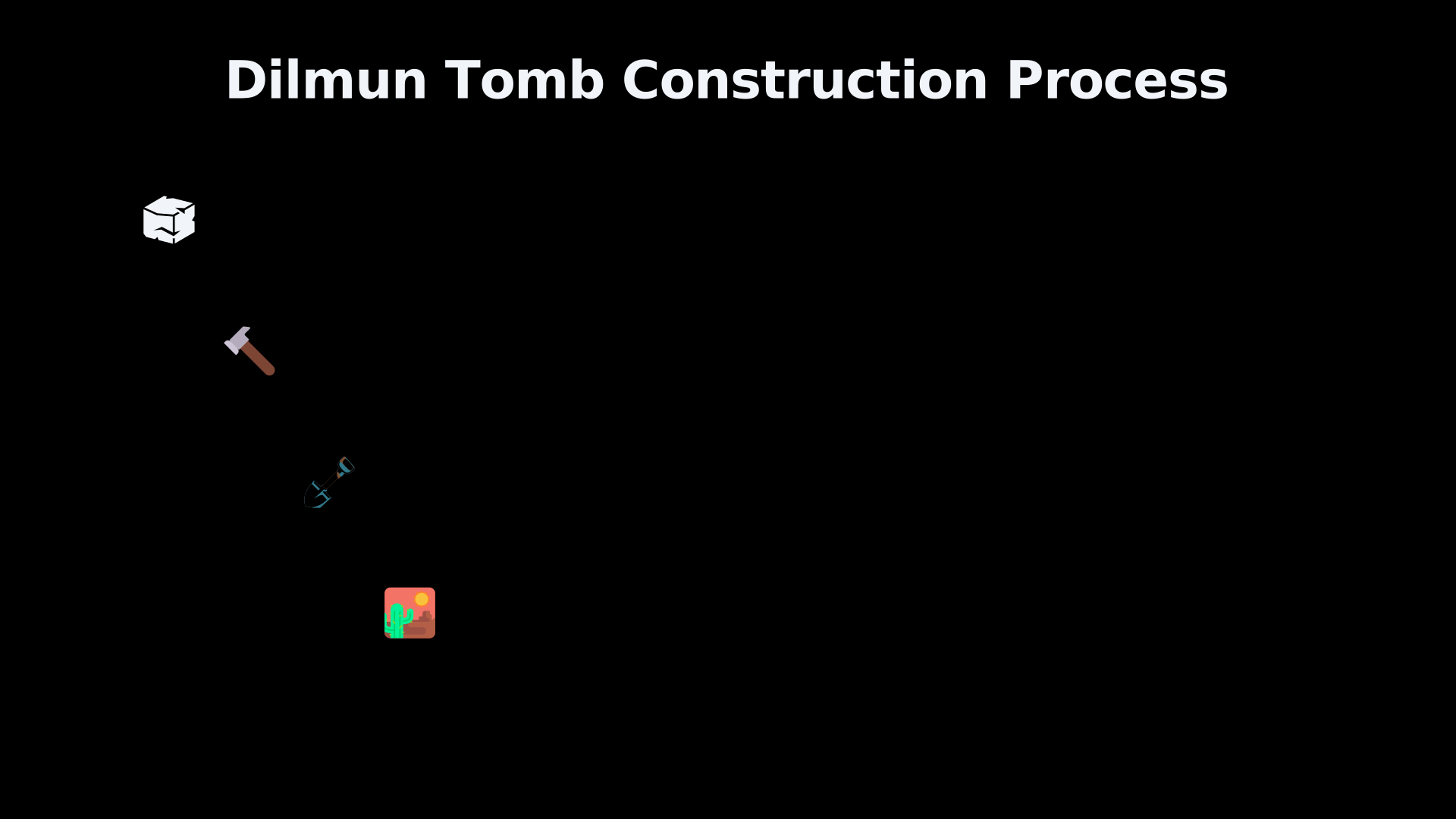
The reconstructed tombs also solve one of the biggest challenges of visiting the archaeological sites themselves. Seen from outside, many mounds resemble natural rises in the ground. Once the internal structure is revealed, however, they become carefully engineered monuments. Archaeological excavations show that many graves were originally constructed as stone-built towers before being covered by earth and gravel, creating the rounded forms visible today. Some chambers include alcoves built into the walls, a feature that helps distinguish Dilmun burial architecture from other Bronze Age traditions.[UNESCO World Heritage Centre]whc.unesco.orgWorld Heritage Centre UNESCO World Heritage CentreUNESCO World Heritage CentreUNESCO World Heritage Centre - Decision - 43 COM 8B.12…
Museum interpretation deliberately avoids presenting the tombs as supernatural or mysterious. Instead, it focuses on burial practices, construction methods, grave goods and changing social status. Pottery, seals and personal objects recovered from excavations are displayed not as treasure but as evidence for everyday life, trade and ritual.
How the burial-mound landscape changed Bahrain
What makes Bahrain exceptional is not simply the existence of ancient tombs but their sheer concentration. The UNESCO World Heritage property consists of 21 archaeological components. Six are vast burial fields containing anywhere from dozens to several thousand mounds, while the remaining components include the imposing royal burial mounds at A’ali, which still rise prominently above the surrounding urban landscape. Together, the protected property includes around 11,774 surviving burial mounds.[UNESCO World Heritage Centre]whc.unesco.orgWorld Heritage Centre UNESCO World Heritage CentreUNESCO World Heritage CentreUNESCO World Heritage Centre - Decision - 43 COM 8B.12…
These surviving monuments represent only part of the original cemetery landscape. Before twentieth-century urban expansion, archaeologists estimate that Bahrain once contained many more burial mounds spread across large areas of the island. Modern housing, roads and development have inevitably reduced their number, making the protected fields especially valuable as representative examples of what was once an even more extensive funerary landscape.[Bahrain]bahrain.comNational Museum | Bahrain Tourism2 days agoBahrain National Museum | Bahrain Tourism2 days ago…
Unlike famous royal cemeteries elsewhere, the Dilmun burial fields contain graves belonging to many different social groups. Archaeologists interpret this as evidence that prosperous Bronze Age Bahrain developed a burial tradition extending well beyond a tiny ruling elite. The variation in mound size—from modest graves to monumental royal tombs—also illustrates increasing social differentiation within Dilmun society as the island prospered through regional trade linking Mesopotamia, the Arabian Gulf and the Indus region.[UNESCO World Heritage Centre]whc.unesco.orgWorld Heritage Centre UNESCO World Heritage CentreUNESCO World Heritage CentreUNESCO World Heritage Centre - Decision - 43 COM 8B.12…
Perhaps the most striking aspect for modern visitors is how closely ancient and modern Bahrain now coexist. Large mound fields survive beside residential districts, while the royal mounds stand within today’s village of A’ali. Rather than existing inside an isolated archaeological park, the ancient cemeteries remain woven into the island’s living landscape.
What archaeology can and cannot reveal
The burial mounds preserve remarkable physical evidence, but they do not answer every question about Dilmun belief.
Archaeologists can identify:
- how tombs were constructed and modified;
- how bodies were positioned within burial chambers;
- differences between ordinary graves, elite tombs and royal monuments;
- grave goods placed alongside the dead;
- changing construction styles over several centuries.[Culture Bahrain]culture.gov.bhCulture BahrainBahrain Authority for Culture and Antiquities - Kingdom of Bahrain | Typology of Dilmun Burial Mounds…
What remains uncertain is the precise religious meaning behind every practice. Objects buried with the deceased may suggest beliefs about status, memory or an afterlife, but they cannot provide a complete account of Dilmun religion. Because written evidence from Bahrain itself is limited, interpretations rely on excavated material, comparisons with neighbouring cultures and cautious archaeological reasoning rather than certainty.
This distinction matters. Popular accounts sometimes treat the burial mounds as enigmatic relics of a “lost civilisation”, yet their real importance comes from careful excavation rather than speculation. The monuments are unusual because they preserve thousands of individual stories within a single archaeological landscape, not because they support sensational theories.
A rare archaeological landscape on a global scale
Many countries preserve spectacular tombs belonging to kings or famous rulers. Bahrain’s contribution is different. Its importance lies in preserving an entire funerary landscape that documents the lives of a broad population over centuries.
UNESCO considered the site globally significant because of several combined characteristics:
- one of the world’s densest surviving concentrations of Bronze Age burial mounds;[whc.unesco.org]whc.unesco.orgWorld Heritage Centre Dilmun Burial MoundsUNESCO World Heritage CentreDilmun Burial Mounds - UNESCO World Heritage Centre…
- exceptional preservation of different mound types and social hierarchies;
- rare evidence for a civilisation whose settlements are comparatively less visible;
- a direct connection between Bahrain’s prosperity as a Bronze Age trading centre and the development of large communal cemeteries.[UNESCO World Heritage Centre]whc.unesco.orgWorld Heritage Centre UNESCO World Heritage CentreUNESCO World Heritage CentreUNESCO World Heritage Centre - Decision - 43 COM 8B.12…
For readers interested in unusual heritage rather than conventional museums, the Dilmun Graves stand apart because they blur the boundary between exhibition and landscape. The museum reconstruction explains the graves from the inside, while the surviving mound fields reveal their astonishing scale. Together they create one of Bahrain’s most distinctive encounters with death, archaeology and deep history—an experience rooted not in legend but in one of the richest prehistoric burial landscapes ever preserved.
Amazon book picks
Further Reading
Books and field guides related to Why Bahrain's Strangest Museum Is Full of Graves. Use these as the next step if you want deeper reading beyond the article.
Looking for Dilmun
The quest for the real Dilmun, the lost civilisation of Arabia, began when the author Geoffrey Bibby revisited Bahrain in order to explor...
Bahrain Through The Ages - the Archaeology
Introduction, Shoreline changes in Bahrain since the beginning of human Occupation, Variation in holocene land use patterns on the Bahrai...
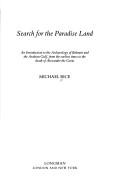
Search for the Paradise Land: An Introduction to the Archaeol...
First published 1985. Subjects: Excavations (Archaeology), Antiquities, Fouilles (Archéologie), Antiquités, Archeologie.
eBay marketplace picks
Marketplace Samples
Live-tested eBay searches with available results related to this page.
Selected fromarchaeology wall art oneBay.co.uk.
Endnotes
1.
Source: whc.unesco.org
Title: World Heritage Centre UNESCO World Heritage Centre
Link:https://whc.unesco.org/en/decisions/7369
Source snippet
UNESCO World Heritage CentreUNESCO World Heritage Centre - Decision - 43 COM 8B.12...
2.
Source: bahrain.com
Title: National Museum | Bahrain Tourism2 days ago
Link:https://www.bahrain.com/en/bahrain-national-museum
Source snippet
Bahrain National Museum | Bahrain Tourism2 days ago...
3.
Source: whc.unesco.org
Title: World Heritage Centre Dilmun Burial Mounds
Link:https://whc.unesco.org/en/list/1542/
Source snippet
UNESCO World Heritage CentreDilmun Burial Mounds - UNESCO World Heritage Centre...
4.
Source: whc.unesco.org
Link:https://whc.unesco.org/en/list/1542/documents/
5.
Source: youtube.com
Title: Ancient Burial Mounds in Bahrain
Link:https://www.youtube.com/watch?v=D8ix-vb5wWY
Source snippet
The Hall of Dilmun Graves | Bahrain History...
6.
Source: youtube.com
Title: The Hall of Dilmun Graves | Bahrain History
Link:https://www.youtube.com/watch?v=IbcE-a_3ZXY
Source snippet
THE RELIGIOUS BELIEF & BURIAL MOUNDS in DILMUN CIVILIZATION Part 2...
7.
Source: culture.gov.bh
Link:https://www.culture.gov.bh/en/authority/cultural_sites/BahrainNationalMuseum/HallofDilmun/
Source snippet
Culture BahrainBahrain Authority for Culture and Antiquities - Kingdom of Bahrain | Hall of Dilmun...
8.
Source: culture.gov.bh
Link:https://culture.gov.bh/en/authority/CulturalHighlights/DBM/TypologyofDilmunBurialMounds/
Source snippet
Culture BahrainBahrain Authority for Culture and Antiquities - Kingdom of Bahrain | Typology of Dilmun Burial Mounds...
9.
Source: culture.gov.bh
Link:https://culture.gov.bh/en/authority/CulturalHighlights/DBM/Descriptionandsignificanceoftheproperty/
Source snippet
Culture BahrainBahrain Authority for Culture and Antiquities - Kingdom of Bahrain | Description and significance of the property...
10.
Source: culture.gov.bh
Title: After almost
Link:https://culture.gov.bh/en/authority/cultural_sites/BahrainNationalMuseum/HallofDilmunGraves/
Source snippet
Bahrain Authority for Culture and Antiquities - Kingdom of Bahrain | Hall of Dilmun GravesJune 26, 2018 — THE HALL OF DILMUN GRAVES The r...
Published: June 26, 2018
11.
Source: culture.gov.bh
Title: Bahrain Authority for Culture and Antiquities
Link:https://www.culture.gov.bh/en/authority/CulturalHighlights/DBM/
12.
Source: culture.gov.bh
Title: Bahrain Authority for Culture and Antiquities
Link:https://www.culture.gov.bh/en/visitingbahrain/CulturalTourism/Destinations/Name%2C19548%2Cen.php
13.
Source: culture.gov.bh
Title: Bahrain Authority for Culture and Antiquities
Link:https://culture.gov.bh/en/visitingbahrain/CulturalTourism/Destinations/Name%2C19542%2Cen.php
14.
Source: culture.gov.bh
Title: Bahrain Authority for Culture and Antiquities
Link:https://www.culture.gov.bh/en/visitingbahrain/CulturalTourism/Destinations/Name%2C19550%2Cen.php
Additional References
15.
Source: youtube.com
Title: Discover Dilmun Burial Mounds, Bahrain
Link:https://www.youtube.com/watch?v=GkX6mkgCpak
Source snippet
Historic City of Dilmun in Bahrain...