Within Strange Brazil
When Does a Psychiatric Archive Become Art?
Brazil's psychiatric collections preserve treatment equipment, testimony and visionary art without reducing patients to medical curiosities.
On this page
- Barbacena and the memory of institutional abuse
- Nise da Silveira and images from the unconscious
- Art, diagnosis and the ethics of display
Page outline Jump by section
Introduction
Brazils most thought-provoking strange museums are not places that sensationalise mental illness. Instead, they ask a difficult question: what should happen to the material legacy of psychiatric institutions once society rejects the systems that created them? Across Brazil, former asylums, therapeutic workshops and specialist museums preserve hospital equipment, patient records, artworks and personal testimony. Together they form a distinctive landscape where institutional memory, human rights and outsider art intersect.
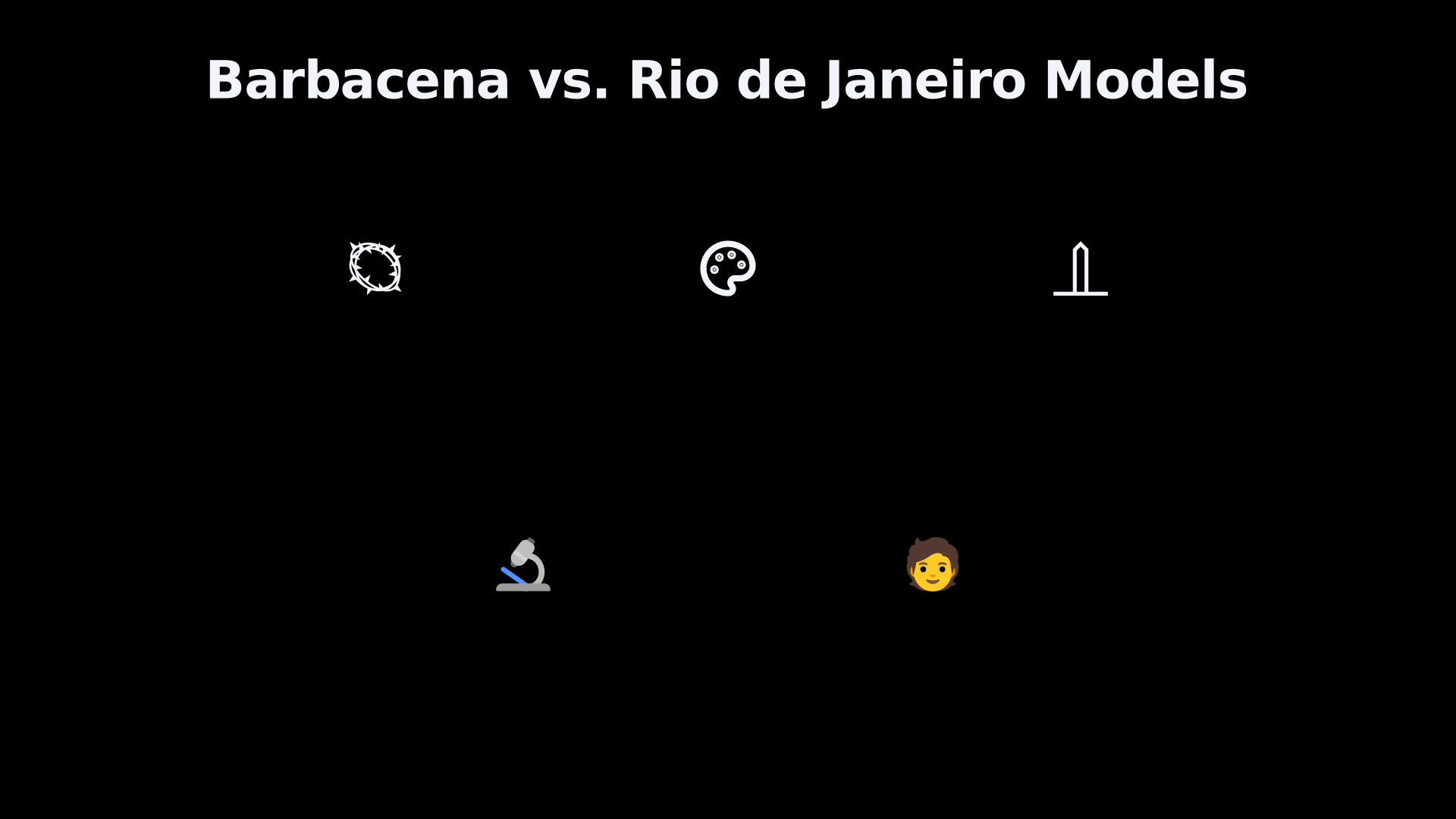
The country’s most significant examples revolve around two complementary stories. In Barbacena, the former Hospital Colnia has become a museum and memorial confronting one of the darkest chapters in Brazilian psychiatric history. In Rio de Janeiro, the pioneering work of psychiatrist Nise da Silveira transformed hospital art studios into the Museu de Imagens do Inconsciente, where creative work made by patients is treated not as pathology but as artistic and psychological expression. These institutions challenge visitors to reconsider where the boundary lies between archive, museum, clinic and gallery.[museuimagensdoinconsciente.org.br]museuimagensdoinconsciente.org.brMuseu de Imagens do Inconsciente The MuseumMuseu de Imagens do InconscienteThe Museum - Museu de Imagens do Inconsciente…
When Does a Psychiatric Archive Become Art?
Psychiatric collections occupy an unusual position within Brazil’s museum landscape because they preserve objects created under conditions of confinement while simultaneously questioning the institutions that confined people. Unlike cabinets of medical curiosities or anatomical museums, these collections are increasingly organised around dignity, memory and critical reflection rather than spectacle.
This creates an ethical tension that shapes every exhibition. Hospital furniture, medical instruments and admission records document systems of diagnosis and control. Paintings, embroidery, sculpture and handwritten notebooks created by patients reveal individual lives that cannot be reduced to clinical files. Modern curators increasingly present these materials together to show how institutions classified people while those same individuals continued to create complex artistic worlds.
Rather than treating psychiatric patients as curiosities, Brazil’s leading collections encourage visitors to ask different questions: Who created this work? Under what circumstances? Was it originally regarded as medical evidence, therapy or art? How should it be interpreted today? These questions place psychiatric museums within broader debates about difficult heritage, human rights and institutional accountability rather than simply the history of medicine.[Museu de Imagens do Inconsciente]museuimagensdoinconsciente.org.brMuseu de Imagens do Inconsciente The MuseumMuseu de Imagens do InconscienteThe Museum - Museu de Imagens do Inconsciente…
Barbacena and the Memory of Institutional Abuse
The Museu da Loucura in Barbacena, Minas Gerais, occupies part of the former Hospital Colnia, one of Brazil’s most infamous psychiatric institutions. Opened in 1996 as part of the “Memria Viva” project, it was conceived not to celebrate the hospital but to preserve evidence of its history while supporting public discussion about psychiatric reform.[cadastro.museus.gov.br]cadastro.museus.gov.brMuseu da Loucura Barbacena Museus BrMuseu da Loucura Barbacena Museus Br
Hospital Colnia has become internationally known because historians and journalists documented decades of overcrowding, neglect and abuse there. Large numbers of patients were admitted for reasons that extended well beyond severe psychiatric illness, including poverty, disability, alcoholism, social exclusion and family rejection. Estimates that around 60,000 people died at the institution have become central to discussions of Brazilian psychiatric history, although researchers continue to examine the circumstances and documentation surrounding individual cases.[abcmc.org.br]abcmc.org.brABCM C MUSEU DA LOUCURAABCM C MUSEU DA LOUCURA
Visitors encounter original medical equipment, photographs, documents, furniture and surgical instruments. Yet the museum’s purpose is not to display shocking objects for their own sake. The collection is organised as a memorial that places those artefacts within the history of psychiatric care, anti-asylum activism and changing ideas about patients’ rights. The physical setting itselfthe surviving hospital buildingsforms part of the interpretation, making the site an example of what heritage specialists often describe as “difficult” or “dark” heritage: places where preservation exists primarily to encourage reflection rather than nostalgia.[abcmc.org.br]abcmc.org.brABCM C MUSEU DA LOUCURAABCM C MUSEU DA LOUCURA
The museum therefore occupies an unusual place within Brazil’s curiosity culture. It preserves material that many visitors initially find unsettling, but the intended emotional response is not fascination with madness. Instead, it is recognition of institutional responsibility and the human consequences of policies once regarded as ordinary psychiatric practice.
Nise da Silveira and Images from the Unconscious
If Barbacena represents the memory of institutional failure, Rio de Janeiro’s Museu de Imagens do Inconsciente represents an alternative vision of psychiatric care.
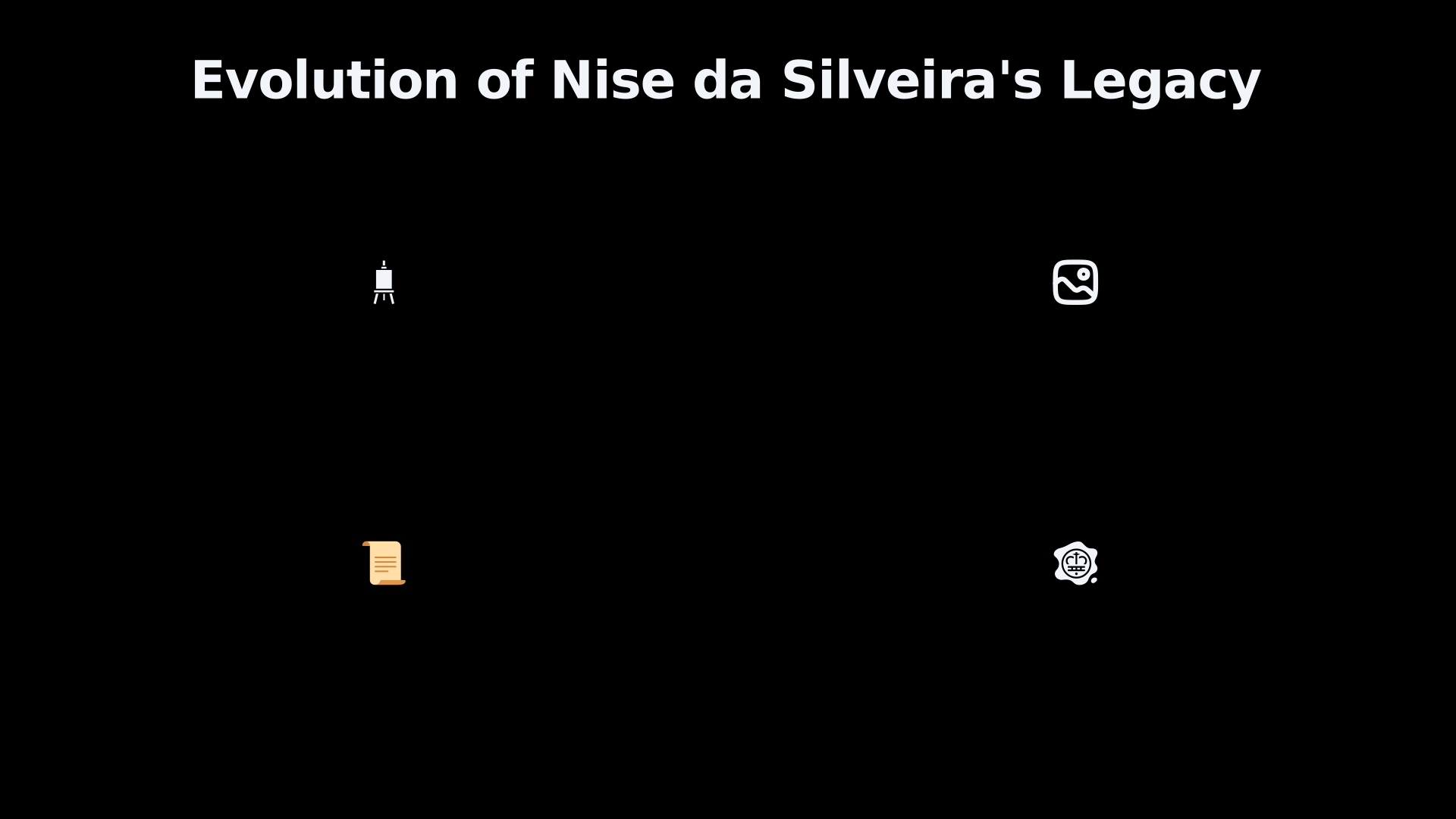
Psychiatrist Nise da Silveira rejected many of the invasive treatments widely used during the 1940s, including electroshock therapy and lobotomy. Instead she established occupational therapy studios in which patients could paint, sculpt and model clay freely. Rather than interpreting these works simply as symptoms, she considered them valuable expressions of inner psychological experience deserving sustained study.[Museu de Imagens do Inconsciente]museuimagensdoinconsciente.org.brMuseu de Imagens do Inconsciente Nise da SilveiraMuseu de Imagens do InconscienteNise da Silveira - Museu de Imagens do Inconsciente…
The resulting museum, founded in 1952, remains both a public museum and an active research centre. Its therapeutic studios continue to operate while the collection has grown into one of the world’s largest archives of patient-created art, containing hundreds of thousands of paintings, sculptures, writings and other works. The museum explicitly describes itself as a living institution where ongoing creative production continues alongside conservation, research and public exhibitions.[Museu de Imagens do Inconsciente]museuimagensdoinconsciente.org.brMuseu de Imagens do Inconsciente The MuseumMuseu de Imagens do InconscienteThe Museum - Museu de Imagens do Inconsciente…
Nise drew heavily on the analytical psychology of Carl Jung, believing recurring symbols and visual motifs could illuminate unconscious processes without reducing individuals to diagnostic categories. Although some aspects of Jungian interpretation remain debated within contemporary psychiatry, her broader commitment to humane treatment profoundly influenced Brazilian mental health reform and reshaped international perceptions of art created in psychiatric settings.[Museu de Imagens do Inconsciente]museuimagensdoinconsciente.org.brMuseu de Imagens do Inconsciente Nise da SilveiraMuseu de Imagens do InconscienteNise da Silveira - Museu de Imagens do Inconsciente…
Recognition has extended beyond psychiatry. The museum’s collections have received Brazilian heritage protection, while Nise da Silveira’s personal archive has been inscribed on UNESCO’s Memory of the World International Register, reflecting its significance for both cultural history and the history of medicine.[Museu de Imagens do Inconsciente]museuimagensdoinconsciente.org.brMuseu de Imagens do Inconsciente The MuseumMuseu de Imagens do InconscienteThe Museum - Museu de Imagens do Inconsciente…
From Clinical Records to Recognised Artists
One of the most distinctive features of Brazil’s psychiatric collections is that many creators are now recognised as artists in their own right rather than anonymous patients.
Works by figures such as Emygdio de Barros, Adelina Gomes, Fernando Diniz and Arthur Bispo do Rosrio have been exhibited in museums and galleries well beyond psychiatric contexts. Their careers illustrate a profound shift in interpretation. Pieces once retained primarily as therapeutic documents have increasingly been evaluated for their artistic innovation, symbolic richness and contribution to Brazilian visual culture.[Museu de Imagens do Inconsciente]museuimagensdoinconsciente.org.brMuseu de Imagens do Inconsciente The MuseumMuseu de Imagens do InconscienteThe Museum - Museu de Imagens do Inconsciente…
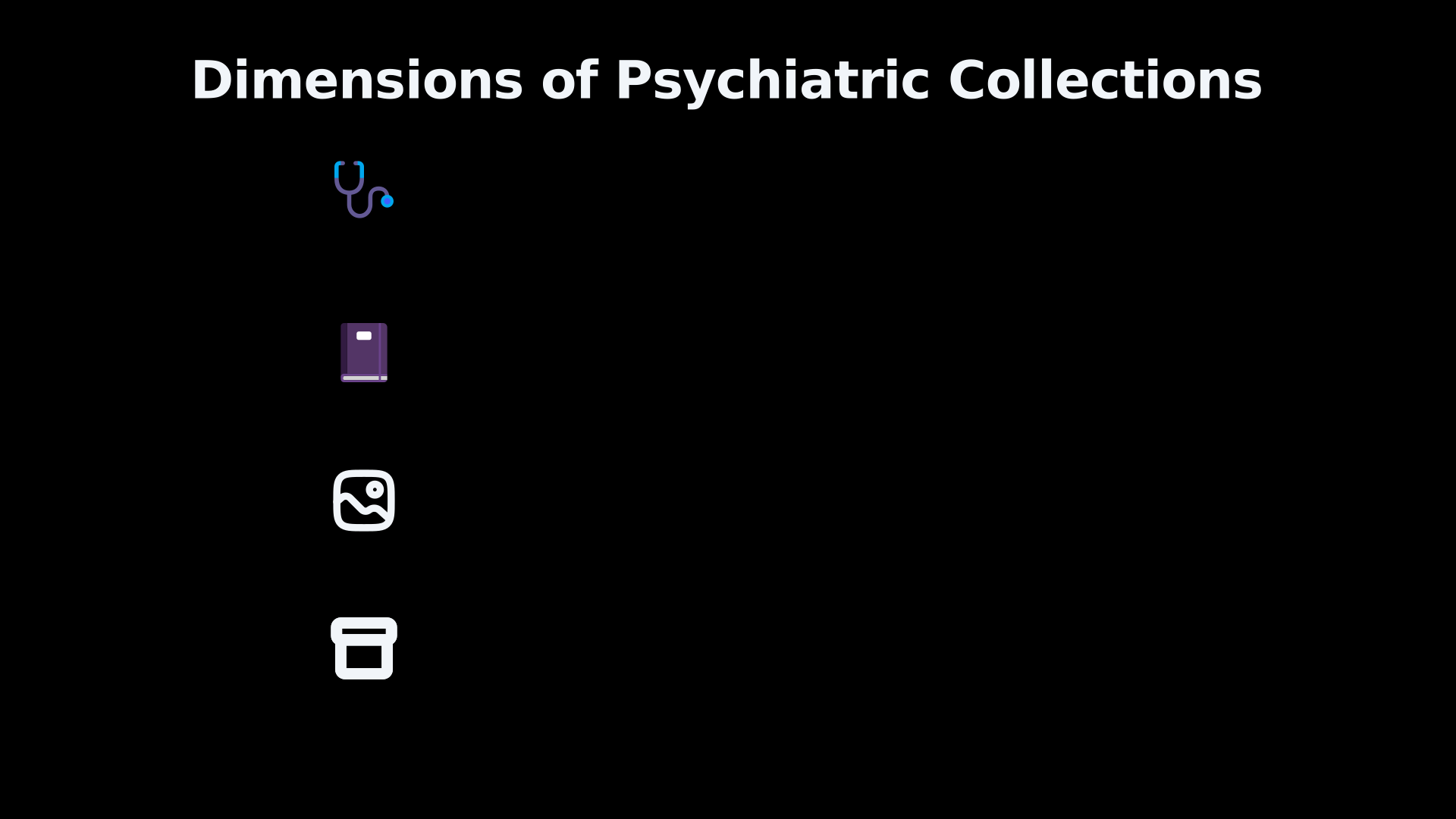
This transformation also changed museum practice. Collections originally organised around diagnosis now require curators to balance multiple identities simultaneously:
- Clinical document: preserving evidence of psychiatric treatment and therapeutic practice.
- Personal testimony: acknowledging individual lives, experiences and agency.
- Artwork: recognising aesthetic achievement independent of diagnosis.
- Historical archive: documenting changing ideas about mental illness and institutional care.
Maintaining these overlapping interpretations is challenging because emphasising one dimension too strongly can obscure the others. Contemporary exhibitions therefore increasingly avoid presenting creativity as either proof of illness or miraculous exceptionality.
Art, Diagnosis and the Ethics of Display
Displaying art produced inside psychiatric institutions raises ethical questions that differ from those faced by most art museums.
Many works were created by people who never imagined international exhibitions or museum audiences. Curators therefore must consider issues of consent, privacy and historical context alongside conventional concerns about conservation and interpretation.
Modern Brazilian institutions generally avoid language that romanticises mental illness or portrays creativity as a symptom of psychiatric diagnosis. Instead, exhibitions tend to explain the institutional conditions in which works were created while foregrounding the individuality of each artist. This approach reflects wider changes brought about by Brazil’s psychiatric reform movement, which sought to replace long-term institutionalisation with community-based care and greater respect for patients’ rights.[Museu de Imagens do Inconsciente]museuimagensdoinconsciente.org.brMuseu de Imagens do Inconsciente The MuseumMuseu de Imagens do InconscienteThe Museum - Museu de Imagens do Inconsciente…
Another ethical challenge concerns the balance between remembrance and tourism. Sites such as Barbacena attract visitors interested in dark history, yet museum professionals consistently frame the collections as educational memorials rather than attractions built around suffering. Likewise, the Museu de Imagens do Inconsciente resists treating patient art as an exotic curiosity by maintaining active therapeutic programmes alongside exhibitions.[Museu de Imagens do Inconsciente]museuimagensdoinconsciente.org.brMuseu de Imagens do Inconsciente The MuseumMuseu de Imagens do InconscienteThe Museum - Museu de Imagens do Inconsciente…
Why These Collections Matter Within Brazil’s Strange Heritage
Brazil’s psychiatric museums stand apart from many unusual museums around the world because their central object is not the bizarre but the process by which societies define normality itself.
Medical instruments, institutional archives and outsider art become inseparable from larger questions about authority, diagnosis and human dignity. The museums reveal how psychiatric institutions once classified, confined and often silenced individuals, while also preserving extraordinary artistic achievements that emerged despite those circumstances.
Within Brazil’s wider landscape of unusual collectionsalongside museums of contested religious objects, medical history and modern folklorethese institutions demonstrate that the country’s most compelling curiosities are often ethical rather than supernatural. Their greatest achievement lies not in displaying strange objects, but in transforming difficult institutional memories into spaces where visitors can reconsider the relationship between medicine, creativity, exclusion and cultural heritage.
Amazon book picks
Further Reading
Books and field guides related to When Does a Psychiatric Archive Become Art?. Use these as the next step if you want deeper reading beyond the article.
Madness and Civilization: A History of Insanity in the Age of...
Rating: 4.0/5 from 15 Google Books ratings
This text is a classic of French post-structuralist scholarship and is widely recommended on humanities courses across a variety of disci...
The Lives They Left Behind: Suitcases from a State Hospital A...
The contents of 10 of the 400 patient suitcases left behind at the Willard Psychiatric Center are examined and compared to the written re...
The Collected Schizophrenias
Powerful, affecting essays on mental illness, winner of the Graywolf Press Nonfiction Prize and a Whiting Award An intimate, moving book...
eBay marketplace picks
Marketplace Samples
Live-tested eBay searches with available results related to this page.
Selected fromoutsider art print oneBay.co.uk.
Endnotes
1.
Source: cadastro.museus.gov.br
Title: Museu da Loucura Barbacena Museus Br
Link:https://cadastro.museus.gov.br/museus/museu-da-loucura-barbacena/
2.
Source: abcmc.org.br
Title: ABCM C MUSEU DA LOUCURA
Link:https://abcmc.org.br/museu/museu-da-loucura/
3.
Source: ccms.saude.gov.br
Title: Nise da Silveira, Vida e Obra
Link:https://www.ccms.saude.gov.br/nisedasilveira/museu-de-imagens-do-inconsciente.php
Source snippet
da Silveira, Vida e Obra - Museu de Imagens do InconscienteMDULO COMEMORATIVO CENTENRIO NISE DA SILVEIRA * Imagens do inconsciente * O...
4.
Source: unesco.org
Link:https://www.unesco.org/archives/multimedia/document-4201
Source snippet
UNESCO Multimedia ArchivesMUSEU DE IMAGENS DO INCONSCIENTE (IMAGES OF THE UNCONSCIOUS MUSEUM) * * * Idioma: Portugus, subtitles English...
5.
Source: saude.mg.gov.br
Link:https://www.saude.mg.gov.br/noticias/museu-da-loucura-completa-25-anos/
Source snippet
August 16, 2021 MUSEU DA LOUCURA COMPLETA 25 ANOS Publicado em: 16/08/2021 - 09:14 Image: ImagemImage: Imagem Inaugurado em 16 de agost...
Published: August 16, 2021
6.
Source: bvsms.saude.gov.br
Link:https://bvsms.saude.gov.br/museu-de-imagens-do-inconsciente-celebra-80-anos-da-terapeutica-de-nise-da-silveira/
Source snippet
de Imagens do Inconsciente celebra 80 anos da teraputica de Nise da Silveira | Biblioteca Virtual em Sade MSMUSEU DE IMAGENS DO INCONSC...
7.
Source: ccms.saude.gov.br
Title: saude.gov.br Nise da Silveira, Vida e Obra
Link:https://www.ccms.saude.gov.br/nisedasilveira/datas-fatos.php
Source snippet
da Silveira, Vida e Obra - Datas e fatosMUSEU DE IMAGENS DO INCONSCIENTE O Legado de uma Vida DATAS E FATOS A CRIAO DOS ATELIS 1946 Ni...
8.
Source: youtube.com
Title: Vamos ao museu?
Link:https://www.youtube.com/watch?v=fNezZ92yQ_w
Source snippet
Museu de Imagens do Inconsciente...
9.
Source: youtube.com
Title: Museu de Imagens do Inconsciente
Link:https://www.youtube.com/watch?v=eY8g0j8gyu8
Source snippet
Nise: O Corao da Loucura - Trailer Oficial...
10.
Source: museuimagensdoinconsciente.org.br
Title: Museu de Imagens do Inconsciente The Museum
Link:https://museuimagensdoinconsciente.org.br/en/the-museum/
Source snippet
Museu de Imagens do InconscienteThe Museum - Museu de Imagens do Inconsciente...
11.
Source: museuimagensdoinconsciente.org.br
Title: Museu de Imagens do Inconsciente Nise da Silveira
Link:https://museuimagensdoinconsciente.org.br/en/nise-da-silveira/
Source snippet
Museu de Imagens do InconscienteNise da Silveira - Museu de Imagens do Inconsciente...
12.
Source: Wikipedia
Title: Museu da Loucura
Link:https://pt.wikipedia.org/wiki/Museu_da_Loucura
13.
Source: Wikipedia
Title: Museu de Imagens do Inconsciente
Link:https://pt.wikipedia.org/wiki/Museu_de_Imagens_do_Inconsciente
Additional References
14.
Source: bdm.unb.br
Link:https://bdm.unb.br/handle/10483/28068
Source snippet
Digital da Produo Intelectual Discente: O museu de imagens do inconsciente: visibilidade, exposies e a desmistificao da loucuraAug...
15.
Source: ridi.ibict.br
Link:https://ridi.ibict.br/handle/123456789/1099
Source snippet
Institucional do Ibict: A vivncia dos (meta)documentos do inconsciente: itinerrios da organizao do conhecimento no Museu de Imagens d...
16.
Source: revistas.usp.br
Link:https://revistas.usp.br/pontourbe/en/article/view/217513
17.
Source: youtube.com
Title: Nise: The Heart of Madness (trailer)
Link:https://www.youtube.com/watch?v=u2HFRiyYUm8
Source snippet
Vamos ao museu? - Museu de Imagens do Inconsciente...
18.
Source: youtube.com
Title: Nise: O Corao da Loucura
Link:https://www.youtube.com/watch?v=Y9Scyu3rH_w
Source snippet
Cine Magister: Holocausto Brasileiro...
19.
Source: youtube.com
Title: Cine Magister: Holocausto Brasileiro
Link:https://www.youtube.com/watch?v=ijB94eoTruU