Where Angola Keeps Its Strangest Stories
Angola does not have a famous commercial “museum of the bizarre” devoted to witchcraft, monsters or unexplained phenomena.
Page outline Jump by section
Introduction
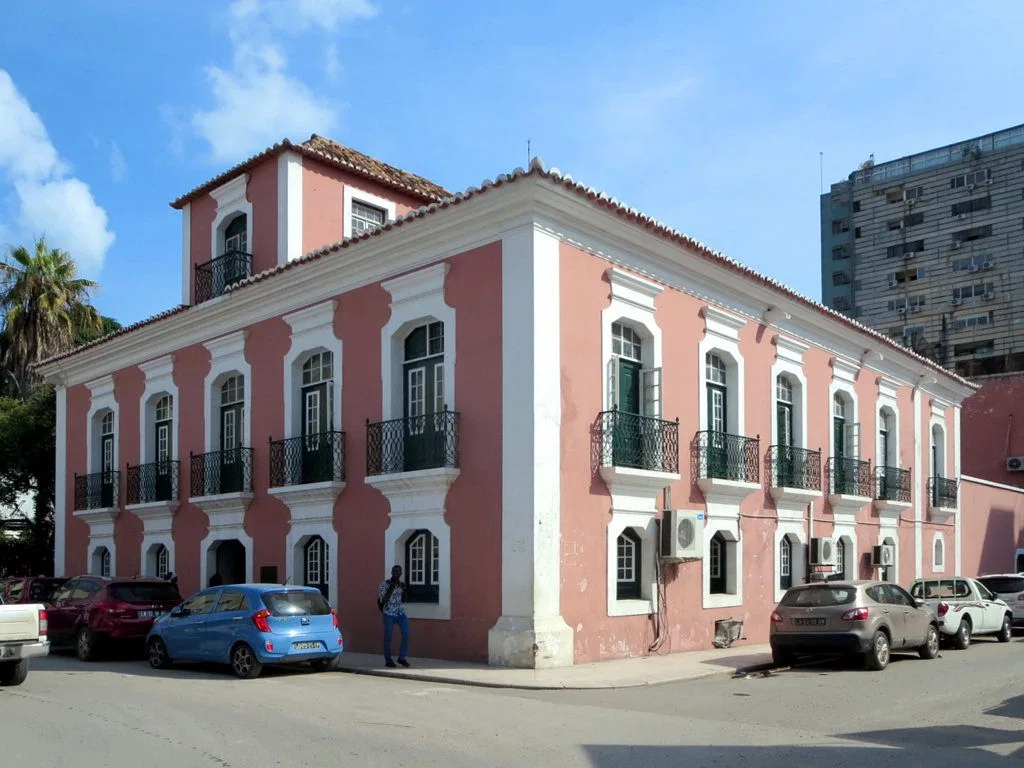
The most rewarding places for an offbeat visitor are the Dundo Museum in the diamond-producing north-east, the National Museum of Anthropology and Natural History Museum in Luanda, the National Museum of Slavery south of the capital, and the military museum inside São Miguel Fortress. Together they show how Angola’s unusual objects have been collected, interpreted, looted, recovered and sometimes stripped from their original ritual or political settings.[unesco.org]unesdoc.unesco.orgUNESCO DocumentsRéhabilitation et promotion du patrimoine culturel angolaisThe Museum of Dundo represents one of the most important art c…
Where Angola’s strangest collections are found
Angola’s unusual museum landscape is concentrated in a few substantial institutions rather than dozens of small private attractions. The collections divide broadly into four groups:
- Ritual and ceremonial objects, especially masks, carved figures, chiefly regalia and musical instruments.
- Material evidence of enslavement, including restraints, weapons, ship models and a baptismal setting associated with forced conversion and renaming.
- Natural-history specimens, from shells and insects to large skeletons and taxidermied mammals.
- Military relics and displaced colonial monuments, presented inside a centuries-old fortress.
This matters because an Angolan “curiosity cabinet” is rarely neutral. Many exhibits were gathered during colonial rule, removed during war or reclassified by outsiders as art, superstition, ethnography or natural science. The interesting question is therefore not merely “What strange thing is in the case?” but “Who collected it, what did it originally do, and why is it being displayed this way?”

Dundo Museum: ritual art inside a company museum
The Dundo Museum is Angola’s most important destination for readers interested in ceremonial masks, carved figures and the complicated history of ethnographic collecting. Established in the colonial period by the Angola Diamond Company, it became a major repository for the cultures of eastern Angola, particularly Chokwe heritage. UNESCO has described its holdings as one of the leading collections of Chokwe art in Angola and Central Africa. It also incorporates archaeology and natural history, making it closer to an old-fashioned encyclopaedic museum than a narrowly defined art gallery.[UNESCO Documents]unesdoc.unesco.orgUNESCO DocumentsRéhabilitation et promotion du patrimoine culturel angolaisThe Museum of Dundo represents one of the most important art c…
Its masks are the obvious curiosity draw, but they should not be treated as theatrical decorations or evidence of a mysterious “witchcraft culture”. In their original settings, masks could be connected with initiation, political authority, education, performance, ancestral identity and relations between visible and spiritual worlds. Angolan cultural programming has emphasised that mask traditions vary between communities and regions rather than belonging to one uniform belief system.[Goethe-Institut]goethe.deInstitutThe value of things: museums and communitiesThe short documentaries bring to life the history of the pieces, their symboli…
The museum itself is also a historical exhibit. Its collection was built through expeditions, company employees, local intermediaries and exchanges with chiefs operating under an extremely unequal colonial economy. Objects that now appear as detached masterpieces may once have belonged to ceremonies, courts, families or community institutions. The museum therefore preserves genuine cultural heritage while also embodying the collecting logic of a mining corporation that exercised enormous power in the region.[Wikipedia]WikipediaDundo MuseumDundo Museum
Dundo’s later history adds another layer. Objects disappeared during Angola’s long civil war, entered private collections and the international art market, and were subsequently identified for return. Six looted works were formally recovered in 2018, while earlier restitution efforts included Chokwe masks and sculpture purchased from European collections for repatriation. These cases turn the museum into part collection, part crime trail and part reconstruction project.[theartnewspaper.com]theartnewspaper.comAngola recovers six artefacts looted from museum duringAngola recovers six artefacts looted from museum during
For visitors, the attraction is not horror or sensationalism. It is the density of meaning around the objects: a carved face may simultaneously be a performance instrument, a spiritual presence, a record of artistic mastery, a colonial acquisition and a recovered casualty of war.
Luanda’s anthropology collections: masks without the fantasy
The National Museum of Anthropology offers the most accessible introduction to Angola’s varied material cultures. Its holdings include masks, sculpture, musical instruments, pottery, metalworking, hunting and fishing equipment, jewellery, domestic objects and photographs. The breadth is important: ritual pieces are shown alongside ordinary technologies, helping prevent the common tourist mistake of imagining African culture solely through masks, magic and ceremony.[Wikipedia]WikipediaMuseu Nacional de Antropologia (AngolaMuseu Nacional de Antropologia (Angola
Its most unusual displays are likely to be objects whose practical and spiritual functions overlap. A chiefly chair, for example, can communicate authority through its form, carved figures and scenes of political or ceremonial responsibility. Masks may represent more than a disguised human performer; their meaning can depend on movement, music, costume, initiation status and the knowledge of the people entitled to use them. Once isolated behind glass, much of that living context disappears.[em]emilyhbruff.comem Museu Nacional de Antropologiaem Museu Nacional de Antropologia
This is where credibility and curation matter. The museum is a public cultural and scientific institution, not an occult attraction. Visitors should be wary of guides or online descriptions that label every unfamiliar ritual object as “witchcraft”. Belief in harmful supernatural action remains a serious and sometimes contentious subject in Angola, including within contemporary religious debate, but a ceremonial mask or carved figure cannot automatically be read as evidence of sorcery.[Vatican News]vaticannews.vaOpen source on vaticannews.va.
The museum also sits within a wider international argument about provenance. Cooperation between Angolan and German institutions has included work on catalogues and colonial-era collections held in Berlin, creating greater scope to trace how Angolan objects left their communities and entered European museums. That process can change interpretation even when an object has not yet been physically returned: naming its collector, date, location and acquisition circumstances makes it less of an anonymous exotic curiosity.[Wikipedia]WikipediaMuseu Nacional de Antropologia (AngolaMuseu Nacional de Antropologia (Angola
The slavery museum: unsettling objects in their original landscape
The National Museum of Slavery, at Morro da Cruz near Luanda, is Angola’s most disturbing visitor-facing collection. Founded after independence, it occupies a coastal site associated with an estate owned by a major slave trader. Its small historic chapel is central to the experience: captives were reportedly baptised and given Christian names before embarkation across the Atlantic.[Wikipedia]WikipediaNational Museum of SlaveryNational Museum of Slavery
The exhibits include shackles, chains, whips, weapons, weights, ship models, documents and images explaining capture, confinement and the Atlantic crossing. A baptismal vessel becomes particularly charged in this setting. It is not simply a religious antique; it represents the use of ceremony to impose a new name and identity immediately before forced removal.[El País]elpais.comOpen source on elpais.com.
Visitors accustomed to large memorial museums may find the institution modest. Its force comes from the relationship between objects, building and coastline rather than from elaborate multimedia spectacle. The Atlantic is not an abstract map beyond the display case: it is physically present outside, connecting Angola to Brazil, the Caribbean and the wider history of the African diaspora.
The museum’s interpretation also enters an active debate over remembrance. Its director has argued that enslavement should be studied not only as past brutality but as a process that affected population patterns, cultural transmission, racism and how Africans understand their place in global history. In December 2024, a visit by US President Joe Biden brought renewed international attention and a US grant towards restoration.[El País]elpais.comOpen source on elpais.com.
This is not a “crime museum” in the entertainment sense. The restraints and instruments are compelling because they are evidence of organised commerce in human beings. Their credibility rests on the documented history of the site and the broader archival record, although individual artefacts should still be understood through precise provenance rather than assumed to have been used in that exact building.
Natural history as a cabinet of extinct-looking creatures
Luanda’s National Museum of Natural History supplies the closest equivalent to a traditional cabinet of curiosities. Its displays include taxidermied mammals, birds, reptiles and fish, as well as insects, molluscs, shells and a large whale skeleton. Such museums often preserve a distinctly twentieth-century style of display: ranked specimens, dramatic animal bodies and recreated habitats intended to compress an entire country’s biodiversity into a sequence of rooms.[Wikipedia]WikipediaMuseu Nacional de História Natural de AngolaMuseu Nacional de História Natural de Angola
The star specimen is the giant sable antelope, an exceptionally rare animal found only in Angola and recognised as a national emblem. Its sweeping horns and near-mythic status make a mounted specimen appear like a heraldic creature made real. Yet the animal’s story is scientific rather than cryptozoological. It survived years of uncertainty during the civil war and was documented again in the early 2000s, becoming a flagship for conservation as well as a symbol on Angolan national imagery.[Springer]link.springer.comThe Giant Sable Antelope: Angola's National IconThe Giant Sable Antelope: Angola's National Icon
That mixture of rarity, disappearance rumours and rediscovery explains why the giant sable occupies a space close to folklore without becoming a cryptid. It was never an unknown monster; it was a recognised subspecies whose surviving population was extremely difficult to verify during conflict. Displays should therefore distinguish the dramatic story of its rediscovery from exaggerated claims that it had literally returned from extinction.
Other objects reveal older connections between nature, commerce and collecting. Shell collections are not merely decorative zoological specimens: particular shells were historically used as currency in parts of West and Central Africa. A display can consequently belong to natural history, economic history and colonial collecting at once.[Wikipedia]WikipediaMuseu Nacional de História Natural de AngolaMuseu Nacional de História Natural de Angola
São Miguel Fortress: tanks, aircraft and exiled statues
The military museum in São Miguel Fortress is unusual because the building, weapons and monuments all tell competing versions of power. The fortress originated as a colonial defensive position overlooking Luanda and now houses collections linked to the struggle for independence, regional warfare and the civil war. Visitor information describes aircraft, combat vehicles, weapons and other military artefacts displayed within the fort.[Welcome to Angola]welcometoangola.co.aoOpen source on welcometoangola.co.ao.
Large machines give the museum an immediate physical impact. Aircraft and armoured vehicles are not reduced to diagrams; visitors can confront the mass and engineering of equipment associated with conflicts that shaped modern Angola. The setting intensifies the effect, since a fortress built to secure Portuguese colonial authority has been repurposed to narrate the emergence and defence of the independent state.
The strangest collection may be the group of statues removed from public squares after independence. Figures of Portuguese explorers, colonial founders and imperial cultural heroes were displaced from their former positions of honour and gathered within the museum complex. They are neither simply destroyed nor left to dominate the city. Instead, they become historical objects — a kind of retirement home for fallen symbols of empire.[Wikipedia]WikipediaMuseum of the Armed Forces (AngolaMuseum of the Armed Forces (Angola
Their presence raises a useful question about what museums do with politically unwanted monuments. Moving a statue changes it from a public declaration into evidence. The figure can still be studied, but its authority is reduced by context, labels and proximity to the history that followed colonial rule.
What Angola does not appear to have
Angola’s documented public museum network does not currently centre on a dedicated witchcraft museum, UFO archive, cryptid exhibition or commercial horror attraction. Claims for such places should be treated cautiously unless supported by a current institutional source, an address and evidence of public access.
That absence does not mean Angola lacks supernatural traditions or unusual beliefs. Witchcraft accusations and fears remain socially real and can have serious consequences, while masks and ritual objects embody complex relationships between performance, authority, healing, ancestry and spiritual knowledge. The problem arises when outside observers flatten all of this into a single category of “dark magic”.[Vatican News]vaticannews.vaOpen source on vaticannews.va.
Angola’s most credible strange-history experiences are therefore museums where the uncanny quality emerges from context:
- a mask removed from a performance and fixed behind glass;
- a sacred or political carving collected by a mining company;
- a restraint displayed beside a chapel used in the machinery of enslavement;
- an animal once feared lost, preserved as a national icon;
- an imperial statue stripped of its pedestal;
- or a war machine resting inside the fort of a former colonial power.
Visiting with the right expectations
Museum information in Angola can be fragmented, and opening arrangements may change because of renovation, official events or institutional constraints. Recent listings can help establish that a site is visitor-facing, but they should not be treated as a guarantee of same-day access. The slavery museum, in particular, has undergone restoration activity and has attracted renewed official attention, while plans for additional museums in Luanda indicate that the national museum landscape is still developing.[The Guardian]theguardian.comOpen source on theguardian.com.
The most satisfying approach is to look beyond the label “oddity”. Ask what an object did before it became an exhibit, who had the authority to use it, how it entered the collection and whether the museum explains that history. At Dundo, provenance and wartime loss are part of the story. At the anthropology museum, ritual context matters more than visual strangeness. At Morro da Cruz, the location transforms ordinary-looking objects into evidence of forced displacement. In the natural-history museum, rarity must be separated from legend. At São Miguel, the collection demonstrates how defeated symbols and obsolete weapons acquire new meanings when power changes hands.
Angola’s curiosity culture is consequently less about fabricated mysteries than about objects whose meanings have been repeatedly transformed — by ceremony, colonialism, scientific classification, war, theft, restitution and national remembrance.
Amazon book picks
Further Reading
Books and field guides related to Where Angola Keeps Its Strangest Stories. Use these as the next step if you want deeper reading beyond the article.
A History of Angola
This sweeping history navigates the staggering paradoxes of Angola, a nation of breathtaking beauty and immense natural wealth whose peop...
Africa Adorned
A documentation of the incredible panoply of African jewelry and body adornment, surveying every major tribal style and every material used.
eBay marketplace picks
Marketplace Samples
Live-tested eBay searches with available results related to this page.
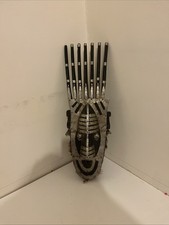
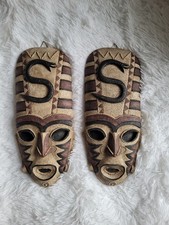
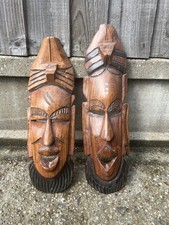
Selected fromAfrican mask wall decor oneBay.co.uk.
Endnotes
1.
Source: unesdoc.unesco.org
Link:https://unesdoc.unesco.org/ark%3A/48223/pf0000121154
Source snippet
UNESCO DocumentsRéhabilitation et promotion du patrimoine culturel angolaisThe Museum of Dundo represents one of the most important art c...
2.
Source: goethe.de
Link:https://www.goethe.de/ins/ao/en/kul/mus/vid.html
Source snippet
InstitutThe value of things: museums and communitiesThe short documentaries bring to life the history of the pieces, their symboli...
3.
Source: visiteluanda.com
Title: Armed Forces Museum
Link:https://visiteluanda.com/en/locais-interesse/museu-das-forcas-armadas.html
Source snippet
The museum's collection includes twin-engine planes, combat vehicles, various weapons and...Read more...
4.
Source: Wikipedia
Title: Dundo Museum
Link:https://en.wikipedia.org/wiki/Dundo_Museum
5.
Source: theartnewspaper.com
Title: Angola recovers six artefacts looted from museum during
Link:https://www.theartnewspaper.com/2018/06/07/angola-recovers-six-artefacts-looted-from-museum-during-civil-war
6.
Source: Wikipedia
Title: Museu Nacional de Antropologia (Angola)
Link:https://en.wikipedia.org/wiki/Museu_Nacional_de_Antropologia_%28Angola%29
7.
Source: Wikipedia
Title: National Museum of Slavery
Link:https://en.wikipedia.org/wiki/National_Museum_of_Slavery
8.
Source: Wikipedia
Title: Museu Nacional de História Natural de Angola
Link:https://en.wikipedia.org/wiki/Museu_Nacional_de_Hist%C3%B3ria_Natural_de_Angola
9.
Source: unesdoc.unesco.org
Link:https://unesdoc.unesco.org/ark%3A/48223/pf0000084381
10.
Source: link.springer.com
Title: The Giant Sable Antelope: Angola’s National Icon
Link:https://link.springer.com/chapter/10.1007/978-3-030-03083
11.
Source: Wikipedia
Title: Museum of the Armed Forces (Angola)
Link:https://en.wikipedia.org/wiki/Museum_of_the_Armed_Forces_%28Angola%29
12.
Source: unesdoc.unesco.org
Link:https://unesdoc.unesco.org/ark%3A/48223/pf0000398454
13.
Source: unesdoc.unesco.org
Link:https://unesdoc.unesco.org/ark%3A/48223/pf0000398415
14.
Source: unesdoc.unesco.org
Title: pf0000084381 fre
Link:https://unesdoc.unesco.org/ark%3A/48223/pf0000084381_fre
15.
Source: unesdoc.unesco.org
Link:https://unesdoc.unesco.org/ark%3A/48223/pf0000398441
16.
Source: unesdoc.unesco.org
Link:https://unesdoc.unesco.org/ark%3A/48223/pf0000055743
17.
Source: unesdoc.unesco.org
Link:https://unesdoc.unesco.org/ark%3A/48223/pf0000398437
18.
Source: unesdoc.unesco.org
Title: pf0000084377 spa
Link:https://unesdoc.unesco.org/ark%3A/48223/pf0000084377_spa
19.
Source: unesdoc.unesco.org
Link:https://unesdoc.unesco.org/ark%3A/48223/pf0000398383
20.
Source: unesdoc.unesco.org
Link:https://unesdoc.unesco.org/ark%3A/48223/pf0000055745
21.
Source: unesdoc.unesco.org
Title: pf0000084387 fre
Link:https://unesdoc.unesco.org/ark%3A/48223/pf0000084387_fre
22.
Source: Wikipedia
Title: Unusual articles
Link:https://en.wikipedia.org/wiki/Wikipedia%3AUnusual_articles
23.
Source: Wikipedia
Title: Fortress of São Miguel
Link:https://en.wikipedia.org/wiki/Fortress_of_S%C3%A3o_Miguel
24.
Source: visiteluanda.com
Title: National Museum of Natural History of Angola
Link:https://visiteluanda.com/en/locais-interesse/museu-nacional-historia-natural-angola.html
25.
Source: elpais.com
Link:https://elpais.com/cultura/2024-11-18/datos-grilletes-y-pilas-bautismales-para-no-olvidar-la-esclavitud.html
26.
Source: emilyhbruff.com
Title: em Museu Nacional de Antropologia
Link:https://emilyhbruff.com/art-atlas/2016/12/5/museu-nacional-de-antropologia-luanda-angola
27.
Source: vaticannews.va
Link:https://www.vaticannews.va/en/africa/news/2024-08/angola-a-neglected-region-seminaries-and-belief-in-witchcraft.html
28.
Source: theguardian.com
Link:https://www.theguardian.com/world/2024/dec/03/us-history-of-enslavement-in-spotlight-joe-biden-angola
29.
Source: welcometoangola.co.ao
Link:https://welcometoangola.co.ao/en/directorio/fortaleza-de-sao-miguel-de-luanda/
30.
Source: nhm.ac.uk
Link:https://www.nhm.ac.uk/visit.html
Additional References
31.
Source: rna.ao
Title: masks a ritual that features traditional culture
Link:https://rna.ao/rna.ao/2020/11/23/masks-a-ritual-that-features-traditional-culture/
Source snippet
Masks: a ritual that features traditional culture23 Nov 2020 — In Angola, traditional masks, represents the different culture of people i...
32.
Source: journals.sagepub.com
Title: Sage Journals From Freedom to Return
Link:https://journals.sagepub.com/doi/10.1177/2753412X251395333
Source snippet
Restitution and Repatriation of...... Dundo Museum in Angola. The museum was established in the North-East of the country in the city by...
33.
Source: youtube.com
Title: Fortaleza de São Miguel, one of the most iconic landmarks in Angola
Link:https://www.youtube.com/watch?v=d1MA4RVZbcQ
Source snippet
National Highlight Part 3: Slavery Museum portrays the experiences of slaves...
34.
Source: youtube.com
Title: When white people arrived in Africa, this is how they were “tested”
Link:https://www.youtube.com/watch?v=-BrdHHB41dM
Source snippet
Fortaleza de São Miguel, one of the most iconic landmarks in Angola...
35.
Source: youtube.com
Title: National Highlight Part 3: Slavery Museum portrays the experiences of slaves
Link:https://www.youtube.com/watch?v=XfRkvVleWms
Source snippet
Places You'll Never Be Able to Understand in Luanda...
36.
Source: youtube.com
Title: Places You’ll Never Be Able to Understand in Luanda
Link:https://www.youtube.com/watch?v=46z6i-Gmoh8
Source snippet
Discover Luanda, Angola: A Vibrant Fusion of Culture, History, and Beauty...
37.
Source: researchgate.net
Link:https://www.researchgate.net/publication/331241340_The_Giant_Sable_Antelope_Angola%27s_National_Icon_Science_Conservation_A_Modern_Synthesis
38.
Source: africamuseum.be
Link:https://www.africamuseum.be/sites/default/files/media/docs/publications/ENG_Remaking_collections_avec%20cover%20online%20def.pdf
39.
Source: divisare.com
Link:https://divisare.com/projects/273880-peter-zumthor-helene-binet-jiri-havran-helge-stikbakke-jarle-waehler-steilneset-witch-trial-memorial
40.
Source: researchgate.net
Link:https://www.researchgate.net/publication/351042041_Reflections_on_the_issue_of_repatriation_of_looted_and_illegally_acquired_African_cultural_objects_in_Western_museums