Within Curious Guinea
Can Guinea's Museums Restore Lost Meanings?
The National Museum and scattered regional collections show how difficult it is to preserve, explain and visit Guinea's unusual heritage.
On this page
- What the National Museum of Sandervalia holds
- Redevelopment, access and the limits of older visitor reports
- How museums can separate ritual life, archaeology and tourist art
Page outline Jump by section
Introduction
Guinea’s museums face an unusual challenge: the problem is often not a lack of remarkable objects but a lack of context. Masks, ritual carvings, archaeological finds, musical instruments and ceremonial artefacts survive in public collections, yet many have been separated from the performances, beliefs and communities that once gave them meaning. At the same time, decades of underinvestment, incomplete cataloguing and changing museum conditions have made it difficult for visitors to know exactly what is on display or how collections are interpreted.
The result is that Guinea’s museums are best understood not simply as places that exhibit unusual heritage, but as institutions attempting to reconnect objects with their histories. The redevelopment of the National Museum of Sandervalia illustrates this wider effort, while the scarcity of well-documented regional museums highlights how much contextual work remains to be done.
Can Guinea’s Museums Restore Lost Meanings?
Unlike countries with extensive museum networks devoted to archaeology, folklore or the occult, Guinea has relatively few public museums and many regional collections are difficult to verify or visit. This creates a particular problem for anyone interested in the country’s more unusual heritage.
Many objects now displayed behind glass were originally designed to be experienced rather than observed. Ritual masks, ceremonial costumes and musical instruments gained significance through dance, music, initiation ceremonies or seasonal festivals. Once separated from those settings, they risk appearing simply as attractive carvings or ethnographic curiosities rather than parts of living cultural systems.
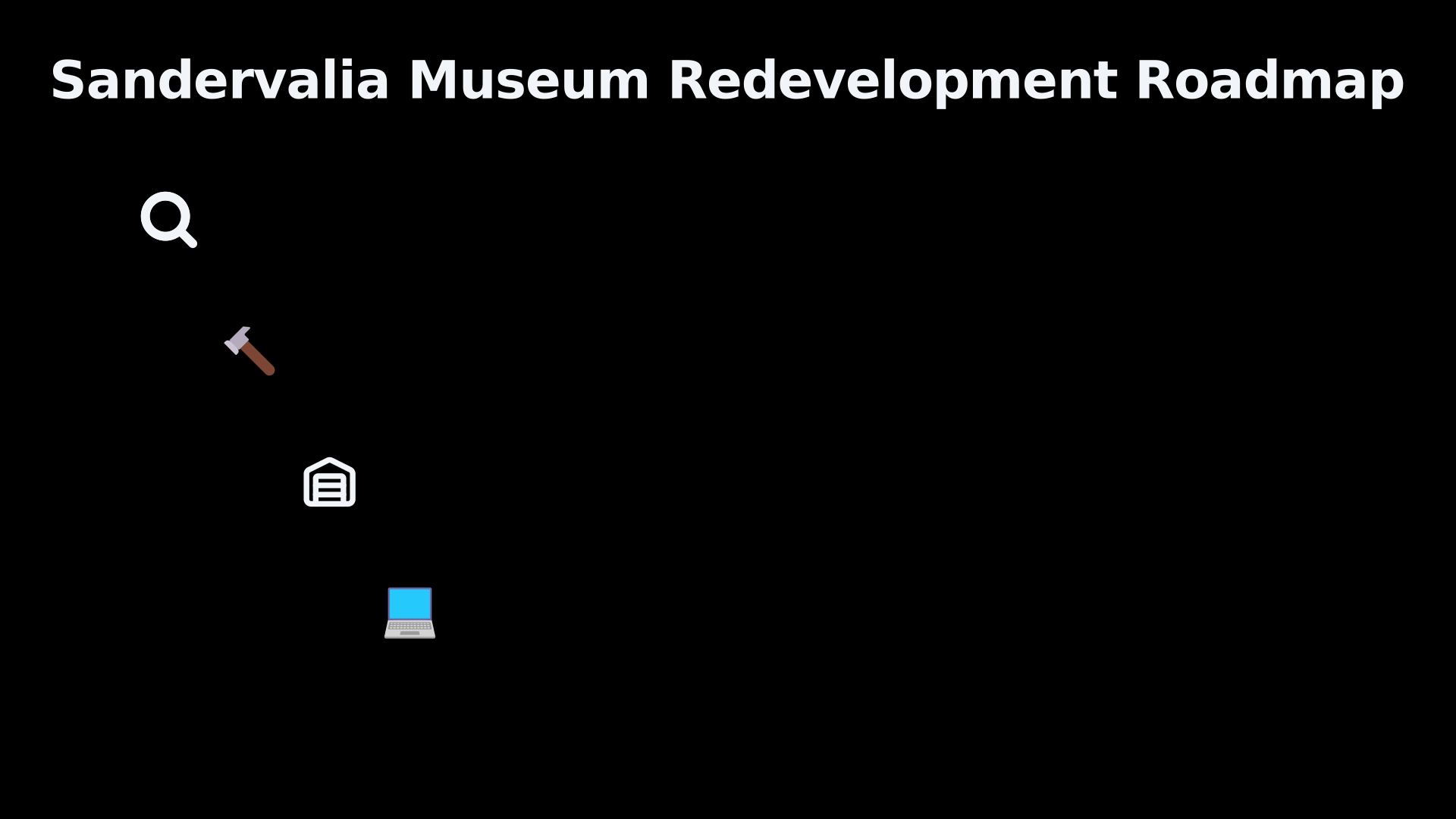
Museums therefore have two responsibilities at once:
- preserving fragile physical objects;
- explaining the cultural practices that cannot themselves be placed inside display cases.
Without that second task, visitors may misunderstand ritual objects as decorative art or assume they belonged to vanished societies rather than communities whose traditions continue in altered forms.
What the National Museum of Sandervalia Holds
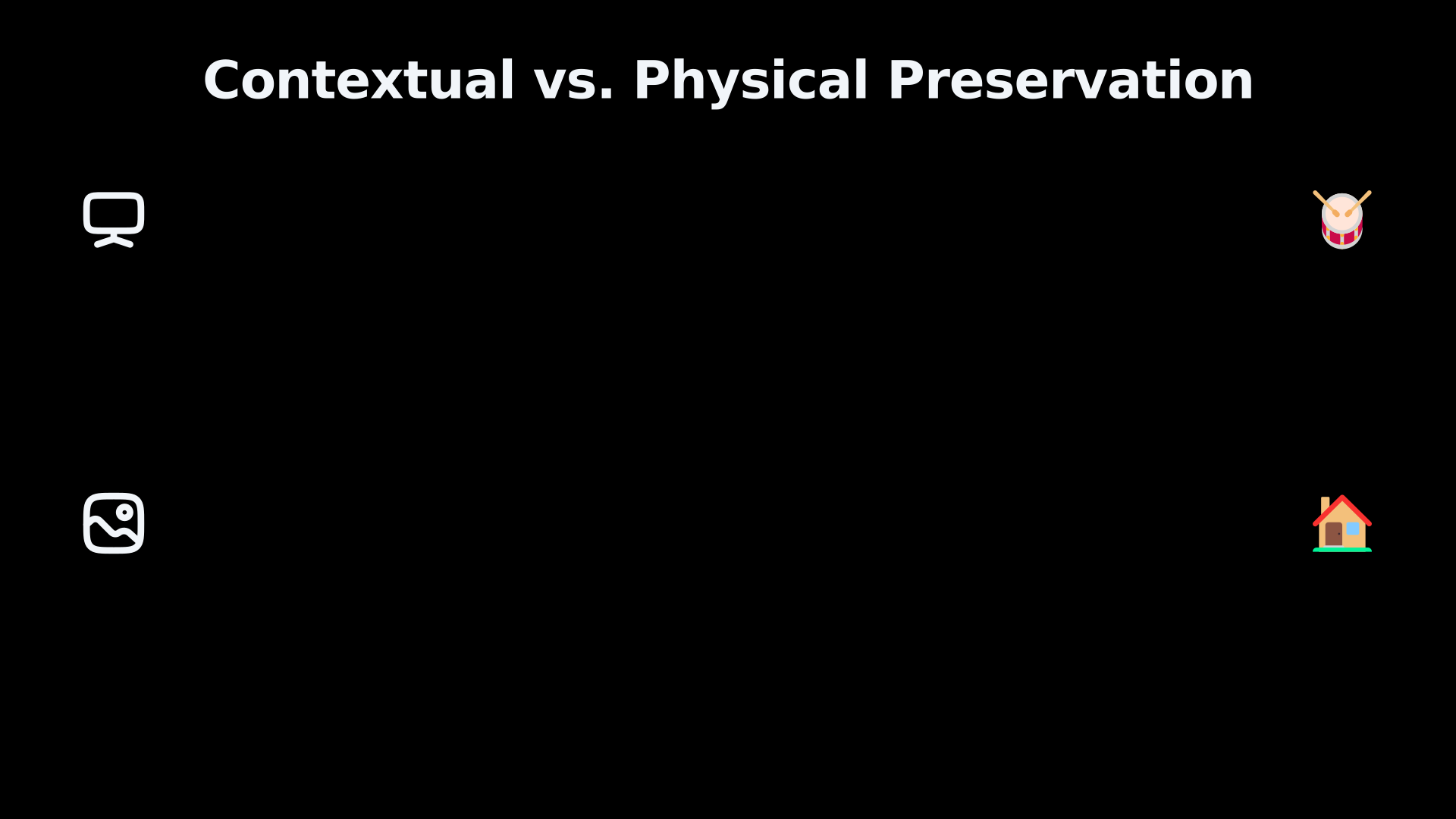
The National Museum of Sandervalia in Conakry remains Guinea’s principal museum and the country’s main public repository for material culture from multiple regions. Its collections have traditionally included:
- ritual masks from different ethnic communities;
- musical instruments;
- carved wooden figures;
- textiles and traditional clothing;
- archaeological material;
- objects from the colonial period;
- models illustrating regional architecture and settlement.
Rather than specialising in unusual collections alone, the museum attempts to represent Guinea’s cultural diversity in a single institution. That creates an interpretive challenge. A mask from the Baga coast, an archaeological object from the inland savannah and colonial-era administrative artefacts all require completely different historical explanations.
Older visitor accounts frequently described sparse displays, limited interpretation and exhibition rooms that appeared only partly occupied. Such reports reflected genuine conditions at the time but should not automatically be treated as descriptions of the museum today because the institution has entered a prolonged period of renovation and redevelopment.[Wikipedia]WikipediaSandervalia National MuseumSandervalia National Museum
Redevelopment, Access and the Limits of Older Visitor Reports
One reason Guinea’s museum landscape can appear confusing is that online descriptions often span almost twenty years of changing conditions.
Visitors may encounter reviews describing empty galleries, temporary closures or incomplete exhibitions alongside newer reports announcing major investment. All can be accurate for the period in which they were written.
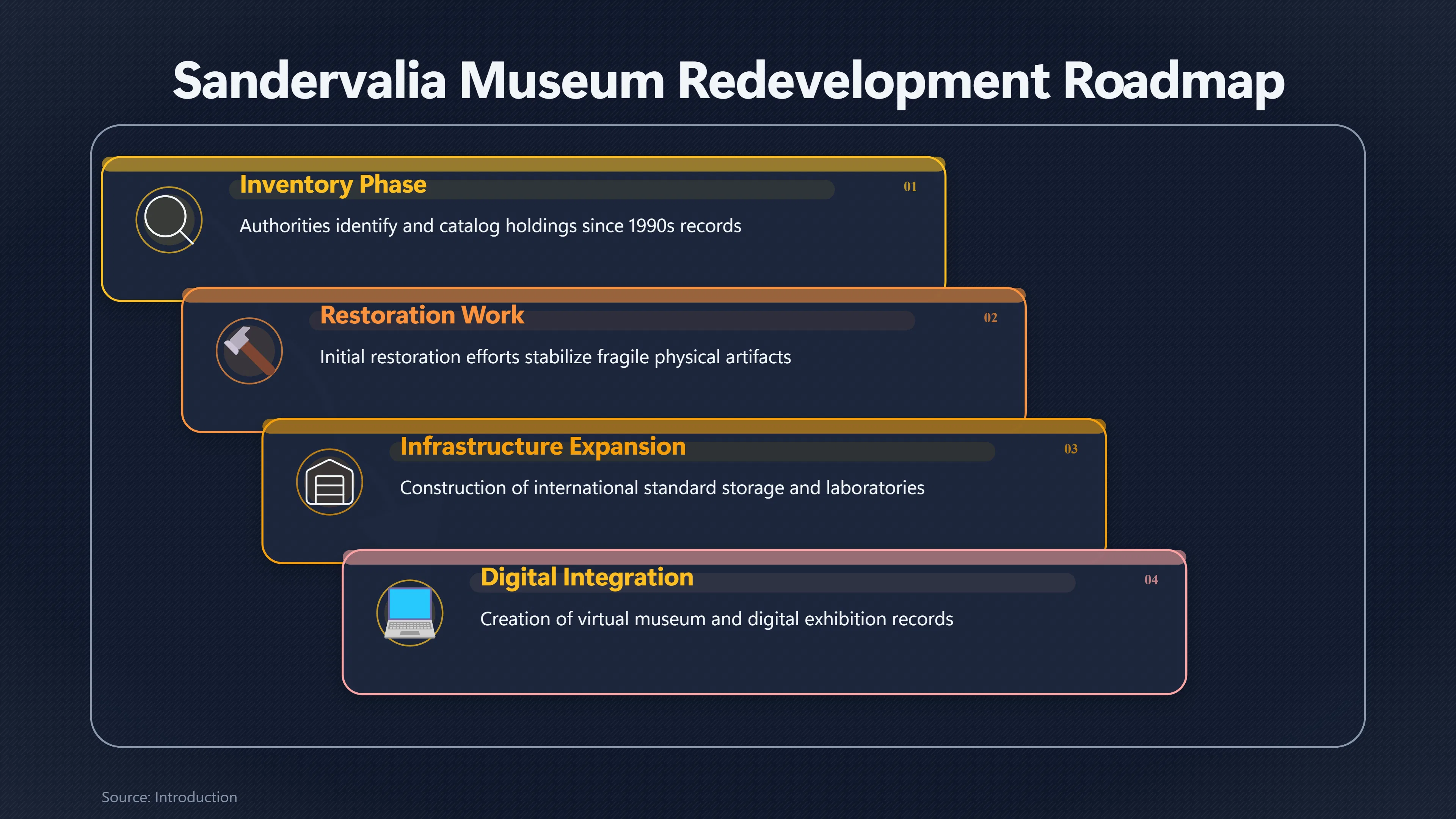
Recent government initiatives represent a significant attempt to change that situation. Authorities first launched restoration work, followed by large-scale programmes to inventory, identify and digitally catalogue museum holdings after recognising that no comprehensive inventory had been completed since the 1990s. The inventory project is intended to establish exactly what survives, assess the condition of collections and create digital records for future conservation.[E-GOV]app.gov.gnement, didentification et de conservation des objets E-GOVAugust 4, 2023…
In 2026 the government announced a much larger redevelopment programme supported through French Development Agency funding. Plans include:
- expanded exhibition galleries;
- international-standard storage for collections;
- conservation laboratories;
- educational spaces;
- digital exhibitions and a virtual museum;
- facilities capable of housing future restituted artefacts;
- improved representation of Guinea’s regional cultures.
The project also forms part of a wider ambition to strengthen museums beyond Conakry by developing regional institutions in cities such as Lab, Kankan, Mamou and Nzrkor.[guinee360.com]guinee360.comPatrimoine national guinen: vers la mise en place de nouveaux muses lintrieur du pays - Guinee360May 18, 2026…
Why Context Matters More Than Rare Objects
For readers interested in strange museums or unusual collections, Guinea demonstrates that rarity alone is not enough.
A ceremonial mask may seem mysterious because it lacks explanation rather than because its original purpose was secret or supernatural. Likewise, archaeological objects may acquire exaggerated stories when excavation records have been lost or poorly documented.
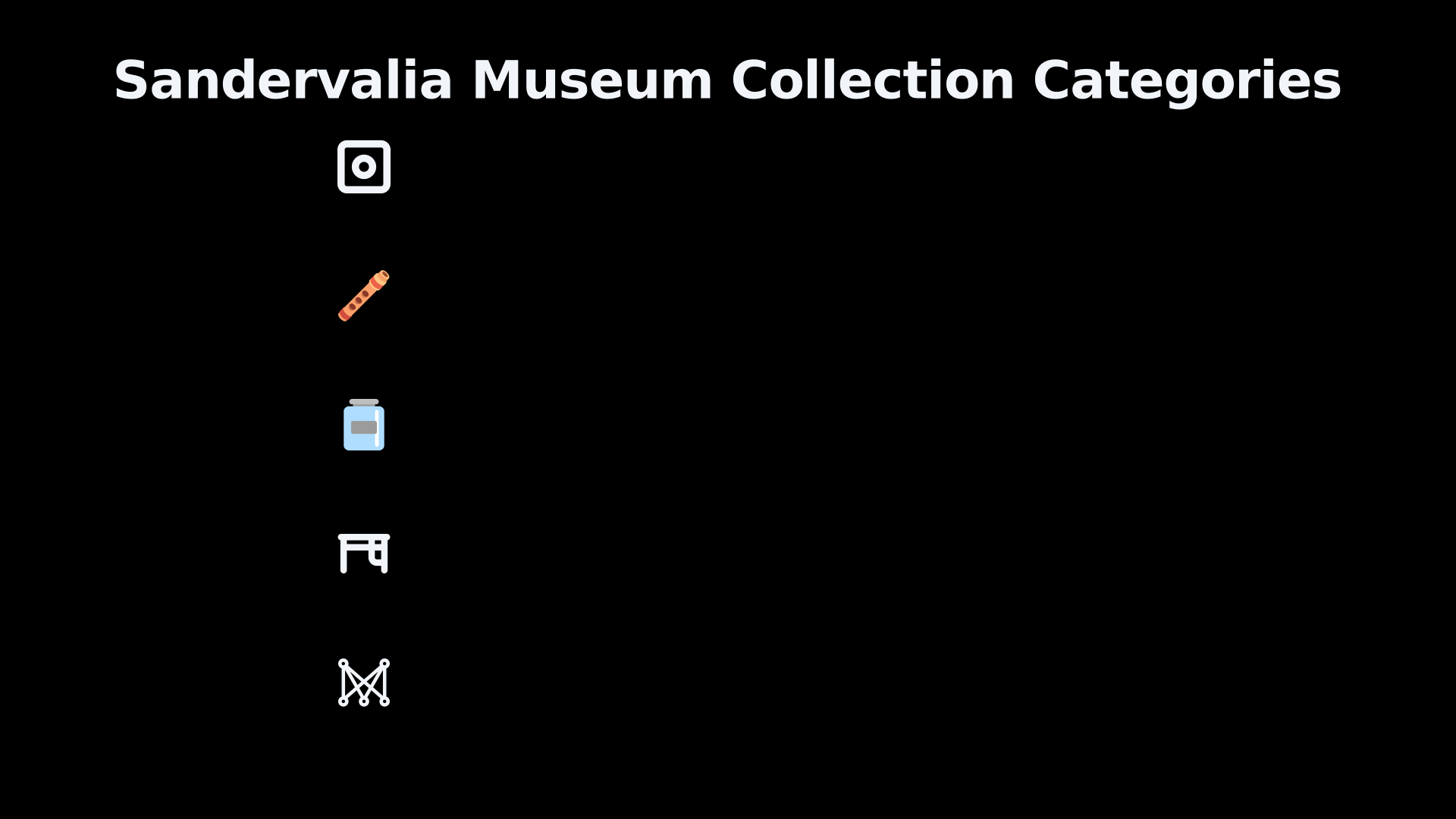
Good museum interpretation helps visitors distinguish between:
- archaeological evidence recovered through scientific investigation;
- sacred objects still connected to living religious traditions;
- historical artefacts collected during the colonial period;
- modern tourist carvings inspired by older artistic styles;
- contemporary artworks that deliberately reinterpret traditional forms.
These distinctions matter because visually similar objects may belong to completely different historical periods and cultural contexts.
Why Regional Collections Remain Difficult to Understand
Outside the capital, Guinea’s museum network is comparatively thin. Some local collections exist within cultural centres or regional institutions, but many receive little international attention and have limited online documentation.
This creates several practical difficulties:
- opening hours may be uncertain;
- catalogues are often unavailable online;
- collections may change without regular publication;
- older travel guides may describe museums that have since moved, closed or been reorganised.
The absence of accessible catalogues also makes it harder for researchers and visitors to determine whether unusual artefacts remain locally, have entered national collections or are now preserved abroad.
For anyone exploring Guinea’s curiosity culture, this means the country’s museum story is often about documentation as much as display.
Separating Ritual Life, Archaeology and Tourist Art
Modern museums increasingly recognise that simply exhibiting objects is not enough. Interpretation determines whether visitors leave with understanding or misconception.
In Guinea, this means carefully explaining that many celebrated masks were originally activated through performance rather than existing as independent sculptures. Archaeological finds require excavation history and dating rather than folklore alone. Meanwhile, contemporary craft production deserves recognition as living artistic practice instead of being confused with centuries-old ritual artefacts.
The redevelopment of Sandervalia offers an opportunity to organise collections around these distinctions instead of presenting them as a single undifferentiated display of “traditional culture”. Plans for conservation laboratories, improved documentation and digital cataloguing suggest an emphasis not only on preserving objects but also on restoring the knowledge that accompanies them.[guinee360.com]guinee360.comPatrimoine national guinen: vers la mise en place de nouveaux muses lintrieur du pays - Guinee360May 18, 2026…
What This Means for Visitors
Visitors interested in Guinea’s unusual heritage should approach museums as places where interpretation is evolving rather than fixed.
The country’s principal museum is undergoing substantial transformation, and regional collections remain unevenly documented. Older guidebooks and online reviews can therefore provide useful historical snapshots but may no longer reflect current exhibitions or access conditions.
The most rewarding approach is to focus less on finding sensational curiosities and more on understanding how museums are attempting to reconnect ritual objects, archaeological material and historical collections with the stories that once made them meaningful. In Guinea, restoring context may ultimately prove as important as preserving the artefacts themselves.
Amazon book picks
Further Reading
Books and field guides related to Can Guinea's Museums Restore Lost Meanings?. Use these as the next step if you want deeper reading beyond the article.
The Participatory Museum
Offers a practical guide to working with community members and visitors to make cultural institutions more dynamic, relevant, essential p...
Museums, Objects, and Collections: A Cultural Study
This book examines the historical context of museums, their collections, and the objects that form them. Susan M. Pearce probes the psych...
The Predicament of Culture: Twentieth-Century Ethnography, Li...
The Predicament of Culture is a critical ethnography of the West in its changing relations with other societies. Analyzing cultural pract...
Museums and the Interpretation of Visual Culture
This is a multi-disciplinary study that adopts an innovative and original approach to a highly topical question, that of meaning-making i...
eBay marketplace picks
Marketplace Samples
Live-tested eBay searches with available results related to this page.
Selected fromethnographic art oneBay.co.uk.
Endnotes
1.
Source: Wikipedia
Title: Sandervalia National Museum
Link:https://en.wikipedia.org/wiki/Sandervalia_National_Museum
2.
Source: mcta.gov.gn
Link:https://mcta.gov.gn/2023/07/26/
Source snippet
juillet 26, 2023 Ministre de la Culture, du Tourisme et de lArtisanat...
3.
Source: app.gov.gn
Link:https://app.gov.gn/?p=8770
Source snippet
ement, didentification et de conservation des objets E-GOVAugust 4, 2023...
Published: August 4, 2023
4.
Source: guinee360.com
Link:https://www.guinee360.com/18/05/2026/patrimoine-national-guineen-vers-la-mise-en-place-de-nouveaux-musees-a-linterieur-du-pays/
Source snippet
Patrimoine national guinen: vers la mise en place de nouveaux muses lintrieur du pays - Guinee360May 18, 2026...
Published: May 18, 2026
5.
Source: mediaguinee.com
Link:https://mediaguinee.com/2026/03/extension-du-musee-national-de-guinee-la-guinee-et-lafd-scellent-une-convention-de-16-millions-deuros/
Source snippet
Extension du Muse National: la Guine et lAFD scellent une convention de 16 millions deuros...
6.
Source: mcta.gov.gn
Link:https://mcta.gov.gn/rehabilitation-et-extension-du-musee-national-de-sandervalia-une-mission-de-l-agence-francaise-de-developpement-rencontre-le-ministre-alpha-soumah-et-son-cabinet/
Source snippet
TRE ALPHA SOUMAH ET SON CABINET Ministre de la Culture, du Tourisme et de lArtisanat...
7.
Source: mcta.gov.gn
Link:https://mcta.gov.gn/musee-national-de-guinee-les-travaux-de-renovation-avance-a-grand-pas/
8.
Source: musee-foaa.com
Link:https://www.musee-foaa.com/guinee/
Additional References
9.
Source: actuguinee.org
Link:https://actuguinee.org/culture-le-gouvernement-veut-faire-du-musee-national-une-institution-de-classe-mondiale/
Source snippet
18, 2026 CULTURE: LE GOUVERNEMENT VEUT FAIRE DU MUSE NATIONAL UNE INSTITUTION DE CLASSE MONDIALE On Mai 18, 2026 loccasion de la J...
10.
Source: leverificateur.net
Link:https://leverificateur.net/le-musee-national-de-guinee-sort-de-loubli-grace-a-un-financement-franco-guineen/
Source snippet
* CULTURE GUINE: LE MUSE NATIONAL SORT DE LOUBLI GRCE UN FINANCEMENT FRANCO-GUINEN Par Directeur de Pu...
11.
Source: unesco.org
Title: renewing commitment sudans national museum
Link:https://www.unesco.org/en/articles/renewing-commitment-sudans-national-museum
Source snippet
Renewing Commitment to Sudans National Museum | UNESCOJuly 6, 2026 RENEWING COMMITMENT TO SUDANS NATIONAL MUSEUM UNESCO, the Ministry...
Published: July 6, 2026
12.
Source: youtube.com
Title: Should stolen African art be returned?
Link:https://www.youtube.com/watch?v=AFl3D6YQJQk
Source snippet
This documentary examines how African cultural artifactsincluding Guinea's Baga D'mba maskswere extracted from their original ritual co...
13.
Source: youtube.com
Title: How does restitution of cultural artefacts affect the future of Western museums?
Link:https://www.youtube.com/watch?v=p0ceMn7uV0o
Source snippet
Reclaiming Africa's stolen treasures and why it matters...
14.
Source: youtube.com
Title: Returning colonial looted art to its countries of origin
Link:https://www.youtube.com/watch?v=ZMkjajxXuQI
Source snippet
How does restitution of cultural artefacts affect the future of Western museums?...
15.
Source: youtube.com
Title: Cultural Capital: African Art, Repatriation, and Restitution
Link:https://www.youtube.com/watch?v=U7JibvB0fo4
Source snippet
Returning colonial looted art to its countries of origin...
16.
Source: agpguinee.com
Link:https://agpguinee.com/guinee-culture-le-gouvernement-guineen-lance-la-restauration-des-objets-darts-du-musee-national-de-sandarvalia/
17.
Source: agpguinee.com
Link:https://agpguinee.com/guinee-culture-le-musee-national-en-pleine-transformation-grace-a-un-ambitieux-programme-de-renovation-et-dextension/
18.
Source: agpguinee.com
Link:https://agpguinee.com/guinee-culture-lafd-finance-la-rehabilitation-et-lextension-du-musee-national-au-hauteur-de-16-millions-deuros/