Where Papua New Guinea Keeps Its Strangest Objects
Papua New Guinea does not have a well-developed circuit of purpose-built “weird museums” devoted to witchcraft, cryptids, medical oddities or paranormal claims.
Page outline Jump by section
Introduction
For visitors, the strongest starting points are the National Museum and Art Gallery in Port Moresby, the J. K. McCarthy Museum in Goroka and the war collections around Kokopo and Rabaul. Yet some of Papua New Guinea’s most compelling “museum stories” concern objects that are absent: exported artefacts, human remains held abroad, poorly documented collections and items whose originating communities may not regard repatriation as straightforward.[pngnri.org]pngnri.orgPNG NRIissues paperJuly 21, 2025 — 8 Jul 2025 — Preserving the museums' extensive collection of over 300,000 artifacts, artworks, crafts, and natural specim…

Where the strangest collections are found
Papua New Guinea’s unusual material is scattered rather than concentrated in one specialist institution. A useful way to understand the landscape is to distinguish between national curation, regional collections, wartime relic sites and living or community-based heritage.
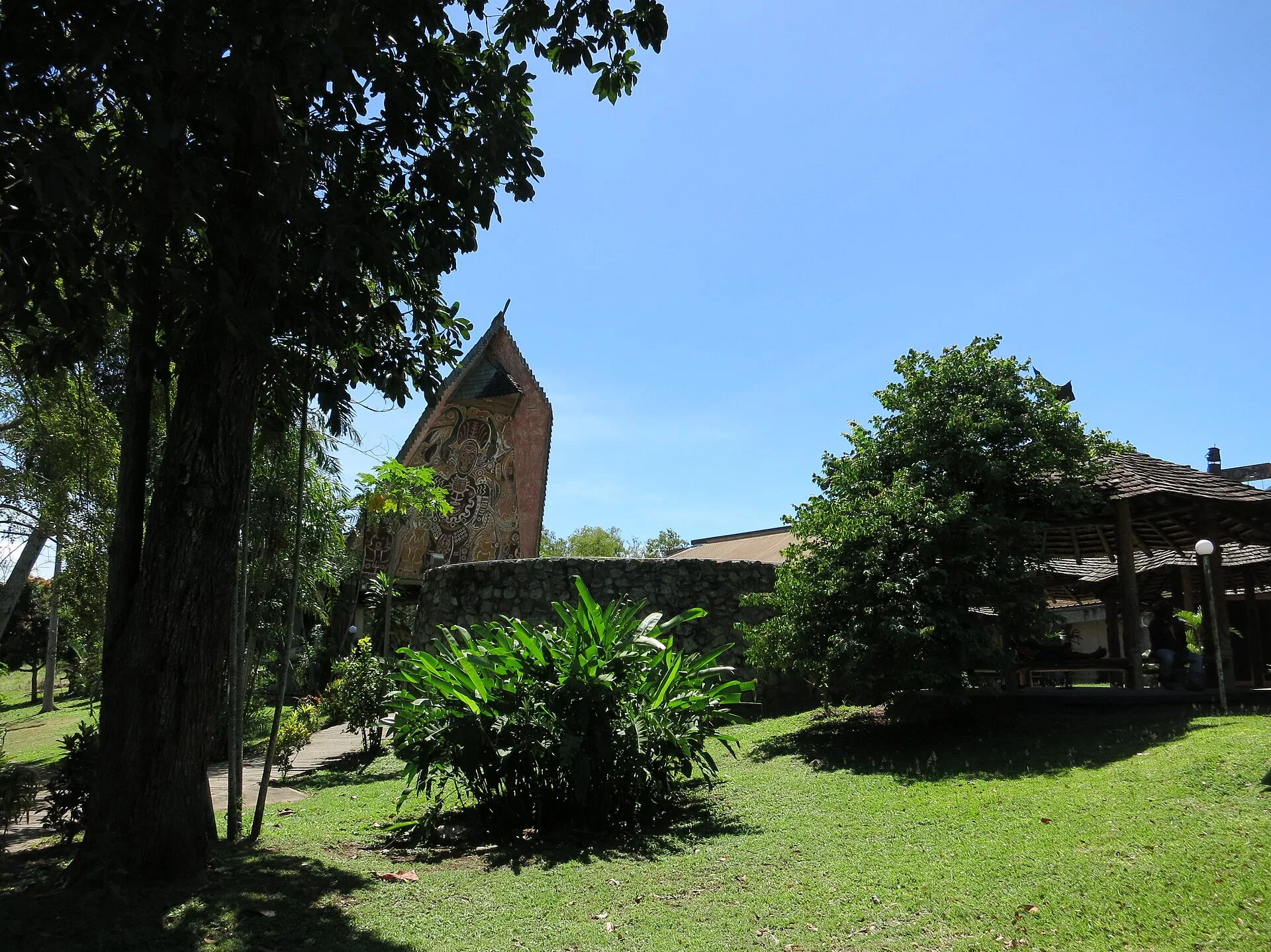
The National Museum and Art Gallery, Port Moresby, is the country’s principal public collection. It combines anthropology, archaeology, art, natural history and modern national history. Its importance for curious travellers comes from ceremonial and ancestral material: carved figures, masks, drums, decorated canoes, body ornaments and objects once used in ritual settings rather than made simply as gallery art. Recent institutional estimates describe the museum system as responsible for hundreds of thousands of artefacts, artworks, crafts and natural specimens, although published totals vary according to whether archival and scientific holdings are included.[pngnri.org]pngnri.orgPNG NRIissues paperJuly 21, 2025 — 8 Jul 2025 — Preserving the museums' extensive collection of over 300,000 artifacts, artworks, crafts, and natural specim…
The J. K. McCarthy Museum in Goroka provides a smaller and sometimes more idiosyncratic encounter with Highlands history. Its galleries have included pottery, weapons, musical instruments, dress, archaeological material, early-contact photographs and Second World War relics. Specialist records also identify aircraft remains and objects recovered from wartime crash sites. Visitor descriptions have reported mourning ornaments incorporating human fingers, although such material should be approached as culturally specific mortuary evidence rather than advertised as a horror attraction.[pacificwrecks.com]pacificwrecks.comPacific WrecksJ. K. McCarthy Museum (Goroka Museum)The J.K. McCarthy Museum in Goroka consists of six display galleries, including the Ni…
Kokopo War Museum and the New Guinea Club museum in Rabaul preserve the physical debris of conflict: rusting aircraft, tanks, artillery, radio equipment, photographs, maps and objects recovered from tunnels or wreck sites. These are closer to open-air salvage collections than polished military museums. Tropical weathering, limited conservation resources and irregular access are part of the experience, but they also threaten the collections. Reports from late 2025 still described weak preservation at the New Guinea Club, while specialist heritage listings warn that opening arrangements may be informal or intermittent.[tracesofwar.com]tracesofwar.comOpen source on tracesofwar.com.
The Massim Museum and Cultural Centre in Alotau is a community-oriented, not-for-profit initiative concerned with the cultures of Milne Bay and its islands. Available public information indicates a modest collection of carvings and painted storyboards rather than a large conventional museum. Its wider significance lies in the region’s relationship with the ceremonial exchange network known internationally as the Kula Ring, whose shell valuables and associated objects now appear in major overseas museums.[tripadvisor.com]tripadvisor.comMassim MuseumMassim Museum
Spirits, masks and objects that were never merely decorative
Many objects that appear uncanny to outsiders were created within systems in which ancestors, landscape forces and non-human beings were treated as active parts of social life. Museum labels that reduce them to “tribal art” can therefore conceal more than they explain.
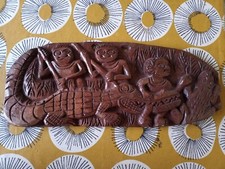
Painted spirit boards from the Gulf of Papua are a good example. Often long and oval, they portray individual ancestral or spirit beings and could be kept within houses as protective presences. Different communities used different names and conventions, so the common museum term should not suggest a single uniform tradition. Their imagery also influenced initiation masks and related ceremonial forms.[Art of The Ancestors]artoftheancestors.comspirit boards papuan gulf british museumspirit boards papuan gulf british museum
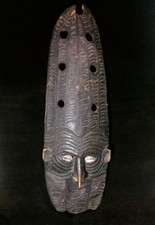
Ceremonial masks could likewise be understood as temporary bodies for named beings rather than disguises. Accounts from the Elema region describe each mask as an individual spirit whose presence animated the dancer. In museum cases, however, only the visible shell survives: barkcloth, rattan, pigment and fibre separated from music, movement, restricted knowledge and the setting in which the figure became meaningful.[australian.museum]australian.museumour global neighbours arousing elema spiritsour global neighbours arousing elema spirits
This distinction matters because Papua New Guinean collections have repeatedly been presented abroad as evidence of an exotic, mysterious or supposedly primitive world. Contemporary curation increasingly treats the same pieces as cultural property carrying histories of ownership, ceremony and colonial removal. The National Museum has described itself in ancestral terms, while long-running partnerships have returned masks, sculptures and everyday cultural objects from Australian collections. In 2020, 225 objects were transferred from the National Gallery of Australia following years of institutional cooperation.[wikipedia.org]WikipediaPapua New Guinea National Museum and Art GalleryPapua New Guinea National Museum and Art Gallery
Decorated skulls and the limits of a simple repatriation story
Human remains are among the most sensitive and unsettling Papua New Guinean objects in museum collections. A widely reported case involving five decorated skulls at the Missiemuseum in the Netherlands shows why their status cannot be reduced to either “macabre curiosities” or possessions that should automatically be sent back.
The skulls were collected by missionaries from communities of the Sepik region in the early twentieth century. Some decorated skulls represented important deceased people and were modelled to resemble them, allowing descendants to address them in mourning, warfare or requests for assistance. Other skulls could derive from enemies killed during conflict. European demand reportedly blurred these distinctions because collectors prized decorated examples and encouraged the preparation of material for exchange.[The Times]thetimes.co.ukThe Times Papua New Guinea tribe rejects return of 'cursed' ritual skullsThe Times Papua New Guinea tribe rejects return of 'cursed' ritual skulls
When a curator later consulted present-day Iatmul communities about a possible return, people reportedly declined. They no longer knew whose remains the skulls contained, saw no current ritual purpose for them and worried that unidentified enemy remains might bring danger if introduced into a village. The episode does not prove that human remains should remain in European museums. It demonstrates instead that responsible repatriation requires consultation, provenance research and respect for the possibility that communities may request return, reburial, restricted display, continued custody abroad or another outcome entirely.[The Times]thetimes.co.ukThe Times Papua New Guinea tribe rejects return of 'cursed' ritual skullsThe Times Papua New Guinea tribe rejects return of 'cursed' ritual skulls
For an unusual-museum visitor, this is a crucial ethical boundary. Human skulls are not neutral “oddities”. Their display can carry missionary propaganda, colonial ideas of savagery, histories of violence and continuing spiritual concerns. A credible museum should explain those layers, identify uncertainty and avoid turning ancestral remains into spectacle.
Ancient stones and unresolved identities
Papua New Guinea also offers archaeological curiosities whose mystery comes from limited evidence rather than supernatural claims. The best-known is the Ambum Stone, an intricately carved stone figure associated with the Highlands and dated to roughly 3,500 years ago. It resembles an animal—often interpreted as an echidna or another small mammal—but its maker, original purpose and exact symbolism remain unknown.[Smarthistory]smarthistory.orgOpen source on smarthistory.org.
The stone is especially useful for understanding how an object can pass through several identities. It began as an ancient carving, later reportedly acquired renewed religious importance within a local community, entered the international art market and was ultimately acquired by the National Gallery of Australia in 1977. It was damaged while on loan, an accident that exposed material within an old fault line and contributed information relevant to its age.[Smarthistory]smarthistory.orgOpen source on smarthistory.org.
The Ambum Stone is therefore not an “out-of-place artefact” in the pseudoscientific sense. Nothing credible suggests lost advanced technology, aliens or an unknown global civilisation. Its genuine puzzle is more interesting: sophisticated stone carving was present in the Highlands thousands of years ago, but the object survives without the oral explanation or archaeological context needed to identify its intended being or use.
Similar caution applies to less famous carved stones, mortars and pestles from the Highlands. Their age and artistry can be remarkable, yet older museum catalogues sometimes assigned function from shape alone. Archaeological curiosity is strongest when uncertainty is retained rather than filled with folklore invented for tourists.
War wrecks, tunnels and a city buried by ash
Around Rabaul and Kokopo, Papua New Guinea’s strangest heritage is industrial and archaeological rather than ritual. The region was a major Japanese base during the Second World War, and the landscape remains marked by tunnels, buried equipment, aircraft fragments, barges, guns and improvised underground installations. Some museums display recovered items indoors, while larger wreckage sits in yards or remains near the places where it was abandoned.[pacificwrecks.com]pacificwrecks.comOpen source on pacificwrecks.com.
The result can feel like a vast, decentralised bunker museum. Japanese forces constructed extensive tunnel systems to protect headquarters, supplies, boats and communications from Allied air attack. Surviving sites include passages associated with naval facilities and concealed barges, although access conditions and safety standards vary. Local guided visits are generally more reliable than attempting to enter unfamiliar tunnels independently.[Travel2Unlimited]travel2unlimited.comOpen source on travel2unlimited.com.
Rabaul’s collections also record destruction by volcanoes. The 1994 eruptions of Tavurvur and Vulcan buried much of the town in ash and shifted administrative life towards Kokopo. Museums and the surviving New Guinea Club consequently preserve overlapping histories of German colonial settlement, Australian administration, Japanese occupation, Allied bombing and volcanic disaster. Few places demonstrate more clearly how an ordinary municipal collection can become a cabinet of repeated catastrophe.[internationaltraveller.com]internationaltraveller.comInternational Traveller How Papua New Guinea's city of Rabaul was reinvigoratedInternational Traveller How Papua New Guinea's city of Rabaul was reinvigorated
The decaying condition of some outdoor relics is both atmospheric and troubling. Rusting aircraft may create a powerful sense of immediacy, but exposure steadily destroys identifying numbers, paint, fabric and technical evidence. Papua New Guinea’s National Research Institute has warned more broadly that inadequate storage, environmental control and maintenance threaten irreplaceable cultural material in national and local museums.[PNG NRI]pngnri.orgPNG NRIissues paperJuly 21, 2025 — 8 Jul 2025 — Preserving the museums' extensive collection of over 300,000 artifacts, artworks, crafts, and natural specim…
Witchcraft is not a tourist theme
Papua New Guinea has no well-evidenced public museum devoted specifically to witchcraft comparable with specialist institutions in Britain or parts of Africa. That absence should not be filled by treating masks, ancestral figures and ritual objects as a generic “witchcraft collection”.
Belief in harmful magic remains a serious contemporary issue in parts of the country. Papua New Guinea repealed its 1971 Sorcery Act in 2013, but accusations have continued to be associated with attacks, displacement and killings. For that reason, presenting the subject as harmless occult entertainment would distort its human consequences.[Kulturní studia]kulturnistudia.czKulturní studia Bilum and Noken: String bags and sorcery in New GuineaKulturní studia Bilum and Noken: String bags and sorcery in New Guinea
Museums can still address such beliefs responsibly. They may explain protective objects, ritual specialists, healing traditions, missionary campaigns and changing interpretations of misfortune. The key is to distinguish between three things that popular travel writing often muddles together:
- Historical ritual practice, documented through objects, oral histories and archival accounts.
- Living religious or customary belief, which may coexist with Christianity and modern medicine.
- Accusations of sorcery, which can become mechanisms for blaming vulnerable people and should not be romanticised.
Objects described as spiritually powerful may also change status over time. Research in Oro Province, for example, has examined how communities reassessed culturally significant or potentially dangerous material through generations of missionary contact, collecting and social change. An artefact placed safely in a glass case may once have been restricted, feared, revered or usable only by particular people.[ResearchGate]researchgate.netOpen source on researchgate.net.
Why so much material is overseas
Any account of Papua New Guinea’s curiosity culture is incomplete without the museums of Australia, New Zealand, Europe and North America. Missionaries, colonial officials, explorers, anthropologists, traders and art dealers removed enormous quantities of objects during the nineteenth and twentieth centuries. Overseas collections now contain masks, spirit boards, canoes, weapons, drums, textiles, ancestral figures and human remains from communities that may hold little comparable early material locally.[mkb.ch]mkb.ch2021RoussillonAPhD vol1text.20222021RoussillonAPhD vol1text.2022
The imbalance resulted from more than outright seizure. Objects were variously purchased, commissioned, gifted, traded, collected during official expeditions or removed under circumstances that are now difficult to reconstruct. European demand could also change what communities produced. The decorated-skull trade shows how collectors’ expectations encouraged objects to be altered or created for outsiders, complicating later claims about authenticity.[The Times]thetimes.co.ukThe Times Papua New Guinea tribe rejects return of 'cursed' ritual skullsThe Times Papua New Guinea tribe rejects return of 'cursed' ritual skulls
Papua New Guinea has legal mechanisms intended to protect nationally important cultural property and regulate export. The National Cultural Property (Preservation) Act defines protected material and assigns responsibilities connected with its preservation and movement. Enforcement is difficult, however, across a country with remote communities, limited museum resources and a long-established international market for Oceanic art.[asha.org.au]asha.org.auASHAPapua New GuineaASHAPapua New Guinea
Returns from Australia demonstrate one route forward: long-term institutional partnerships, conservation support, documentation and negotiated transfer rather than a single dramatic restitution event. Such projects can restore physical objects while also sharing catalogue information and professional skills. Yet return is only part of the problem. Museums inside Papua New Guinea require adequate buildings, trained staff and stable funding if repatriated material is to be safely stored and made accessible.[National Gallery of Australia]nga.gov.auA return to Papua New GuineaNational Gallery of AustraliaRight of return: Papua New Guinea10 Mar 2023 — In 2020 the transferral of 225 artefacts of Papua New Guinean…
What visitors should expect
Papua New Guinea’s museums are rewarding but not consistently presented or documented. Travellers should expect substantial differences between the national institution in Port Moresby and small regional museums maintained with limited staff and conservation budgets.
At the National Museum and Art Gallery, visitors can expect the clearest curatorial framework and the broadest range of material. Public listings indicate regular daytime opening, including limited weekend hours, but schedules can change and should be confirmed locally. The collection is best approached as an introduction to the country’s immense cultural diversity rather than a complete representation of every province or language group.[facebook.com]facebook.comOpen source on facebook.com.
At Goroka, Kokopo, Rabaul and Alotau, opening hours may be less dependable. Some collections rely on donations, local volunteers or arrangements made through nearby hotels and guides. Labels can be brief, conservation conditions uneven and photography restricted. This does not make the objects inauthentic, but it means visitors may need local explanation to understand whether an item was ceremonial, commercial, archaeological, colonial or recovered from a battlefield.[tracesofwar.com]tracesofwar.comOpen source on tracesofwar.com.
A responsible visit also involves restraint. Some images, objects or ceremonial spaces may be restricted by gender, initiation status, clan ownership or community wishes. Permission to enter a village or photograph an object should not be assumed simply because similar material is openly displayed in an overseas museum.
How credible are the displays?
The strongest Papua New Guinean collections are credible repositories, but the quality of interpretation varies. The National Museum supports archaeological, anthropological and natural-history work and acts as a regulatory authority for significant cultural material. Regional institutions often preserve unique local evidence despite having fewer resources for cataloguing, conservation or elaborate exhibitions.[pngnri.org]pngnri.orgPNG NRICONDITIONS AND GUIDELINES FOR OVERSEASPNG NRICONDITIONS AND GUIDELINES FOR OVERSEAS
Credibility should be assessed object by object. Useful questions include:
- Is the place operated by a national institution, local foundation, hotel, tour company or private collector?
- Does the label name the community, province, date and collecting history?
- Is a supernatural interpretation presented as a community belief, a historical account or an established fact?
- Are human remains displayed, and is there evidence of consent or consultation?
- Is a wartime object documented through serial numbers, recovery records or photographs?
- Has restoration changed the object, or is it deteriorating outdoors?
- Does the institution acknowledge contested ownership or uncertain provenance?
The weakest accounts are usually not deliberate hoaxes but confident tourist retellings detached from evidence. Masks become “demon faces”, ancestral boards become “witchcraft tablets”, and unidentified aircraft parts acquire heroic stories. Good interpretation resists that drift. It allows mystery where documentation is missing without replacing uncertainty with a saleable legend.
Why Papua New Guinea matters to curiosity culture
Papua New Guinea expands the meaning of a strange museum. Its most unusual collections are not primarily rooms of manufactured oddities. They are places where objects have crossed boundaries between ancestor and artwork, battlefield wreck and memorial, sacred presence and commodity, archaeological puzzle and national treasure.
The country also exposes a central contradiction of museum culture. Some of its most famous objects are better conserved and more easily viewed abroad than at home, yet overseas display can remove them from language, ceremony, descendants and local authority. Repatriation may repair part of that history, but it can also reveal unresolved questions about identity, danger, storage and who is entitled to decide an object’s future.[nga.gov.au]nga.gov.auA return to Papua New GuineaNational Gallery of AustraliaRight of return: Papua New Guinea10 Mar 2023 — In 2020 the transferral of 225 artefacts of Papua New Guinean…
For readers interested in folklore, uncanny objects and offbeat history, Papua New Guinea is therefore most compelling when approached without the language of “primitive magic”. Its collections document sophisticated visual systems, changing religious worlds, colonial appetite, warfare, environmental disaster and the fragile work of preservation. The strangest fact is not that people once believed objects could embody spirits. It is that museums continue to decide whether those objects are art, evidence, property, ancestors—or several of those things at once.
Amazon book picks
Further Reading
Books and field guides related to Where Papua New Guinea Keeps Its Strangest Objects. Use these as the next step if you want deeper reading beyond the article.
Oceanic Art
This updated edition of Nicholas Thomas’s authoritative World of Art volume is a comprehensive look at Oceanic art, and includes a new ch...
Throwim Way Leg
From the bestselling author of The Weather Makers: "An enthralling introduction to the mountain people of New Guinea . . . and to their m...
eBay marketplace picks
Marketplace Samples
Live-tested eBay searches with available results related to this page.
Selected fromPapua New Guinea art oneBay.co.uk.
Endnotes
1.
Source: unesdoc.unesco.org
Link:https://unesdoc.unesco.org/ark%3A/48223/pf0000028290
Source snippet
UNESCO DocumentsThe National Museum and Art Gallery of Papua New...The National Museum and Art Gallery of Papua New Guinea, after many u...
2.
Source: dutchnews.nl
Title: museum keeps skulls after papua new guinea rejects offer
Link:https://www.dutchnews.nl/2025/01/museum-keeps-skulls-after-papua-new-guinea-rejects-offer/
Source snippet
6 Jan 2025 — A museum in Limburg has decided not to return five ornamental human skulls taken by missionaries from Papua New Guinea after...
3.
Source: tripadvisor.com
Title: Massim Museum
Link:https://www.tripadvisor.com/Attraction_Review-g616352-d11802389-Reviews-Massim_Museum-Alotau_Papua_Region.html
4.
Source: facebook.com
Link:https://www.facebook.com/MMCFinc/
5.
Source: australian.museum
Title: our global neighbours arousing elema spirits
Link:https://australian.museum/blog-archive/science/our-global-neighbours-arousing-elema-spirits/
6.
Source: australian.museum
Title: spirit faces
Link:https://australian.museum/about/organisation/media-centre/spirit-faces/
7.
Source: Wikipedia
Title: Papua New Guinea National Museum and Art Gallery
Link:https://en.wikipedia.org/wiki/Papua_New_Guinea_National_Museum_and_Art_Gallery
8.
Source: smarthistory.org
Link:https://smarthistory.org/ambum/
9.
Source: travel2unlimited.com
Link:https://travel2unlimited.com/papua-new-guinea-rabaul-wwii-japanese-tunnels/
10.
Source: pngnri.org
Link:https://www.pngnri.org/index.php/news-events/news/563-there-is-a-need-to-protect-png-s-cultural-artifacts
11.
Source: researchgate.net
Link:https://www.researchgate.net/publication/29737730_Dangerous_Objects_Changing_Indigenous_Perceptions_of_Material_Culture_in_a_Papua_New_Guinea_Society
12.
Source: mkb.ch
Title: 2021RoussillonAPhD vol1text.2022 04 11 11 35 28
Link:https://www.mkb.ch/dam/jcr%3Abc14b6e6-192a-4790-bf4e-b78ccc735046/2021RoussillonAPhD_vol1text.2022-04-11-11-35-28.pdf
13.
Source: asha.org.au
Title: ASHAPapua New Guinea
Link:https://asha.org.au/papua-new-guinea/
14.
Source: faolex.fao.org
Link:https://faolex.fao.org/docs/pdf/png65547.pdf
15.
Source: facebook.com
Link:https://www.facebook.com/www.museumpng.gov.pg/
16.
Source: qa.trip.com
Title: papua new guinea national museum and art gallery 38890587
Link:https://qa.trip.com/travel-guide/attraction/port-moresby/papua-new-guinea-national-museum-and-art-gallery-38890587
17.
Source: ich.unesco.org
Title: 00337 EN.doc
Link:https://ich.unesco.org/doc/src/00337-EN.doc
18.
Source: facebook.com
Link:https://www.facebook.com/PNGTourismGlobal/posts/-reason-10-discover-pngs-museums-%EF%B8%8Fstep-inside-our-museums-and-you-step-into-the-/1192447799584318/
19.
Source: facebook.com
Link:https://www.facebook.com/ABC730/videos/across-the-pacific-museums-and-art-galleries-are-in-a-battle-for-survival-730/574697822095421/
20.
Source: facebook.com
Link:https://www.facebook.com/100044482927402/posts/papua-new-guinea-national-museum-and-art-gallery-visit-was-amazing-for-us-we-all/686661526159939/
21.
Source: facebook.com
Link:https://www.facebook.com/kokopobeachbungalow/posts/site-seeing%EF%B8%8Fkokopo-war-museum-features-relics-such-as-airplane-parts-tanks-and-c/4236293679821981/
22.
Source: facebook.com
Link:https://www.facebook.com/groups/122160938171362/posts/1141414449579334/
23.
Source: facebook.com
Link:https://www.facebook.com/dttulo/posts/yesterdays-tour-of-the-kokopo-war-museum-with-josh-was-a-fascinating-dive-into-h/1476741061128304/
24.
Source: facebook.com
Link:https://www.facebook.com/groups/721734017963433/posts/3744191112384360/
25.
Source: facebook.com
Link:https://www.facebook.com/rabaulhistoricaltours/posts/step-into-history-at-the-new-guinea-club-museum-there-is-something-powerful-abou/876900221870509/
26.
Source: Wikipedia
Link:https://en.wikipedia.org/wiki/Malawi
27.
Source: Wikipedia
Title: Ambum stone
Link:https://en.wikipedia.org/wiki/Ambum_stone
28.
Source: tripadvisor.com
Title: A Different Perspective
Link:https://www.tripadvisor.com/ShowUserReviews-g304034-d6416223-r422694045-J_K_McCarthy_Museum-Goroka_Highlands_Region.html
29.
Source: tripadvisor.com
Link:https://www.tripadvisor.com/Attraction_Review-g294119-d7257253-Reviews-or90-Kokopo_War_Museum-Rabaul_East_New_Britain_Islands_Region.html
30.
Source: tripadvisor.com
Title: National Museum and Art Gallery
Link:https://www.tripadvisor.com/Attraction_Review-g294118-d309616-Reviews-or65-National_Museum_and_Art_Gallery-Port_Moresby_Papua_Region.html
31.
Source: tripadvisor.com
Link:https://www.tripadvisor.com/Attractions-g294115-Activities-c49-Papua_New_Guinea.html
32.
Source: researchgate.net
Title: 383455078 Title The Ceremonial Mask of the Sepik River
Link:https://www.researchgate.net/publication/383455078_Title_The_Ceremonial_Mask_of_the_Sepik_River
33.
Source: researchgate.net
Title: Short History of the Papua New Guinea
Link:https://www.researchgate.net/profile/Mark-Busse/publication/293272192_Short_history_of_the_Papua_New_Guinea_National_Museum/links/5a1a434aaca272df080d875c/Short-history-of-the-Papua-New-Guinea-National-Museum.pdf
34.
Source: researchgate.net
Link:https://www.researchgate.net/publication/238415004_The_National_Museum_and_Art_Gallery_of_Papua_New_Guinea_Port_Moresby
35.
Source: researchgate.net
Link:https://www.researchgate.net/publication/395051254_Bones_of_the_Ancestors_The_Ambum_Stone
36.
Source: researchgate.net
Link:https://www.researchgate.net/publication/293272192_Short_history_of_the_Papua_New_Guinea_National_Museum
37.
Source: trip.com
Title: jk mccarthy museum 50659392
Link:https://www.trip.com/travel-guide/attraction/goroka/jk-mccarthy-museum-50659392/
38.
Source: pngnri.org
Title: PNG NRIissues paper
Link:https://pngnri.org/images/Publications/Issue_Paper_49_Clara_Bal.pdf
Source snippet
July 21, 2025 — 8 Jul 2025 — Preserving the museums' extensive collection of over 300,000 artifacts, artworks, crafts, and natural specim...
Published: July 21, 2025
39.
Source: nga.gov.au
Title: A return to Papua New Guinea
Link:https://nga.gov.au/stories-ideas/A-return-to-Papua-New-Guinea/
Source snippet
National Gallery of AustraliaRight of return: Papua New Guinea10 Mar 2023 — In 2020 the transferral of 225 artefacts of Papua New Guinean...
40.
Source: wanbelglobal.com
Link:https://wanbelglobal.com/papua-new-guinea-national-museum-art-gallery
Source snippet
WanbelPapua New Guinea National Museum And Art GalleryThe Papua New Guinea National Museum and Art Gallery (NMAG) open to the public from...
41.
Source: pacificwrecks.com
Link:https://pacificwrecks.com/restore/png/jk_mccarthy.html
Source snippet
Pacific WrecksJ. K. McCarthy Museum (Goroka Museum)The J.K. McCarthy Museum in Goroka consists of six display galleries, including the Ni...
42.
Source: theramblingwombat.com
Title: jk mccarthy museum goroka
Link:https://theramblingwombat.com/2017/03/07/jk-mccarthy-museum-goroka/
Source snippet
The Rambling WombatJK McCarthy Museum – Goroka7 Mar 2017 — The museum actually has a great collection of PNG Highland musical instruments...
43.
Source: tracesofwar.com
Link:https://www.tracesofwar.com/sights/19262/Kokopo-War-Museum.htm
44.
Source: aviationmuseum.eu
Link:https://aviationmuseum.eu/Blogvorm/kokopo-war-museum/
45.
Source: pacificwrecks.com
Link:https://pacificwrecks.com/restore/png/kokopo.html
46.
Source: tripadvisor.co.uk
Link:https://www.tripadvisor.co.uk/Attraction_Review-g294119-d8472451-Reviews-New_Guinea_Club_Rabaul_Museum-Rabaul_East_New_Britain_Islands_Region.html
47.
Source: tracesofwar.com
Link:https://www.tracesofwar.com/sights/125138/New-Guinea-Club-And-Rabaul-Museum.htm
48.
Source: artoftheancestors.com
Title: spirit boards papuan gulf british museum
Link:https://www.artoftheancestors.com/blog/spirit-boards-papuan-gulf-british-museum
49.
Source: tepapa.govt.nz
Link:https://tepapa.govt.nz/digital-museum/explore-digital-museum/papua-new-guinea
50.
Source: thetimes.co.uk
Title: The Times Papua New Guinea tribe rejects return of ‘cursed’ ritual skulls
Link:https://www.thetimes.co.uk/article/papua-new-guinea-tribe-rejects-return-of-cursed-ritual-skulls-qnshvx65d
51.
Source: searchthecollection.nga.gov.au
Title: Search the Collection Enga
Link:https://searchthecollection.nga.gov.au/object/40724
52.
Source: rabaulfrangipanitours.com.pg
Link:https://rabaulfrangipanitours.com.pg/world-war-ii-sites-relics/
53.
Source: pacificwrecks.com
Link:https://pacificwrecks.com/restore/png/rabaul_club.html
54.
Source: internationaltraveller.com
Title: International Traveller How Papua New Guinea’s city of Rabaul was reinvigorated
Link:https://internationaltraveller.com/oceania/how-rabaul-has-been-reinvigorated/
55.
Source: kulturnistudia.cz
Title: Kulturní studia Bilum and Noken: String bags and sorcery in New Guinea
Link:https://kulturnistudia.cz/wp-content/uploads/2023/10/KS-2-2023-Bilum-and-Noken.pdf
56.
Source: pngnri.org
Title: PNG NRICONDITIONS AND GUIDELINES FOR OVERSEAS
Link:https://pngnri.org/images/CS/Research_in_PNG_Conditions_and_Guidelines_.pdf
57.
Source: en.tripadvisor.com.hk
Title: tripadvisor.com.hk Very Basic Collection of WWII relics
Link:https://en.tripadvisor.com.hk/ShowUserReviews-g294119-d7257253-r482179820-Kokopo_War_Museum-Rabaul_East_New_Britain_Islands_Region.html
58.
Source: en.tripadvisor.com.hk
Link:https://en.tripadvisor.com.hk/ShowUserReviews-g294119-d8472451-r712981675-New_Guinea_Club_Rabaul_Museum-Rabaul_East_New_Britain_Islands_Region.html
59.
Source: tripadvisor.co.uk
Title: Attractions g294115 Activities c49 Papua New Guinea
Link:https://www.tripadvisor.co.uk/Attractions-g294115-Activities-c49-Papua_New_Guinea.html
60.
Source: tripadvisor.co.uk
Title: MORBITORIU M
Link:https://www.tripadvisor.co.uk/Attraction_Review-g186459-d21379868-Reviews-Morbitorium-Caerphilly_Caerphilly_County_South_Wales_Wales.html
61.
Source: tripadvisor.co.uk
Title: J.K. MCCARTHY MUSEUM
Link:https://www.tripadvisor.co.uk/Attraction_Review-g304034-d6416223-Reviews-J_K_McCarthy_Museum-Goroka_Highlands_Region.html
62.
Source: jstor.org
Link:https://www.jstor.org/stable/26589136
63.
Source: jstor.org
Link:https://www.jstor.org/stable/44078417
64.
Source: pacificwrecks.com
Link:https://pacificwrecks.com/restore/png/museum.html
65.
Source: artoftheancestors.com
Title: korwar raymond corbey
Link:https://www.artoftheancestors.com/blog/korwar-raymond-corbey
66.
Source: ncdc.gov.pg
Title: the png national museum art gallery
Link:https://www.ncdc.gov.pg/places-to-visit/place_to_visit/the-png-national-museum-art-gallery.html
67.
Source: png.embassy.gov.au
Link:https://png.embassy.gov.au/pmsb/450.html
68.
Source: toodyay.wa.gov.au
Title: museum interpretation and exhibition
Link:https://www.toodyay.wa.gov.au/documents/172/museum-interpretation-and-exhibition
Additional References
69.
Source: youtube.com
Link:https://www.youtube.com/watch?v=wLsCNBp_edU
Source snippet
Journeys along the Sepik River: The Tribal Art of Papua New Guinea...
70.
Source: youtube.com
Title: Journeys along the Sepik River: The Tribal Art of Papua New Guinea
Link:https://www.youtube.com/watch?v=40qdo3Evjy0
Source snippet
Kokopo War Meueum holds some of the oldest accounts of Second World War...
71.
Source: youtube.com
Title: Kokopo War Meueum holds some of the oldest accounts of Second World War
Link:https://www.youtube.com/watch?v=88yp4GLtSRU
Source snippet
KOKODA STORY – Papua New Guinean histories of World War II...
72.
Source: britishmuseum.org
Link:https://www.britishmuseum.org/collection/term/x84255
73.
Source: thelasttuesdaysociety.org
Link:https://thelasttuesdaysociety.org/wp-content/uploads/2021/04/Guide-Book-May-for-web.pdf
74.
Source: cyh.rrchnm.org
Link:https://cyh.rrchnm.org/primary-sources/428.html
75.
Source: instagram.com
Link:https://www.instagram.com/p/DUN3BI-EbS6/
76.
Source: evendo.com
Link:https://evendo.com/locations/papua-new-guinea/buka/landmark/jk-mccarthy-museum
77.
Source: skjtravel.net
Link:https://skjtravel.net/index.php/15-features/401-granny-sabina-a-tale-of-mystery-culture-and-times-past-in-namibia
78.
Source: instagram.com
Link:https://www.instagram.com/reel/DQccKM9CBMQ/